'%3e%3cpath%20d='M34.1406%205.85938C30.3906%202.10547%2025.3047%200%2020%200C14.6953%200%209.60938%202.10547%205.85938%205.85938C2.10938%209.61328%200%2014.6953%200%2020C0%2025.3047%202.10547%2030.3906%205.85938%2034.1406C9.61328%2037.8906%2014.6953%2040%2020%2040C25.3047%2040%2030.3906%2037.8945%2034.1406%2034.1406C37.8906%2030.3906%2040%2025.3047%2040%2020C40%2014.6953%2037.8945%209.60938%2034.1406%205.85938ZM37.0117%2023.543H31.1602V13.5391H27.6328V19.9414C28.1211%2020.6914%2028.3711%2021.582%2028.3711%2022.5625V22.625C28.3711%2023.668%2028.1172%2024.6055%2027.6328%2025.4297V26.6094H36.082C33.4883%2032.9375%2027.2891%2037.3789%2020.0039%2037.3789C10.3711%2037.3789%202.62109%2029.6289%202.62109%2020C2.62109%2010.3711%2010.3711%202.62109%2020%202.62109C29.6289%202.62109%2037.3789%2010.3711%2037.3789%2020C37.3789%2021.1484%2037.2617%2022.2656%2037.0508%2023.3477C37.0391%2023.4141%2037.0234%2023.4766%2037.0117%2023.543Z'%20fill='white'/%3e%3cpath%20d='M22.3086%2018.5352C20.4336%2018.125%2019.9531%2017.8398%2019.9766%2017.1836V17.1406C19.9766%2016.6992%2020.3477%2016.2148%2021.4023%2016.2148C22.582%2016.2148%2023.8867%2016.6797%2025.0781%2017.4766L26.8516%2015.0195C25.4453%2013.8906%2023.707%2013.3398%2021.5547%2013.3398C18.5195%2013.3398%2016.4375%2015%2016.4063%2017.4766V17.5352C16.3633%2020.2617%2018.5859%2020.9805%2021.293%2021.6016C23.0391%2021.9766%2023.5703%2022.3164%2023.5703%2022.9609L23.5469%2022.9766C23.5469%2023.3906%2023.2578%2023.7031%2022.7852%2023.8359C22.5742%2023.9062%2022.1289%2023.9727%2021.5156%2023.9727C20.7617%2023.9727%2019.7539%2023.8633%2018.6328%2023.4844C18.0898%2023.2891%2017.4727%2023.0039%2016.8047%2022.6133L20.1406%2026.625C20.2813%2026.6602%2021.0977%2026.8516%2021.7734%2026.8516C25.0039%2026.8516%2027.0859%2025.2461%2027.1094%2022.6328V22.5703C27.1602%2020.1133%2025.2148%2019.1719%2022.3086%2018.5352Z'%20fill='white'/%3e%3cpath%20d='M5.24219%2013.5664V26.6133H8.75391V23.7578L10.2969%2021.9531L14.2031%2026.6133H18.3867L12.3555%2019.5195L17.4023%2013.5664H13.4531L8.75391%2019.0586V13.5664H5.24219Z'%20fill='white'/%3e%3c/g%3e%3cdefs%3e%3cclipPath%20id='clip0_97_2430'%3e%3crect%20width='40'%20height='40'%20fill='white'/%3e%3c/clipPath%3e%3c/defs%3e%3c/svg%3e)


- Salt Lake City limits new nonresidential buildings to 200,000 gallons of water daily.
- City Council willing to add further reductions and smart irrigation to conserve water.
- The ordinance excludes agriculture, schools, social services, worship places and hospitals.
SALT LAKE CITY — Utah's capital city is permanently limiting the amount of water that all new nonresidential buildings can use, but its leaders are also interested in tightening the cap beyond what is now required.
Members of the Salt Lake City Council voted unanimously on Tuesday to adopt a new ordinance that limits water use to 200,000 gallons per day across most new nonresidential properties across the city. The motion to approve was joined by a legislative action calling on city staff to track water use data across all nonresidential properties for a new report outlining whether the daily maximum could be reduced further.
City leaders also want to explore incentives that may encourage residents and businesses to adopt smart irrigation controllers or other practices that can reduce outdoor water use.
"We've got to make responsible choices about limited water resources," Salt Lake City Council Vice Chair Erika Carlsen told KSL before the vote. "We're trying to do that with this water use amendment."
The new ordinance doesn't apply to agricultural use, as well as water consumed by schools, government-owned or operated facilities that primarily provide social services, places of worship and hospitals.
It permanently establishes a temporary, six-month ordinance that the City Council approved in March, which was approved as Salt Lake City worried about potential water shortages and a controversial project proposed at the time.
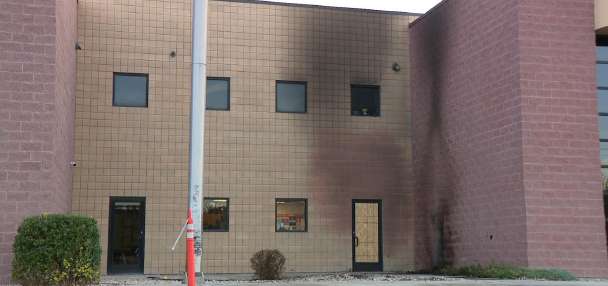
The U.S. Immigration and Customs Enforcement purchased a massive warehouse on Salt Lake City's west side, which it intended to convert into a federal detention facility with approximately 7,500 beds.
City officials estimated that such a project would likely use 1 million to 2 million gallons of water every day, meaning that the plan would be complicated by the emergency ordinance that leaders wanted to make permanent. The city and other entities also sued the federal government over the project, which was ultimately scrapped over the summer.
Yet, the plan to keep the ordinance didn't change.
Over two-thirds of Salt Lake County, including its valley, remains in extreme drought, while the rest of the county is still in severe drought.
Salt Lake City's public utilities department reported last month that it had to rely more on its share of Deer Creek Reservoir than usual. Almost 60% of the city's drinking water came from the reservoir this year, as compared to 30% to 40% during most years.
The city returned to its water shortage contingency plan this year, as well.
But as conversations about the permanent ordinance picked up in July, some on the City Council questioned if 200,000 gallons was too lenient.
"We have got to get our heads and our hands around the water crisis, and start to manage things more responsibly. … I would be happier if we went even stricter," said Salt Lake City Councilwoman Victoria Petro at the time.
Some of the feedback from residents mirrored that question, Carlsen said.
That sparked the request for a study of water use included in Tuesday's vote. The analysis, she said, aims to explore how much water is needed for large nonresidential properties to better manage water resources.
It could spark even tighter restrictions that could be considered as early as next year. Thus, the 200,000 gallons could be a starting point.
"This is one step among many to think about how we can be responsible stewards of our most precious resource," Carlsen said.