

Estimated read time: 2-3 minutes
This archived news story is available only for your personal, non-commercial use. Information in the story may be outdated or superseded by additional information. Reading or replaying the story in its archived form does not constitute a republication of the story.

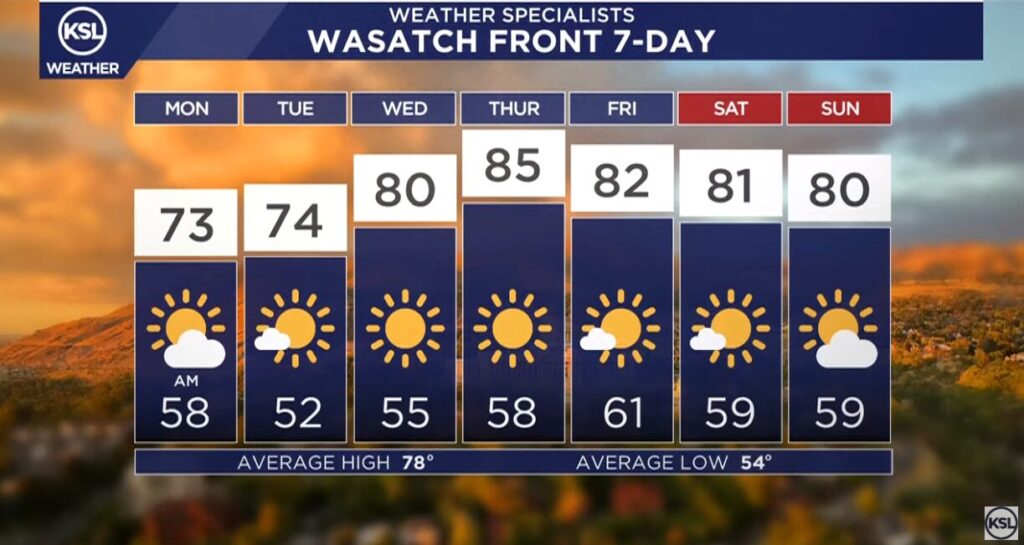
SALT LAKE CITY — As of 12:19 p.m. on Monday, the fall equinox arrived in Utah. As the state welcomed the new season, it also welcomed some moisture. On Sunday, parts of the Salt Lake Valley were drenched in thunderstorms, according to KSL Meteorologist Matt Johnson. Residents in Sandy and Cottonwood Heights especially experienced a "rain and hail curtain," he said.While the rain is welcome and replenishes the dry desert of a state, most folks have something else at the top of mind when fall hits: the foliage. Although, the precipitation actually helps the foliage to appear in more vibrant color. As of Monday, according to the U.S. Forest Service, warm daytime temperatures forecast in the Wasatch Front paired with cooler temperatures in the evening will allow leaves to showcase "the most spectacular color displays." As the sunlight begins to fade, deciduous trees, with their large leaves, begin to prepare for the long winter months ahead, according to the Smithsonian. The green chlorophyl within the leaves that gathers sunlight begins to fade, revealing the yellow and orange pigments already present within the leaves. The trees then begin building a protective layer at the end of their branches, sucking the nutrients from the leaves back into the main trunk. As the layer develops, the leaves drop off the branches, leaving them bare before the snow begins to fall. The U.S. Department of Agriculture website explains that fallen leaves will decompose over the winter months, providing ground cover for small animals and additional nutrients to the soil in the spring.So what comes next? Thanks to the approximately 23.4-degree tilt in the Earth's rotational axis, the amount of visible daylight will steadily decrease until the winter solstice, encouraging snow to replace rainfall as the temperature cools. [gallery columns="5" ids="822697,822698,822699,822700,822701,822702,822703,822704,822705,822706"]