'%3e%3cpath%20d='M34.1406%205.85938C30.3906%202.10547%2025.3047%200%2020%200C14.6953%200%209.60938%202.10547%205.85938%205.85938C2.10938%209.61328%200%2014.6953%200%2020C0%2025.3047%202.10547%2030.3906%205.85938%2034.1406C9.61328%2037.8906%2014.6953%2040%2020%2040C25.3047%2040%2030.3906%2037.8945%2034.1406%2034.1406C37.8906%2030.3906%2040%2025.3047%2040%2020C40%2014.6953%2037.8945%209.60938%2034.1406%205.85938ZM37.0117%2023.543H31.1602V13.5391H27.6328V19.9414C28.1211%2020.6914%2028.3711%2021.582%2028.3711%2022.5625V22.625C28.3711%2023.668%2028.1172%2024.6055%2027.6328%2025.4297V26.6094H36.082C33.4883%2032.9375%2027.2891%2037.3789%2020.0039%2037.3789C10.3711%2037.3789%202.62109%2029.6289%202.62109%2020C2.62109%2010.3711%2010.3711%202.62109%2020%202.62109C29.6289%202.62109%2037.3789%2010.3711%2037.3789%2020C37.3789%2021.1484%2037.2617%2022.2656%2037.0508%2023.3477C37.0391%2023.4141%2037.0234%2023.4766%2037.0117%2023.543Z'%20fill='white'/%3e%3cpath%20d='M22.3086%2018.5352C20.4336%2018.125%2019.9531%2017.8398%2019.9766%2017.1836V17.1406C19.9766%2016.6992%2020.3477%2016.2148%2021.4023%2016.2148C22.582%2016.2148%2023.8867%2016.6797%2025.0781%2017.4766L26.8516%2015.0195C25.4453%2013.8906%2023.707%2013.3398%2021.5547%2013.3398C18.5195%2013.3398%2016.4375%2015%2016.4063%2017.4766V17.5352C16.3633%2020.2617%2018.5859%2020.9805%2021.293%2021.6016C23.0391%2021.9766%2023.5703%2022.3164%2023.5703%2022.9609L23.5469%2022.9766C23.5469%2023.3906%2023.2578%2023.7031%2022.7852%2023.8359C22.5742%2023.9062%2022.1289%2023.9727%2021.5156%2023.9727C20.7617%2023.9727%2019.7539%2023.8633%2018.6328%2023.4844C18.0898%2023.2891%2017.4727%2023.0039%2016.8047%2022.6133L20.1406%2026.625C20.2813%2026.6602%2021.0977%2026.8516%2021.7734%2026.8516C25.0039%2026.8516%2027.0859%2025.2461%2027.1094%2022.6328V22.5703C27.1602%2020.1133%2025.2148%2019.1719%2022.3086%2018.5352Z'%20fill='white'/%3e%3cpath%20d='M5.24219%2013.5664V26.6133H8.75391V23.7578L10.2969%2021.9531L14.2031%2026.6133H18.3867L12.3555%2019.5195L17.4023%2013.5664H13.4531L8.75391%2019.0586V13.5664H5.24219Z'%20fill='white'/%3e%3c/g%3e%3cdefs%3e%3cclipPath%20id='clip0_97_2430'%3e%3crect%20width='40'%20height='40'%20fill='white'/%3e%3c/clipPath%3e%3c/defs%3e%3c/svg%3e)




Estimated read time: 6-7 minutes
- Utah 4-H communities raised over $41,000 for nine-year-old Brandon "Chomp" Barela.
- Chomp became hospitalized with heart failure, and couldn't show his goat at the fair.
- Another Utah 4-H auction, this one in Salt Lake County, raised $15,000 for a young cancer patient in Salt Lake.
OGDEN — Nine-year-old Brandon "Chomp" Barela spent his summer preparing for his first livestock show at the Weber County Fair. He had a goat named Santa, a best friend who shared his love of animals and plenty of excitement about finally getting into the show ring.
But a week before the fair, Chomp was hospitalized with heart failure. He wouldn't get the chance to show the goat he had spent months raising.
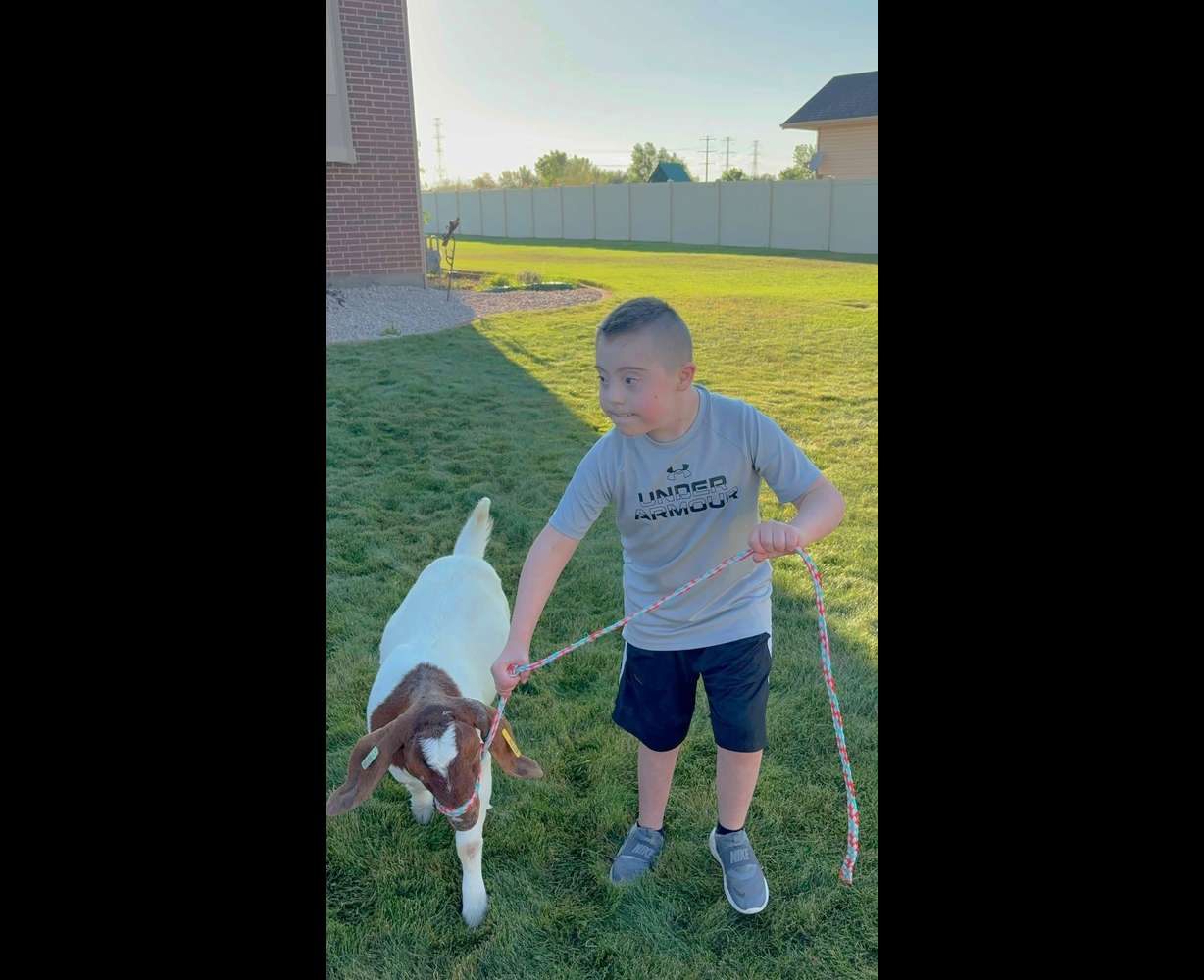
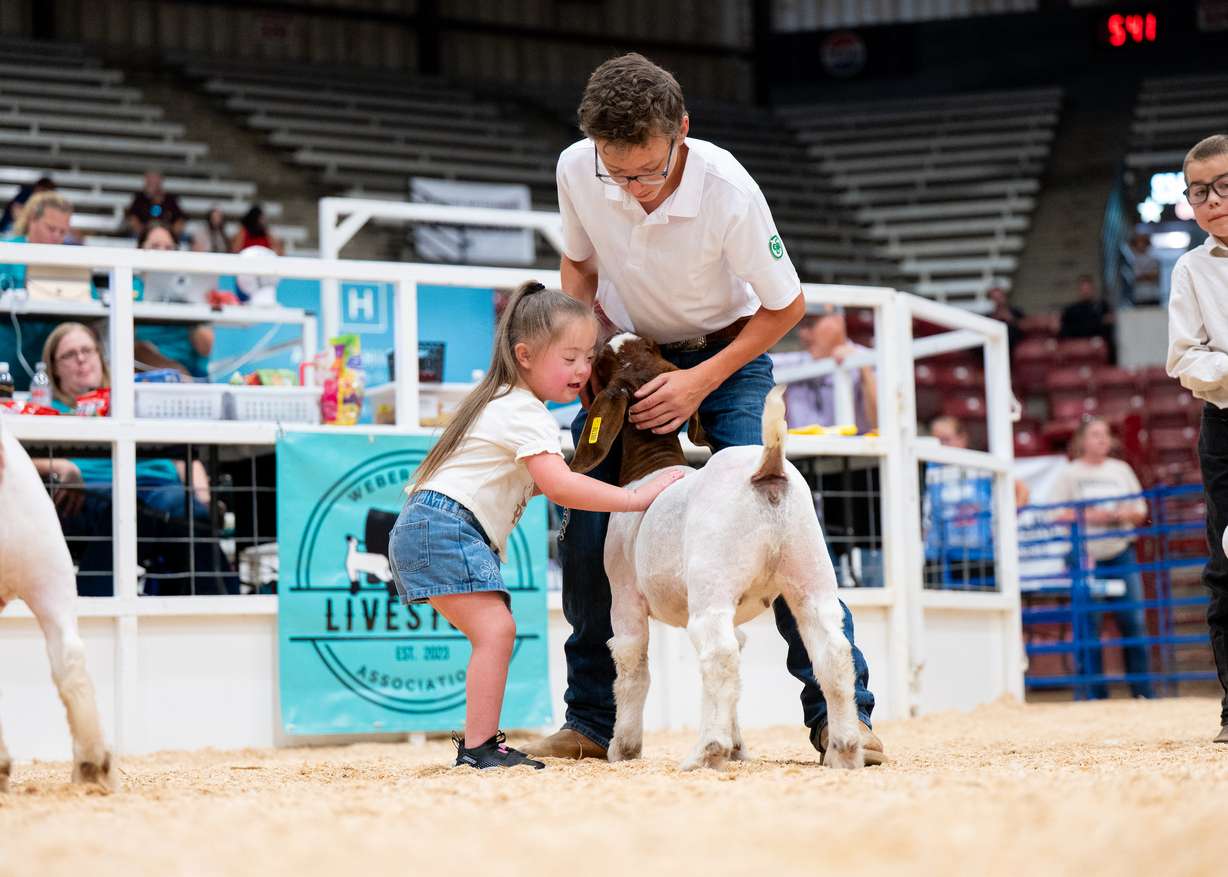
That's when his best friend, Tyttan Sappington, stepped in to make sure Santa would still get his moment in the ring.
What followed was an extraordinary show of generosity. Local buyers joined forces at the Weber County Junior Livestock Auction, ultimately raising more than $41,000 for Chomp and his family. Then they gave Santa back.
The auction was one of two Utah 4-H livestock sales this year in which communities rallied around young members facing serious health challenges. In Salt Lake County, buyers raised approximately $15,000 for another young exhibitor battling a rare form of cancer.
A best friend steps into the ring
For Chomp, participating in 4-H was something he had been looking forward to all summer.
Sharon Bee, Weber County's 4-H program coordinator, said Chomp developed an interest in livestock through his friendship with Tyttan, an older 4-H member who regularly showed animals at the fair.
"Chomp was always helping him and being around with him," Bee said.
Another member of the community noticed Chomp's enthusiasm and helped him get a goat of his own. Chomp named him Santa and spent the summer caring for him.
His health, however, made participating in the program difficult.
Bee said 4-H exhibitors are typically required to complete two educational activities, such as workshops, clinics or other events, before showing their animals.
Chomp's club leader contacted her because the boy's medical challenges had prevented him from attending all the required activities.
"He's putting forth that effort. He's gone to what he could attend," Bee recalled of their discussion.
They agreed Chomp could participate in the fair.
But a week before the event, he was admitted to the hospital and could no longer attend.
Tyttan stepped in to show Santa during the market competition, allowing the goat to qualify for the livestock auction.
By auction day, word had spread about Chomp's condition.
"When Tyttan was able to bring Chomp's goat into the auction ring, it was pretty incredible," Bee said. "The entire auction ring came pretty quiet and turned their attention towards that animal."
An auction that brought the arena to tears
What started as a livestock sale quickly became a community fundraiser.
Buyers who had learned about Chomp's hospitalization began joining forces, offering to split bids and contribute money toward the purchase of Santa.
"It's fun to hear the community say, 'Well, hey, you know, I'll split that with you,' or, 'I'll go half with you,' or, 'What if we pitch in this much together?" Bee said.
By the end of the auction, Santa had sold for more than $41,000.
The buyers then returned the goat to Chomp's family, allowing them to keep the animal he had spent the summer raising.
For Bee, the generosity was overwhelming.
"There were not many dry eyes in that arena, including mine," she said.
What made the moment particularly meaningful, she said, was that many of the people contributing had never met Chomp.
"Most of those buyers probably don't know who he is, never met him, probably may never meet him in the future," Bee said. "But they were willing to help him and his family."
A new heart and a new chapter
Chomp's health challenges began long before his first livestock show.
Born with Down syndrome and a congenital heart defect, he experienced heart failure in March and underwent surgery to receive a pacemaker and a new heart valve.
He experienced heart failure again shortly before the Weber County Fair, preventing him from showing Santa.
Chomp received a heart transplant Sept. 1, an important update to the original Utah State University Extension announcement, which described him as awaiting a transplant.
Bee said she had heard that Chomp and his family recently returned home from the hospital, although she had not yet spoken with them directly.
She said she has been giving the family space as they navigate his recovery.
In the meantime, Santa was returned to the family, allowing Chomp's younger sister to spend time with the goat while the family dealt with his hospitalization.
For Bee, the auction demonstrated how much a community can accomplish when its members recognize that someone needs help.
"Thanks for seeing the youth in our community in need and being there for them," she said of the message she has shared with those who supported Chomp.
Another Utah family receives support
A similar act of generosity unfolded at the Salt Lake County Junior Livestock Auction.
There, a young 4-H member battling a rare form of cancer continued participating in livestock projects despite his medical challenges.
Buyers, including Les Schwab and the Bastian Family Foundation, helped raise approximately $15,000 through the sale of his lamb.
Kaitlyn Lunt, Utah's state 4-H program coordinator for communications and outreach, said the generosity at both auctions reflected the relationships that develop between young exhibitors, local businesses and their communities.
"We actually saw a bunch of businesses come together and shake hands," Lunt said. "We're going to go in on this together because we care about the kid. It's not about us."
Lunt said neither fundraiser was the result of a formal request from the families. Instead, community members learned about the children's circumstances and independently decided to help.
For young exhibitors, she said, livestock projects require substantial investments of time and money, from purchasing animals to paying for feed and grooming supplies.
But the lessons extend beyond raising animals.
"These kids are learning those life skills that are going to prepare them for life no matter what," Lunt said.
More than a livestock show
The two auctions come ahead of National 4-H Week, Oct. 4-10, when members across the country will celebrate the program and recognize the people who support it.
Weber County 4-H encourages members to wear green Oct. 5, and participate in Thankful Thursday on Oct. 8 by recognizing club leaders, community supporters and others who have made a difference.
Lunt said the program offers far more than traditional agricultural activities, with opportunities ranging from STEM projects to outdoor recreation.
For Bee, this year's Weber County auction provided a particularly memorable example of what those relationships can mean outside the show ring.
As Chomp continues his recovery following his heart transplant, his goat Santa remains with the family, thanks to the buyers who turned an ordinary livestock auction into a $41,000 show of support.