'%3e%3cpath%20d='M34.1406%205.85938C30.3906%202.10547%2025.3047%200%2020%200C14.6953%200%209.60938%202.10547%205.85938%205.85938C2.10938%209.61328%200%2014.6953%200%2020C0%2025.3047%202.10547%2030.3906%205.85938%2034.1406C9.61328%2037.8906%2014.6953%2040%2020%2040C25.3047%2040%2030.3906%2037.8945%2034.1406%2034.1406C37.8906%2030.3906%2040%2025.3047%2040%2020C40%2014.6953%2037.8945%209.60938%2034.1406%205.85938ZM37.0117%2023.543H31.1602V13.5391H27.6328V19.9414C28.1211%2020.6914%2028.3711%2021.582%2028.3711%2022.5625V22.625C28.3711%2023.668%2028.1172%2024.6055%2027.6328%2025.4297V26.6094H36.082C33.4883%2032.9375%2027.2891%2037.3789%2020.0039%2037.3789C10.3711%2037.3789%202.62109%2029.6289%202.62109%2020C2.62109%2010.3711%2010.3711%202.62109%2020%202.62109C29.6289%202.62109%2037.3789%2010.3711%2037.3789%2020C37.3789%2021.1484%2037.2617%2022.2656%2037.0508%2023.3477C37.0391%2023.4141%2037.0234%2023.4766%2037.0117%2023.543Z'%20fill='white'/%3e%3cpath%20d='M22.3086%2018.5352C20.4336%2018.125%2019.9531%2017.8398%2019.9766%2017.1836V17.1406C19.9766%2016.6992%2020.3477%2016.2148%2021.4023%2016.2148C22.582%2016.2148%2023.8867%2016.6797%2025.0781%2017.4766L26.8516%2015.0195C25.4453%2013.8906%2023.707%2013.3398%2021.5547%2013.3398C18.5195%2013.3398%2016.4375%2015%2016.4063%2017.4766V17.5352C16.3633%2020.2617%2018.5859%2020.9805%2021.293%2021.6016C23.0391%2021.9766%2023.5703%2022.3164%2023.5703%2022.9609L23.5469%2022.9766C23.5469%2023.3906%2023.2578%2023.7031%2022.7852%2023.8359C22.5742%2023.9062%2022.1289%2023.9727%2021.5156%2023.9727C20.7617%2023.9727%2019.7539%2023.8633%2018.6328%2023.4844C18.0898%2023.2891%2017.4727%2023.0039%2016.8047%2022.6133L20.1406%2026.625C20.2813%2026.6602%2021.0977%2026.8516%2021.7734%2026.8516C25.0039%2026.8516%2027.0859%2025.2461%2027.1094%2022.6328V22.5703C27.1602%2020.1133%2025.2148%2019.1719%2022.3086%2018.5352Z'%20fill='white'/%3e%3cpath%20d='M5.24219%2013.5664V26.6133H8.75391V23.7578L10.2969%2021.9531L14.2031%2026.6133H18.3867L12.3555%2019.5195L17.4023%2013.5664H13.4531L8.75391%2019.0586V13.5664H5.24219Z'%20fill='white'/%3e%3c/g%3e%3cdefs%3e%3cclipPath%20id='clip0_97_2430'%3e%3crect%20width='40'%20height='40'%20fill='white'/%3e%3c/clipPath%3e%3c/defs%3e%3c/svg%3e)


Estimated read time: 5-6 minutes
- Taranto, Italy, is establishing Europe's first sea-based dolphin sanctuary, San Paolo Refuge.
- Marine biologist Carmelo Fanizza leads the project, addressing captive dolphins' welfare.
- The refuge aims to ethically house dolphins from closing marine parks, enhancing their lives.
TARANTO, Italy — Greek legend tells the story of Taras, son of Poseidon, whose ship was wrecked while sailing between Italy and Greece. The sailor's sea-god father dispatched a dolphin to rescue him, which he rode to the shores of the Ionian Peninsula. Safely on dry land, Taras established a city. Ignoring the role of his aquatic rescuer, he named it after himself.
Some 4,000 years later, Taras is now Taranto, Puglia's second-largest city. While it has shed the name of its legendary founder, Taranto's connection to the dolphin has remained strong.
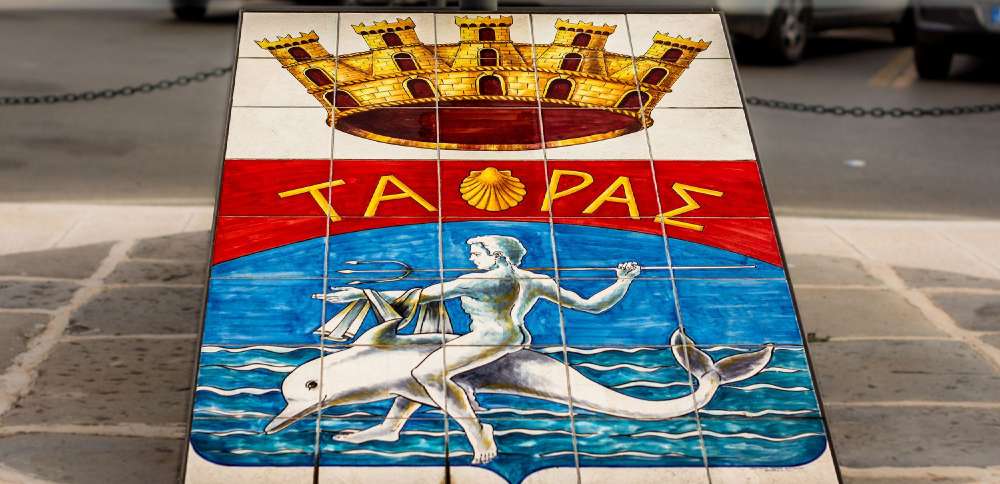
From ancient local coins, statues and figurines, to the city's coat of arms and the crest of its professional soccer team, the noble cetacean is everywhere — often with Taras on its back. Today, a fresh connection to one of the ocean's most beloved inhabitants is shaping an uplifting story for Taranto — and a new future for dolphins currently in captivity.
A variety of dolphin species, including bottlenose, spinner, and striped dolphins, numbering in their thousands, are thriving in the warm waters of the Gulf of Taranto — the stretch of the Ionian Sea that sits in the instep of the Italian "boot."
Stand on the walls of Taranto's Città Vecchia, or old town, and it is often possible to spot dolphins leaping from distant waves.
Every year thousands of visitors to Taranto take the opportunity for a closer look at the sociable animals on organized day trips.
Now, thanks to a pioneering new project, those wild dolphins will soon be joined by some that may never have known the freedom of the ocean at the brand-new San Paolo Dolphin Refuge — Europe's first sea-based sanctuary for formerly captive dolphins.
Marine biologist Carmelo Fanizza wears a blue T-shirt emblazoned with the logo of the Jonian Dolphin Conservation association (JDC), the organization he founded, which lies at the heart of dolphin conservation in Taranto.
His skin bears the weathered tan of someone whose life has been spent on the ocean under the Pugliese sun, and his eyes shine with enthusiasm for what will be the culmination of almost a decade's work.
A high-tech marine haven
Standing on a white rigid inflatable boat, or RIB, floating next to San Paolo Island — a tiny islet that is home to a Napoleonic fort — Fanizza gestures proudly towards a series of blue-and-white modular cubes laid out in neat squares across the gently rippling water.
"We have an area of seven hectares," Fanizza says, pointing to four yellow buoys marking the boundaries. "The buoys are monitoring buoys … we collect information about the quality of the water, the quality of the air, also we have a hydrophone for measurement of the acoustic noise in the water. All that information arrives in the control room in our headquarters."
The area is also equipped with underwater cameras and an AI system, which monitors the data and can generate alerts for the biologists back at base in the event of any irregularities in the environment.
There is a floating cabin with areas to store and prepare food, where staff will also work and sleep, as well as a special platform where veterinarians will be able to care for the animals.
The dolphins the refuge expects to host are currently housed in aquariums, particularly in France, where a new law that will come into effect in December 2026 has banned shows featuring cetaceans such as dolphins and whales.
While conservationists and animal rights groups have welcomed the ban, the closure of these marine parks has presented a new problem — what to do with the animals left behind.
An 'ethical' solution
"The French government has taken a very important step because they have closed the facilities, or facilitated the closure of some structures," Fanizza says. "But the problem is that nobody has in mind the solution, because if you close one structure, you need to have a solution for the animals that are in the structure."
After so long in captivity, releasing the animals into the wild is not an option. "It's true that it's not possible to take an animal that has spent his life in a concrete tank, putting him in the open sea," Fanizza tells CNN.
"So, now we want to generate a model to host the animals of these structures that are closed now or the structures that will be closed in the future. And we want to find a solution, an ethical solution, we want to find a solution for the wellness of the animal."
This month, Fanizza's team received the final permits to complete the Refuge, which will initially become home to just a handful of dolphins while the JDC explores the possibilities of its new sanctuary.
"We have in mind to host, not a big number of dolphins here," he says. "This is a pilot project, so we want to host a small number, a small family group" to discover "the correct way to manage these animals in this kind of facility."
'Citizen science'
"It's a fantastic place to host dolphins, because now a lot of dolphins are in concrete pools and they don't have any interaction with sea life. Here they have a lot of fish, a lot of contact with the bottom, so it's a very important thing for the animal to return to the natural environment," he says.
The JDC's relationship with Taranto's dolphins began in 2009, when it was established with the goal of protecting cetaceans and safeguarding the seas in the area. It organizes day trips out into the ocean for all ages, with a strong educational and scientific thread running through the itinerary.
"Our project is a citizen science project," Fanizza explains. "We use the people that come aboard to finance the research activity."
Participants are invited to become "Researchers for the Day," helping the JDC's staff with their work by recording sightings and participating in other scientific activities, while members can also join events and workshops. The association has over 6,000 active members currently.
The San Paolo Dolphin Refuge itself will not, however, be open to the public. Instead, visitors to the JDC's headquarters, known as Kètos — the Euro-Mediterranean Center for the Sea and Cetaceans, in Taranto's Città Vecchia will find a state-of-the-art observation center.