'%3e%3cpath%20d='M34.1406%205.85938C30.3906%202.10547%2025.3047%200%2020%200C14.6953%200%209.60938%202.10547%205.85938%205.85938C2.10938%209.61328%200%2014.6953%200%2020C0%2025.3047%202.10547%2030.3906%205.85938%2034.1406C9.61328%2037.8906%2014.6953%2040%2020%2040C25.3047%2040%2030.3906%2037.8945%2034.1406%2034.1406C37.8906%2030.3906%2040%2025.3047%2040%2020C40%2014.6953%2037.8945%209.60938%2034.1406%205.85938ZM37.0117%2023.543H31.1602V13.5391H27.6328V19.9414C28.1211%2020.6914%2028.3711%2021.582%2028.3711%2022.5625V22.625C28.3711%2023.668%2028.1172%2024.6055%2027.6328%2025.4297V26.6094H36.082C33.4883%2032.9375%2027.2891%2037.3789%2020.0039%2037.3789C10.3711%2037.3789%202.62109%2029.6289%202.62109%2020C2.62109%2010.3711%2010.3711%202.62109%2020%202.62109C29.6289%202.62109%2037.3789%2010.3711%2037.3789%2020C37.3789%2021.1484%2037.2617%2022.2656%2037.0508%2023.3477C37.0391%2023.4141%2037.0234%2023.4766%2037.0117%2023.543Z'%20fill='white'/%3e%3cpath%20d='M22.3086%2018.5352C20.4336%2018.125%2019.9531%2017.8398%2019.9766%2017.1836V17.1406C19.9766%2016.6992%2020.3477%2016.2148%2021.4023%2016.2148C22.582%2016.2148%2023.8867%2016.6797%2025.0781%2017.4766L26.8516%2015.0195C25.4453%2013.8906%2023.707%2013.3398%2021.5547%2013.3398C18.5195%2013.3398%2016.4375%2015%2016.4063%2017.4766V17.5352C16.3633%2020.2617%2018.5859%2020.9805%2021.293%2021.6016C23.0391%2021.9766%2023.5703%2022.3164%2023.5703%2022.9609L23.5469%2022.9766C23.5469%2023.3906%2023.2578%2023.7031%2022.7852%2023.8359C22.5742%2023.9062%2022.1289%2023.9727%2021.5156%2023.9727C20.7617%2023.9727%2019.7539%2023.8633%2018.6328%2023.4844C18.0898%2023.2891%2017.4727%2023.0039%2016.8047%2022.6133L20.1406%2026.625C20.2813%2026.6602%2021.0977%2026.8516%2021.7734%2026.8516C25.0039%2026.8516%2027.0859%2025.2461%2027.1094%2022.6328V22.5703C27.1602%2020.1133%2025.2148%2019.1719%2022.3086%2018.5352Z'%20fill='white'/%3e%3cpath%20d='M5.24219%2013.5664V26.6133H8.75391V23.7578L10.2969%2021.9531L14.2031%2026.6133H18.3867L12.3555%2019.5195L17.4023%2013.5664H13.4531L8.75391%2019.0586V13.5664H5.24219Z'%20fill='white'/%3e%3c/g%3e%3cdefs%3e%3cclipPath%20id='clip0_97_2430'%3e%3crect%20width='40'%20height='40'%20fill='white'/%3e%3c/clipPath%3e%3c/defs%3e%3c/svg%3e)



- Salt Lake City's 999 Ride faces safety concerns as participation has grown over the past 15 years.
- Concerns about vandalism, disorderly conduct and assault have "soured" the event in recent years, some riders say.
- Community members, police, and city leaders discuss potential solutions to maintain event safety.
SALT LAKE CITY — Anyone who has ridden Salt Lake City's "999 Ride" over the years probably knows Jeff.
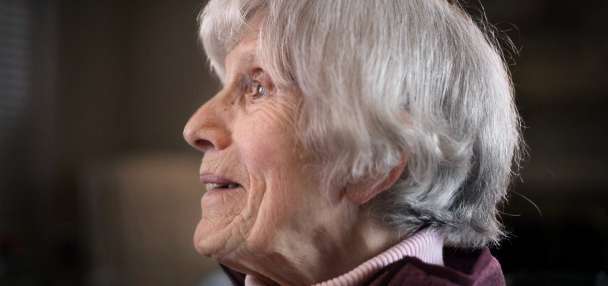
Jeff, who did not want to use his last name, has been a part of the informal bike ride since nearly the beginning. He's known for bringing his speaker to the event, but he's not sure how long he'll keep riding amid issues that have emerged as the event has grown.
"It has changed. ... People get rowdy," he said, referencing people kicking car mirrors or riding on strangers' lawns.
Jeff said he remembers being a rowdy kid, but as he's grown older, he empathizes with people affected by the rambunctiousness.
He's not alone in the feeling. Lucas Matelich said he and fellow bicyclists have had more and more conversations about how the 999 Ride has felt different lately, sometimes straying from its original intent.
"There's this general taste of souring that is pervasive in these conversations," said Matelich, founder of Unplugged Wellness, which hosts all sorts of various local outdoor recreation events.
That's why he gathered bikers, city leaders, transportation planners and police on Monday to discuss the growing challenges and potential solutions that seek to keep the event safe for everyone who participates or comes across the massive bicycle gathering.
Everyone who participated acknowledged there are issues tied to the informal event, even if they also agreed there are limitations to implementing potential solutions.
A community origin
Naresh Kumar is credited with starting the "999 Ride" in 2011, although he told Utah Stories earlier this month that his friend Skylar Hoellein was just as instrumental in getting the event off the ground.
They were avid cyclists and wanted to celebrate the activity with others, so they wanted to gather a bunch of bikers at the corner of 900 South and 900 East at 9 p.m. for a community ride through the city.
It's been a summer tradition every Thursday evening ever since. Riders gather at the corner and then ride in whatever direction they feel that night.
Jeff remembers encountering the bikers while walking his dog in Sugar House during one of the nights 14 years ago. By then it had taken off, bringing together three blocks full of bikes. He asked the riders what they were doing, and they explained it was a social bike ride bringing together neighbors and families.
"It was really cool," he recalled.
The following week, Jeff joined them, bringing along a Bose speaker that he placed in a cup holder. He's basically been a staple of the ride ever since, with the speaker only getting bigger and louder with time.
Growing safety concerns
The weekly ride has also only gotten bigger and louder. Salt Lake City police estimate it's gathered as many as 800 people this year, but some have estimated it has reached over 1,000 riders at points.
People have had mixed feelings about that. While it has remained a communal gathering, one that brings back riders old and new every week, it's not uncommon to find social media posts every Thursday from confused motorists caught up in the traffic jam.
There have also been safety concerns beyond blocked intersections. Vandalism, disorderly conduct, loitering and assaults have occurred, prompting police to increase enforcement this year. A rider was hit and killed by a FrontRunner train in 2018, but those who have participated say they fear that something worse could happen on the roads on the wrong night.
"That's my worry," Jeff said.
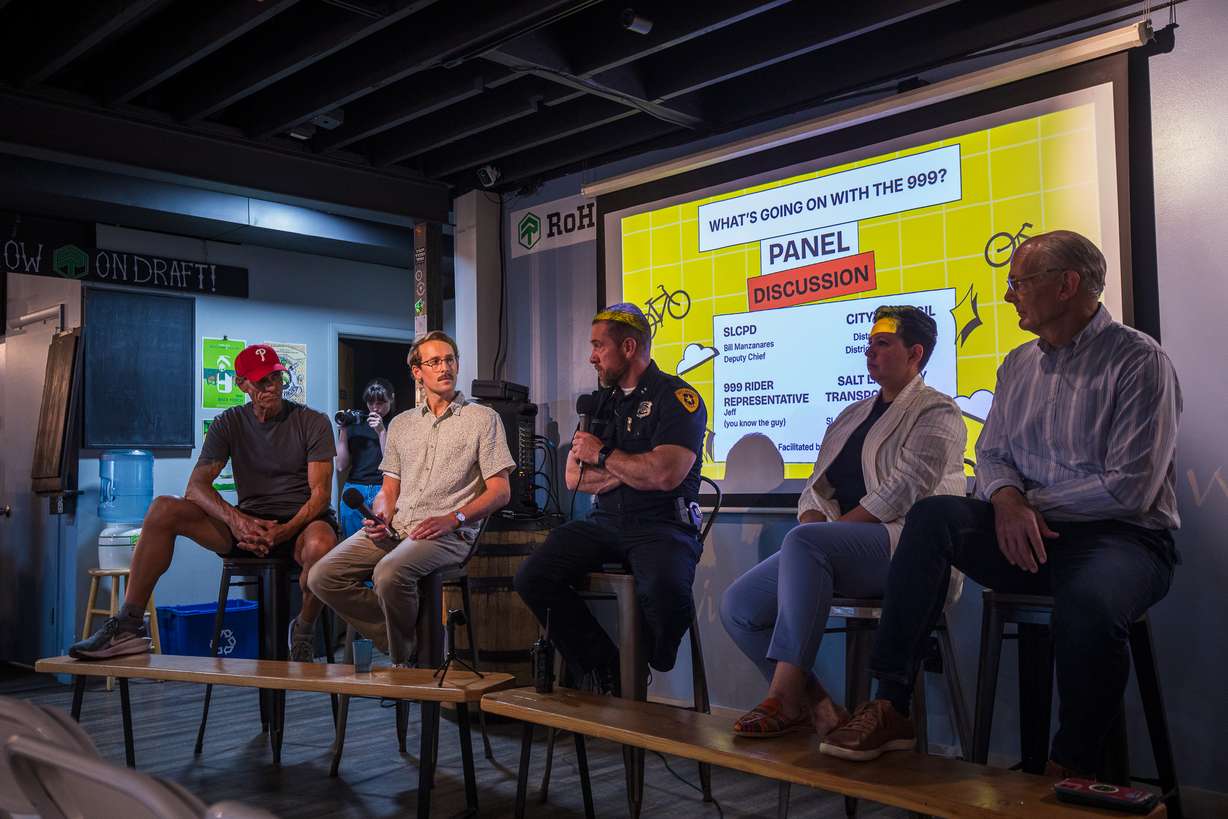
Others who attended Monday's event say they feel just as threatened by vehicular traffic, and not everyone has been a fan of how police have used drones and other equipment to track riders, noting that only a small percentage of riders are causing problems. A heckler even interrupted Jeff at one point as he voiced support of some of the city's recent police tactics.
Many feel there aren't many safe options to ride bicycles safely, which is likely why the 999 Ride has gained popularity, Matelich said. It's a counterculture response to automobile-heavy roads.
But he believes not everyone who participates has handled that frustration appropriately, sparking Monday's discussion.
"There's this collective fed-upness within the bike community that then trickles out in unhealthy ways and onto drivers," he told KSL. "I think that is the sourness that we're feeling."
Can concerns be addressed?
Yet, the 999 Ride is difficult to wrangle because there's really no entity that oversees it. Kumar left it over a decade ago, but people still know when and where to meet. It's simultaneously owned by nobody and everybody.
Authorities have tried reaching out to the people who operate a social media account for the ride and people who come to the event early to find a leader to communicate concerns, but they haven't found one, said Salt Lake City Deputy Chief Bill Manzanares.
He insists police aren't trying to stop the event, but they'd like to make sure everyone comes home safely, and properties are left undamaged after it's over.
Some who attended suggested police should help direct traffic, especially near high-traffic sites like 700 East, but with no event organizers, there's nobody to file the paperwork and pay for those costs. It would also pull resources away from other parts of the city every Thursday night, while state laws also prevent organizers from directing traffic themselves, authorities noted.
Dave Iltis, editor and publisher of Cycling West, doubts that anyone would step up to lead the event because of potential liabilities. He suggested that the mayor's office take over control in some capacity, which he said may solve logistical hurdles.
Salt Lake City Mayor Erin Mendenhall, who wasn't at the event, told KSL that the city is aware of the concerns over the 999 Ride, but she said the city has not discussed taking over any operations.
Setting an example
The room ultimately seemed to agree that the best course of action, at least for now, is to have positive role models in the sea of bikers, picking up trash left behind and encouraging riders to follow laws. Having posted routes may also work, helping drivers know what areas to avoid, among other ideas tossed around.
"More volunteers would be helpful, so more people leading the ride, more (high-visibility) vests, more lights being handed out (and) a code of conduct," added Kyle Irvin, a transportation planner for Salt Lake City.
Still, it's unclear if that will weed out any bad apples.
It also doesn't address everyone on the road, said Ian Hamilton, a local bicyclist who came to watch Monday's discussion. He believes future debates will need to include motorists, which might be just as daunting a task to get everyone on the same page.
Having infrastructure that allows both modes to coexist safely is also key in those discussions, he added.
Monday's event, Matelich said, is just the start of the conversation. The ultimate goal is to make the ride enjoyable for all, which is what it was intended to be from the beginning.
"People who care about biking (should be) showing up and being the change they wish to see," he said. "It's a grassroots culture thing."