- Sen. Mike Lee co-authored a bill requiring data centers to cover energy costs.
- Creekstone Energy supports the bill despite increased regulation for its projects.
- The bill aims to prevent costs from being passed to Utah families and businesses.
SALT LAKE CITY — Following months of public backlash against data centers across Utah, Sen. Mike Lee co-authored the Bipartisan American Affordability and Jobs Act of 2026 — which would hold data center developers responsible for energy costs.
Creekstone Energy, the developer of Delta's Gigasite, recently announced that it supports the bill, even though it would heighten regulations for its projects.
"It gives builders the certainty to invest, and it makes sure data centers pay their own way for the infrastructure they require instead of shifting those costs to Utah families and businesses," said Ray Conley, CEO and founder of Creekstone.
What the act would accomplish
The 417-page bill was introduced on Sept. 16 and is awaiting Senate committee votes before it continues to the House.
"We need to make it easier to build, grow, power, and fuel our country. We need to lower the cost of living for American families," said Energy and Natural Resources Chairman Lee on X. "Permitting reform is moving forward."
If approved, it would create a strict "Pay Your Own Way" rule — that means public utilities like Rocky Mountain Power must charge data centers the full cost of both their electricity usage and grid expansions like new power lines and plants. Data centers would also be legally forbidden from shifting these expansion costs onto residential ratepayers or local businesses.
This is one of the main concerns Utahns have been protesting about since data center backlash began earlier this year.
Shon Hiatt, an associate professor at the University of Southern California, told the Economic Development and Workforce Services Interim Committee on Aug. 19 that electricity prices nationwide have risen over the past six years.
In a study, he found that investor-owned utilities, like Rocky Mountain Power, which serves most of Utah, experienced no effect on power prices from data center entry from 2020 to 2025. Hiatt said these companies have the tools necessary to handle a big, new customer without passing the cost onto other consumers.
But that isn't always the case, he said.
Non-investor-owned utilities, he explained, "have no idea how to deal with" new data centers coming in and using so many resources, "so they just raise the prices."
Even for investor-owned utilities like Rocky Mountain Power, Hiatt said this trend in the past may not hold: "I would expect data centers coming in now, especially these larger ones, to have an impact on power prices wholesale."
The bill would allow states to require data centers to build or contract to build their own new power plants — such as wind, solar, geothermal or battery projects. Alternatively, states could require data centers to turn down their electricity usage during peak demand hours.
Aside from energy costs, many Utah leaders have started to question who pays the bill when a data center is driven out of a county.
This new bill would also ensure the protection of citizens on that front.
The document lays out that before a utility builds or upgrades grid infrastructure for a data center, the data center must put up upfront financial guarantees or cash contributions. Additionally, if a data center shuts down, moves or cancels its contract early, it remains legally obligated to keep paying until all the grid infrastructure built for it is completely paid off.
What does it mean for Utah?
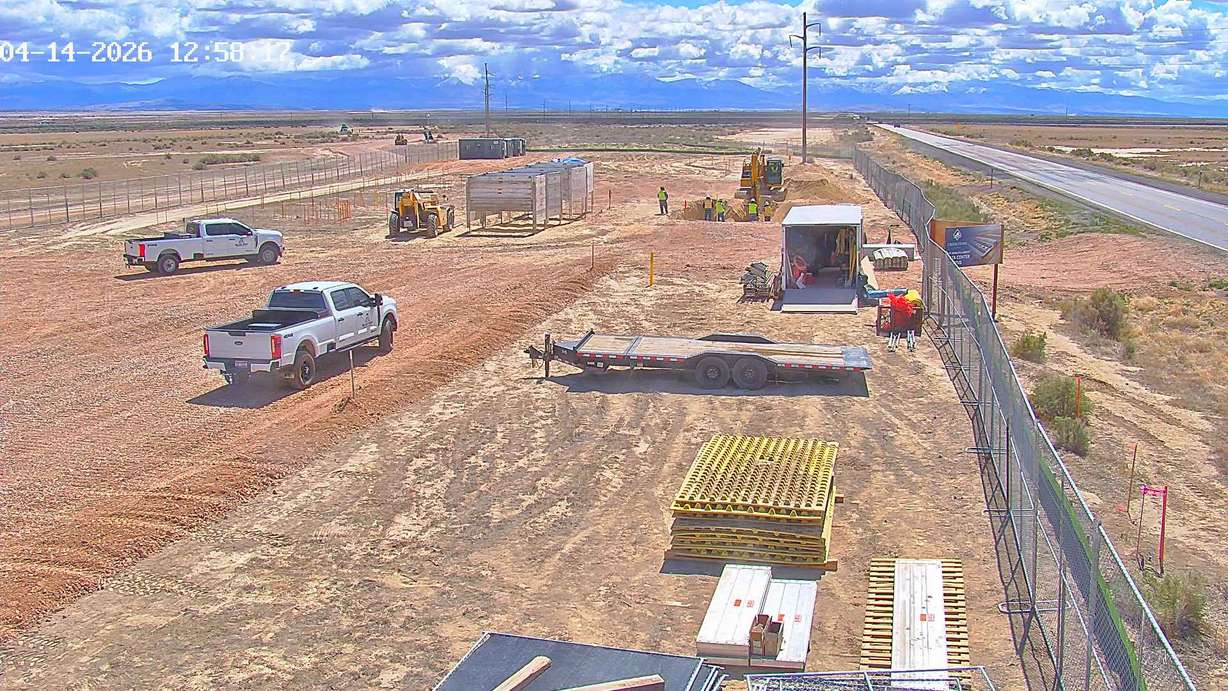
Creekstone Energy is calling its $17 billion data center being built in Millard County, "the largest data center campus in the world."
Yet, the company says it has been planning projects in a way already aligned with the Act.
"Utahns should not have to choose between attracting investment and protecting the people who already live here," said Marty Carpenter, Creekstone Energy's spokesperson. "The objective should be to do both."
The proposed bill would require data centers to pay 100% of their incremental grid expansion costs upfront. Creekstone, however, is developing Millard County's data center site as well as the power infrastructure.
"We are bringing those pieces together at the Delta Gigasite and bringing customers into that integrated campus, rather than simply selling power to a separate data center developer," added Carpenter.
Creekstone's energy platform is a combination of natural gas generation, solar development and storage, which will provide dispatchable power. Carpenter mentioned the company is also evaluating the possibility of adding nuclear projects into the mix.
In Creekstone's case, the bill wouldn't change operations, but would create "greater certainty."
"Federal permitting reform could make it easier to plan and finance the energy infrastructure needed as development proceeds," said Carpenter. "When builders, investors, and customers have a clearer understanding of the review process, they can make commitments with greater confidence."
However, until the act is passed into law — or not — data center developers remain solely responsible for decisions that may impact locals. Carpenter called it an "opportunity" for Utah to build the energy infrastructure.
"That opportunity is strongest when developers take responsibility for the infrastructure they require and communities can understand both the benefits and the obligations involved," Carpenter added.