WASHINGTON — The Trump administration's $8 billion in diesel aid for farmers will be disbursed after the November 3 election, an administration official said on Friday.
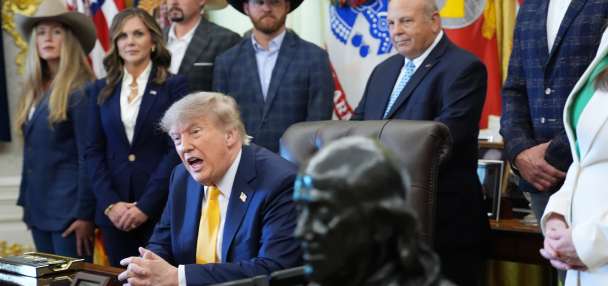
President Donald Trump announced the aid at a rally in Kansas on Monday as part of a suite of costly and politically fraught actions to offer Americans relief from high fuel prices driven up by the war in Iran.
U.S. Department of Agriculture official Richard Fordyce told Reuters the exact timing of payments is still to be determined.
"It's going to be close to the end of the year, would be my guess," Fordyce said. "That is a little unclear at this point."
Farmers have been hard hit this harvest season by record-high diesel prices needed to run their combines, tractors and other equipment. The USDA's Economic Research Service has projected that they will spend nearly $5 billion more on fuel than last year.
Fordyce said payments will be determined using data about farmers' average fuel consumption, but that the agency feels confident in its $8 billion figure.
"We've still got a lot of work ahead of us to be really dialed in on a specific number. We believe that the $8 billion is close," he said.
The money will come from the USDA's Commodity Credit Corporation, a discretionary fund that also paid for $12 billion in tariff relief distributed to farmers earlier this year.
There is enough money in the CCC to pay for the diesel relief, Fordyce said.
Government payments to farmers were already expected to top $47 billion this year. The diesel aid would bring that sum to a record $55.4 billion, exceeding the previous high of $45 billion in 2020, when farmers received pandemic assistance.
Farmers of commodities like soybeans, corn and rice will receive payments based on USDA models of average fuel expenditures, Fordyce said.
The agency is seeking fuel cost data from other types of producers, like fishermen and produce farmers, though they will not need to submit receipts to obtain aid, he said.