'%3e%3cpath%20d='M34.1406%205.85938C30.3906%202.10547%2025.3047%200%2020%200C14.6953%200%209.60938%202.10547%205.85938%205.85938C2.10938%209.61328%200%2014.6953%200%2020C0%2025.3047%202.10547%2030.3906%205.85938%2034.1406C9.61328%2037.8906%2014.6953%2040%2020%2040C25.3047%2040%2030.3906%2037.8945%2034.1406%2034.1406C37.8906%2030.3906%2040%2025.3047%2040%2020C40%2014.6953%2037.8945%209.60938%2034.1406%205.85938ZM37.0117%2023.543H31.1602V13.5391H27.6328V19.9414C28.1211%2020.6914%2028.3711%2021.582%2028.3711%2022.5625V22.625C28.3711%2023.668%2028.1172%2024.6055%2027.6328%2025.4297V26.6094H36.082C33.4883%2032.9375%2027.2891%2037.3789%2020.0039%2037.3789C10.3711%2037.3789%202.62109%2029.6289%202.62109%2020C2.62109%2010.3711%2010.3711%202.62109%2020%202.62109C29.6289%202.62109%2037.3789%2010.3711%2037.3789%2020C37.3789%2021.1484%2037.2617%2022.2656%2037.0508%2023.3477C37.0391%2023.4141%2037.0234%2023.4766%2037.0117%2023.543Z'%20fill='white'/%3e%3cpath%20d='M22.3086%2018.5352C20.4336%2018.125%2019.9531%2017.8398%2019.9766%2017.1836V17.1406C19.9766%2016.6992%2020.3477%2016.2148%2021.4023%2016.2148C22.582%2016.2148%2023.8867%2016.6797%2025.0781%2017.4766L26.8516%2015.0195C25.4453%2013.8906%2023.707%2013.3398%2021.5547%2013.3398C18.5195%2013.3398%2016.4375%2015%2016.4063%2017.4766V17.5352C16.3633%2020.2617%2018.5859%2020.9805%2021.293%2021.6016C23.0391%2021.9766%2023.5703%2022.3164%2023.5703%2022.9609L23.5469%2022.9766C23.5469%2023.3906%2023.2578%2023.7031%2022.7852%2023.8359C22.5742%2023.9062%2022.1289%2023.9727%2021.5156%2023.9727C20.7617%2023.9727%2019.7539%2023.8633%2018.6328%2023.4844C18.0898%2023.2891%2017.4727%2023.0039%2016.8047%2022.6133L20.1406%2026.625C20.2813%2026.6602%2021.0977%2026.8516%2021.7734%2026.8516C25.0039%2026.8516%2027.0859%2025.2461%2027.1094%2022.6328V22.5703C27.1602%2020.1133%2025.2148%2019.1719%2022.3086%2018.5352Z'%20fill='white'/%3e%3cpath%20d='M5.24219%2013.5664V26.6133H8.75391V23.7578L10.2969%2021.9531L14.2031%2026.6133H18.3867L12.3555%2019.5195L17.4023%2013.5664H13.4531L8.75391%2019.0586V13.5664H5.24219Z'%20fill='white'/%3e%3c/g%3e%3cdefs%3e%3cclipPath%20id='clip0_97_2430'%3e%3crect%20width='40'%20height='40'%20fill='white'/%3e%3c/clipPath%3e%3c/defs%3e%3c/svg%3e)




Welcome to a Hotline series examining head coaches under various forms of pressure in the 2026 season. The first installment focused on USC's Lincoln Riley, the second on Washington's Jedd Fisch.
Morgan Scalley spent a quarter century preparing for this moment: Four years as a player, one year as an administrative assistant and another as a graduate assistant, eight as an assistant coach, 10 as defensive coordinator and, of course, the past nine months as head coach — all of it, of course, at Utah.
By our count, he has devoted 9,125 days of his life to the Utes, to preparing for the job he coveted so dearly and now occupies.
It wasn't enough. Given the complexities of the assignment he inherits, a half century of preparation was required.
We're joking, mostly.
It's difficult to imagine any first-time head coach in any job, whether it's the Big 12 or Big Ten, FBS or FCS, NCAA or NFL, being as well-trained as Scalley is to lead the Utes this season.
That said, it's equally difficult to envision a first-time head coach navigating the array of pressure points that await Scalley. From the on-campus dynamics and the evolving national landscape to the rival down the road and the mentor across the country, there are forces conspiring to make Scalley's first season deeply challenging.
Years ago, the term Hot Seat carried a narrow definition for head coaches: Win now or face termination. But the era of revenue sharing, NIL payments and unlimited transfers has changed the job responsibilities and expanded the sources of seat heat.
Scalley is not in danger of losing his job but faces a series of fascinating pressure points traced to a variety of sources. Only one is linked, directly and unequivocally, to Utah's victory total this season.
Allow us to explain:
The internal heat: Scalley didn't take charge of a floundering program in need of new direction, an overhauled culture and a massive influx from the transfer portal.
The Utes won 11 games last season and finished No. 14 in the AP poll, and they did it with a legend at the helm in Kyle Whittingham. In fact, Whittingham averaged nine wins per year for the last decade of his tenure (excluding the COVID-shortened 2020 season).
If Scalley doesn't win nine this season, especially with a manageable schedule and a veteran quarterback, a few eyebrows might rise within the Utah football constituency.
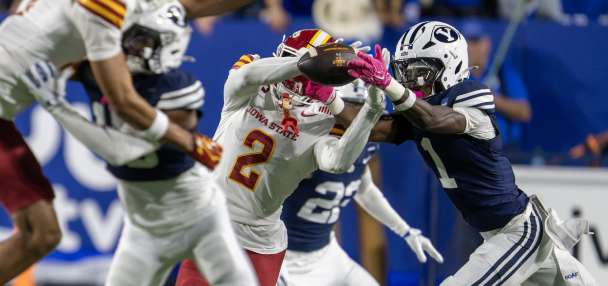
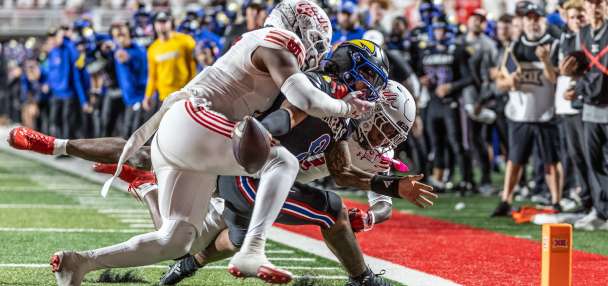
The rivalry heat: Scalley's tenure begins with Utah on tenuous ground relative to BYU.
The Utes dominated the Holy War for much of Whittingham's tenure but have lost three in a row to the Cougars, including a three-point defeat last season that ultimately prevented Utah from appearing in the Big 12 championship game.
What's more, BYU has finished the past two seasons with a better Big 12 record and higher rankings than the Utes. At this point, the more successful program resides in Provo.
One of Scalley's central tasks is to claw back in-state superiority. At the very least, he cannot allow whatever gap exists to become a chasm.
The circumstantial heat: Once Utah released documents related to Whittingham's departure last winter, the optics changed: The longtime coach did not want to step down; the Utes orchestrated the transition that elevated Scalley, who had been the coach-in-waiting.
To the college football public, it quickly became evident that Utah's administration chose to move on from a future Hall of Famer coming off an 11-win season in favor of a rookie head coach.
From our vantage point, Scalley did nothing wrong. But the circumstances of the transition have created next-level pressure to be as successful with the Utes as Whittingham is with Michigan.
The scoreboard Utah fans will be watching this fall is in Ann Arbor.
The what-comes-next heat: While Scalley's first season unfolds on the field, the future of college football will play out in courtrooms across the country, corner offices throughout the SEC and Big Ten and on Capitol Hill, where lawmakers are expected to determine the future of the Protect College Sports Act.
The sport could have an entirely new structure in the 2030s courtesy of either a super league or another round of realignment.
Present success translates to future prosperity.
Like so many programs in the Big 12 and ACC, the Utes must remain relevant and prove they are worthy of inclusion in whatever comes next.
A string of mediocre seasons now could have massive, lasting consequences for Scalley and the program he spent his adult life preparing to lead.