Estimated read time: 2-3 minutes
This archived news story is available only for your personal, non-commercial use. Information in the story may be outdated or superseded by additional information. Reading or replaying the story in its archived form does not constitute a republication of the story.
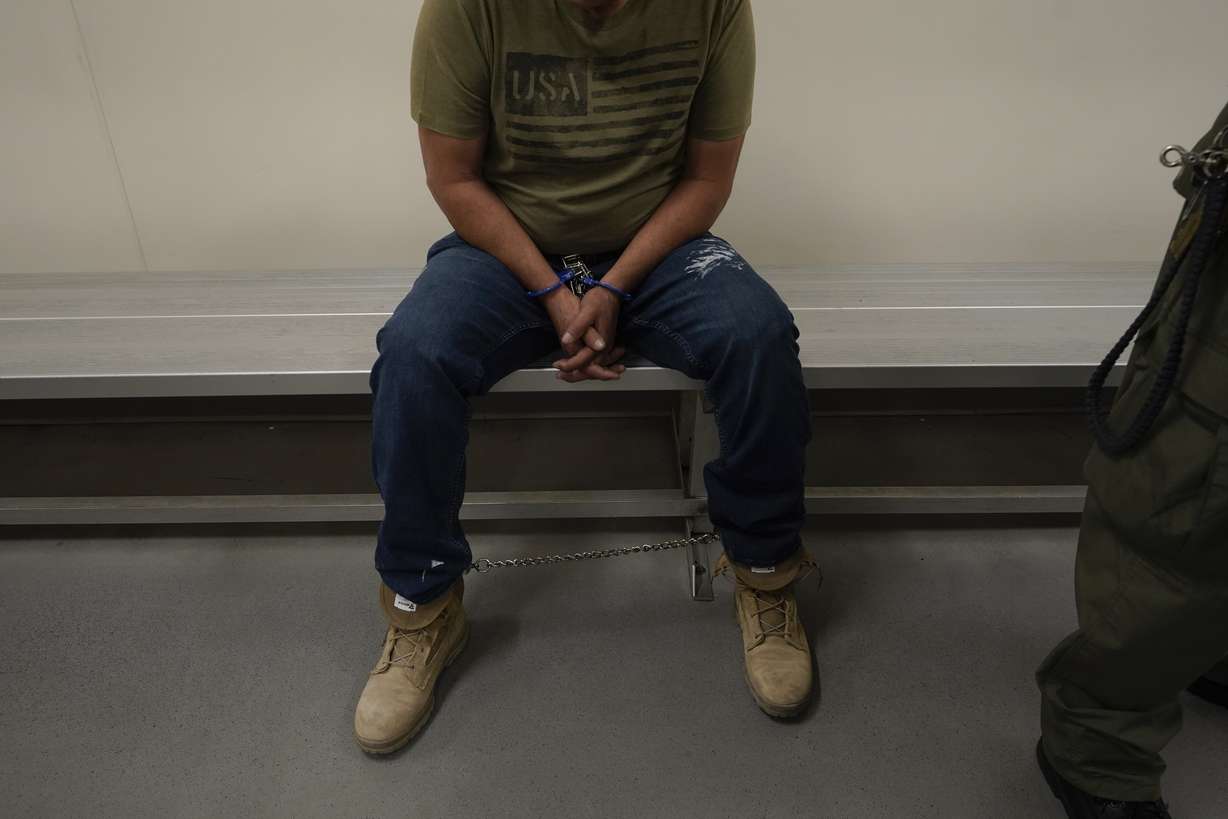
WASHINGTON — The Supreme Court on Friday rejected a Republican-led challenge to a long-blocked Biden administration policy that prioritizes the deportation of immigrants who are deemed to pose the greatest risk to public safety or were picked up at the border.
The justices voted 8-1 to allow the policy to take effect, recognizing there is not enough money or manpower to deport all 11 million or so people who are in the United States illegally.
Louisiana and Texas had argued that federal immigration law requires authorities to detain and deport even those who pose little or no risk.
But the court held that the states lacked the legal standing, or right to sue, in the first place.
Justice Brett Kavanaugh wrote in his opinion for the court that the executive branch has no choice but to prioritize enforcement efforts.
"That is because the executive branch invariably lacks the resources to arrest and prosecute every violator of every law and must constantly react and adjust to the ever-shifting public safety and public welfare needs of the American people," Kavanaugh wrote.
At the center of the case is a September 2021 directive from the Department of Homeland Security that paused deportations unless individuals had committed acts of terrorism, espionage or "egregious threats to public safety." The guidance, issued after Joe Biden became president, updated a Trump-era policy to remove people who were in the country illegally, regardless of criminal history or community ties.
The case displayed a frequently used litigation strategy by Republican attorneys general and other officials that has succeeded in slowing Biden administration initiatives by going to Republican-friendly courts.
Texas and Louisiana claimed in their lawsuit that they would face added costs of having to detain people the federal government might allow to remain free inside the United States, despite their criminal records.
Last year, a federal judge in Texas ordered a nationwide halt to the guidance and a federal appellate panel in New Orleans declined to step in.
A federal appeals court in Cincinnati had earlier overturned a district judge's order that put the policy on hold in a lawsuit filed by Arizona, Ohio and Montana.
But 11 months ago, when the administration asked the Supreme Court to intervene, the justices voted 5-4 to keep the policy on hold. At the same time, the court agreed to hear the case, which was argued in December.
In Friday's decision, Kavanaugh's opinion spoke for just five justices, including Chief Justice John Roberts and the three liberals. Justices Clarence Thomas, Neil Gorsuch and Amy Coney Barrett agreed with the outcome for other reasons.
Justice Samuel Alito filed a solo dissent, writing that the decision improperly favors the president over Congress. "And it renders States already laboring under the effects of massive illegal immigration even more helpless," Alito wrote.