'%3e%3cpath%20d='M34.1406%205.85938C30.3906%202.10547%2025.3047%200%2020%200C14.6953%200%209.60938%202.10547%205.85938%205.85938C2.10938%209.61328%200%2014.6953%200%2020C0%2025.3047%202.10547%2030.3906%205.85938%2034.1406C9.61328%2037.8906%2014.6953%2040%2020%2040C25.3047%2040%2030.3906%2037.8945%2034.1406%2034.1406C37.8906%2030.3906%2040%2025.3047%2040%2020C40%2014.6953%2037.8945%209.60938%2034.1406%205.85938ZM37.0117%2023.543H31.1602V13.5391H27.6328V19.9414C28.1211%2020.6914%2028.3711%2021.582%2028.3711%2022.5625V22.625C28.3711%2023.668%2028.1172%2024.6055%2027.6328%2025.4297V26.6094H36.082C33.4883%2032.9375%2027.2891%2037.3789%2020.0039%2037.3789C10.3711%2037.3789%202.62109%2029.6289%202.62109%2020C2.62109%2010.3711%2010.3711%202.62109%2020%202.62109C29.6289%202.62109%2037.3789%2010.3711%2037.3789%2020C37.3789%2021.1484%2037.2617%2022.2656%2037.0508%2023.3477C37.0391%2023.4141%2037.0234%2023.4766%2037.0117%2023.543Z'%20fill='white'/%3e%3cpath%20d='M22.3086%2018.5352C20.4336%2018.125%2019.9531%2017.8398%2019.9766%2017.1836V17.1406C19.9766%2016.6992%2020.3477%2016.2148%2021.4023%2016.2148C22.582%2016.2148%2023.8867%2016.6797%2025.0781%2017.4766L26.8516%2015.0195C25.4453%2013.8906%2023.707%2013.3398%2021.5547%2013.3398C18.5195%2013.3398%2016.4375%2015%2016.4063%2017.4766V17.5352C16.3633%2020.2617%2018.5859%2020.9805%2021.293%2021.6016C23.0391%2021.9766%2023.5703%2022.3164%2023.5703%2022.9609L23.5469%2022.9766C23.5469%2023.3906%2023.2578%2023.7031%2022.7852%2023.8359C22.5742%2023.9062%2022.1289%2023.9727%2021.5156%2023.9727C20.7617%2023.9727%2019.7539%2023.8633%2018.6328%2023.4844C18.0898%2023.2891%2017.4727%2023.0039%2016.8047%2022.6133L20.1406%2026.625C20.2813%2026.6602%2021.0977%2026.8516%2021.7734%2026.8516C25.0039%2026.8516%2027.0859%2025.2461%2027.1094%2022.6328V22.5703C27.1602%2020.1133%2025.2148%2019.1719%2022.3086%2018.5352Z'%20fill='white'/%3e%3cpath%20d='M5.24219%2013.5664V26.6133H8.75391V23.7578L10.2969%2021.9531L14.2031%2026.6133H18.3867L12.3555%2019.5195L17.4023%2013.5664H13.4531L8.75391%2019.0586V13.5664H5.24219Z'%20fill='white'/%3e%3c/g%3e%3cdefs%3e%3cclipPath%20id='clip0_97_2430'%3e%3crect%20width='40'%20height='40'%20fill='white'/%3e%3c/clipPath%3e%3c/defs%3e%3c/svg%3e)


Estimated read time: 3-4 minutes
SALT LAKE CITY — Utah’s newly formed Government Records Office was designed to streamline the state’s public records appeals process. But a KSL Investigators review shows that while the GRO is actively holding hearings and issuing decisions, the time it takes to resolve appeals has more than doubled — likely due to months without a functioning committee and delays in leadership appointments by the state legislature and the governor.
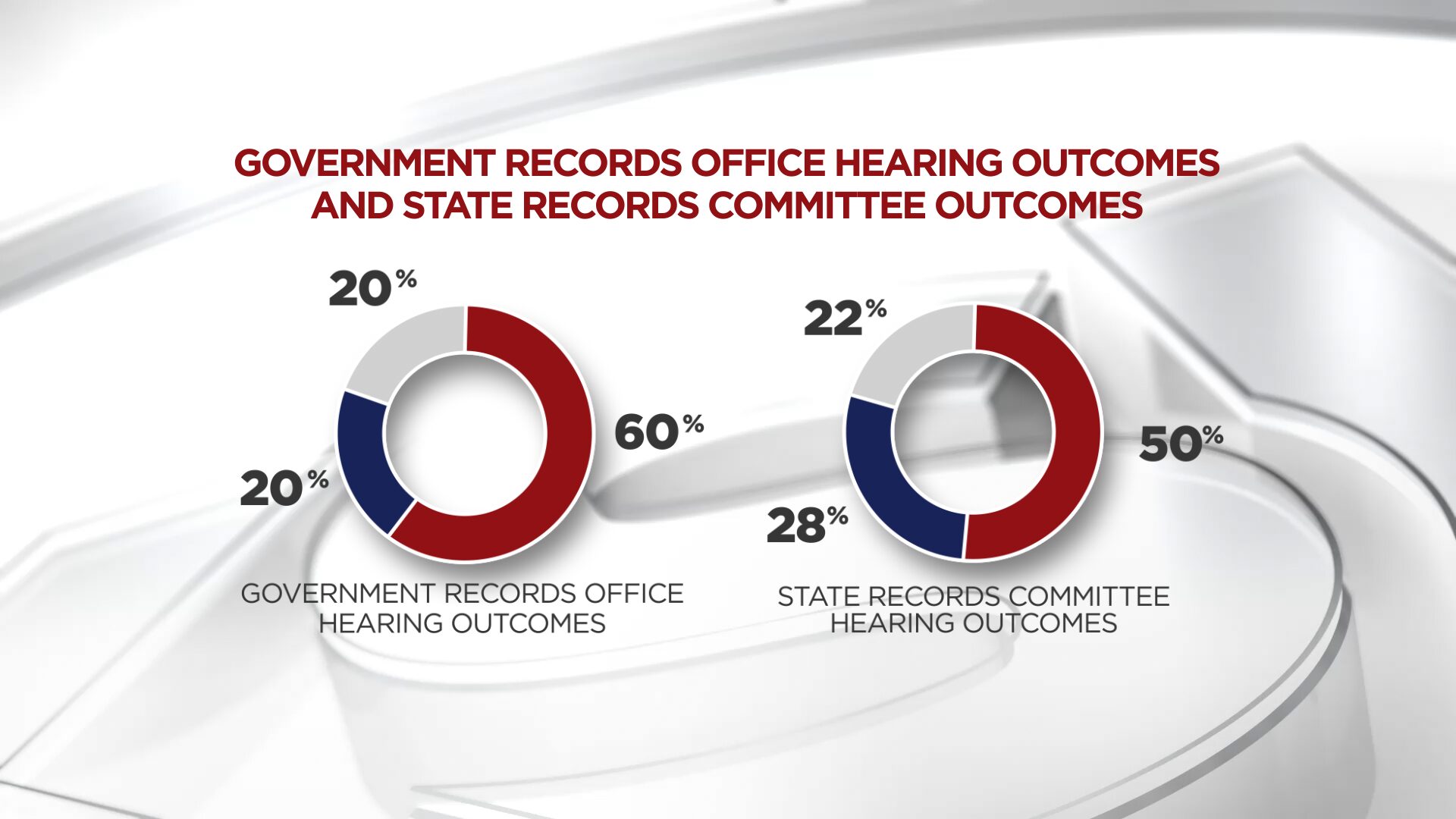
For roughly three months, GRO Director Lonny Pehrson has held weekly hearings. Of the cases that resulted in a written decision after a hearing, 60% were fully denied, while 20% were granted and another 20% received partial relief.
By comparison, the State Records Committee, which the GRO replaced, denied 50% of appeals during the same timeframe in early 2024, granted 28.1% and provided partial relief in 21.9% of cases.
Former SRC member Marie Cornwall cautioned against drawing conclusions too early.
“A larger dataset is needed to have a more accurate understanding of how the GRO is operating,” Cornwall said.
The SRC data was limited to appeals received prior to when it lost quorum and could no longer meet. To ensure a fair comparison, the KSL Investigators excluded dismissed cases and those continued to future meetings, focusing only on appeals that received a written decision after a hearing.
While the Legislature cited delays as the reason for dissolving the SRC, its own actions contributed to a significant backlog. Lawmakers declined to reappoint several SRC members, leaving the committee without a quorum and unable to meet for months. The Governor’s Office then took additional time to appoint a GRO director, further stalling the appeals process.
The result: longer delays. The average time from appeal receipt to written decision under the SRC was about 100 days. Under the GRO, that number has more than doubled to 265 days, according to the latest available data.
“I think it was a case of them not understanding how difficult it was and feeling like the nature of our body made us take longer and that’s just not true,” said Linda Petersen, a former SRC member. “I think it’s just the process itself. There just aren’t any shortcuts.”
Gov. Spencer Cox declined an interview about the increased wait times. But Jeff Hymas, executive communications director for the Department of Government Operations, defended the GRO’s performance:
“In less than five months since the appointment of Director Lonny Pehrson, the state’s Government Records Office (GRO) is making tremendous progress in fulfilling its legislative mandate, working through a backlog of 102 cases (14 in abeyance) inherited from the State Records Committee (SRC) and 76 new appeals received.”
“Utah’s new Government Records Office is clearly delivering on the intent for which it was created by the State Legislature, to provide a more efficient process for resolving GRAMA appeals in a timely and impartial manner.”
The GRO director did not respond to the KSL Investigators’ request for comment. Sen. Mike McKell, who sponsored the legislation to remove the SRC, said he may speak in the future but believes it’s too early for a full analysis.
Have you experienced something you think just isn’t right?The KSL Investigators want to help. Submit your tip at investigates@ksl.com or call 385-707-6153 so we can get working for you.