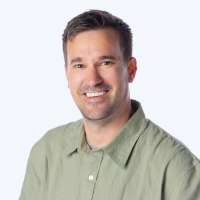

- Kenneth Mace Gift, killed on USS Utah during Pearl Harbor, will be buried in Wisconsin.
- Gift's remains were identified after DNA testing and will be interred Dec. 1.
- The Navy continues efforts to identify remains from the USS Utah attack.
SALT LAKE CITY — A U.S. Navy sailor who was killed aboard the USS Utah during the attack on Pearl Harbor nearly 85 years ago is finally heading home.
Kenneth Mace Gift, originally of Middleburg, Pennsylvania, will be laid to rest with full military honors at Graceland Lutheran Cemetery in Blanchardville, Wisconsin, on Dec. 1, Navy Office of Community Outreach officials announced on Monday.
Gift was a boatswain's mate, 2nd class, on the ship, supervising deck divisions, on Dec. 7, 1941, when the ship was attacked by Japanese forces and sank, killing the 38-year-old and 57 others aboard.
The USS Utah was completed in 1911 and was the first ship in the U.S. military to be named after the Beehive State.
According to Navy historians, it was used to help intercept the Ypiranga, a German-registered cargo steamer that had carried arms for Mexican dictator Victoriano Huerta during the Mexican Revolution, and it provided "covering force" for Allied forces off the coast of Ireland during World War I.
"In 1941, she was given additional guns to enhance her gunnery training mission, and was active with the U.S. Fleet at Pearl Harbor later that year," they wrote in a history of the ship.
By December, the USS Utah was among almost half of the U.S. Pacific Fleet stationed at the Hawaii base. Japanese Empire forces began their attack on the morning of Dec. 7, while the ship was being prepared for an inspection.
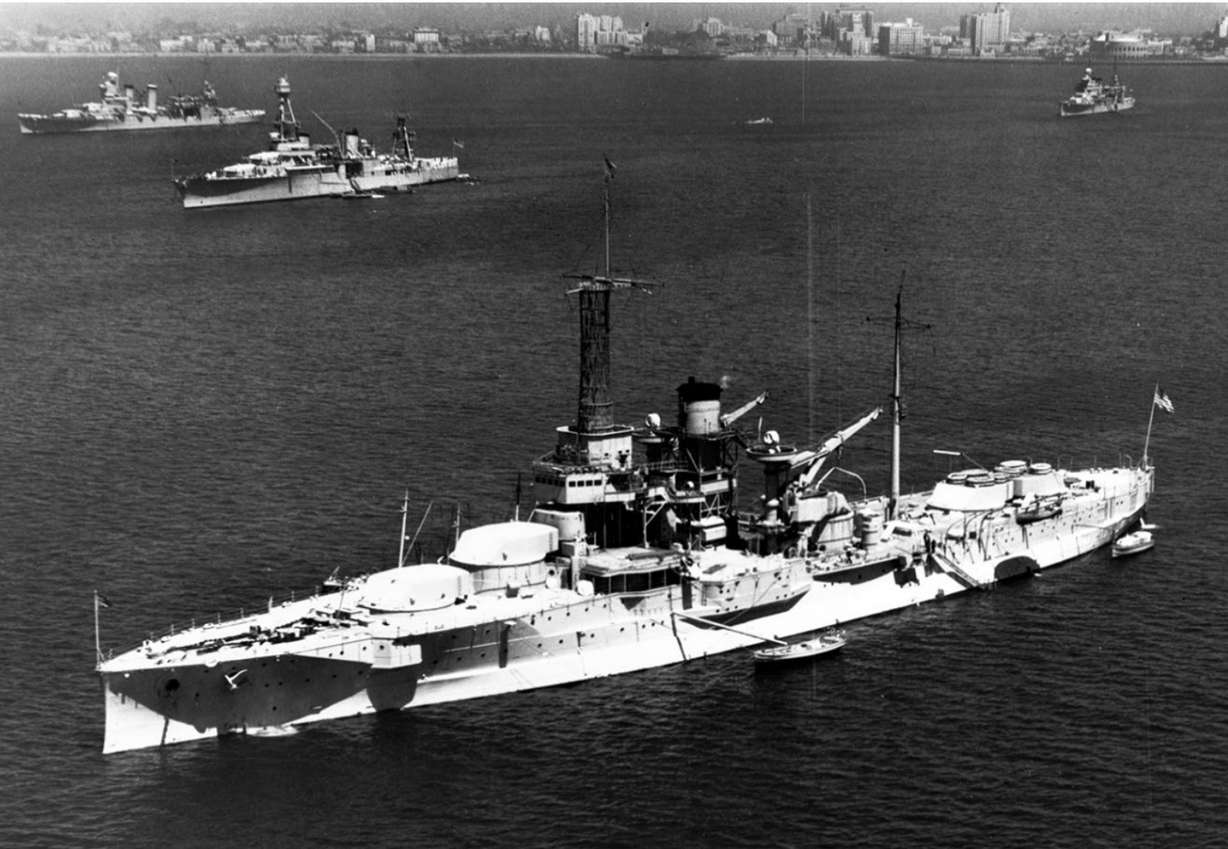
Crews were trying to close its watertight doors, which were open for that inspection, when two torpedoes and a bomb struck it, causing it to flood and tilt onto its left side, and sink.
There was an effort to salvage the USS Utah weeks after the attack, but it proved to be too difficult because of how it capsized, Navy historians noted. It was officially decommissioned in 1944.
Some of its artifacts were eventually removed, and many ended up back in its namesake. The University of Utah, for example, received its bell in the 1960s. It was restored and returned to the university in 2017.
A memorial honoring all who perished aboard the ship was ultimately placed inside the Utah Capitol.
Gift is among the names on the plaque.
His remains were unknowingly buried at Halawa Naval Cemetery in Honolulu in 1944, and then at the National Memorial Cemetery of the Pacific after an effort to identify the remains later in the 1940s, per the Navy.
He was finally listed as accounted for on Dec. 12, 2025. That came after crews exhumed the remains of over two dozen unknown individuals beginning in 2018, said Laurel Freas, a forensic anthropologist and project lead for the Pearl Harbor Ships Project.
DNA tests were conducted at the Armed Forces DNA Identification Laboratory to try to match them to DNA samples submitted by families for reference. Gift's identification marked the 13th confirmed identification since the effort began.
Every time a positive match is discovered, a casualty assistance officer and Navy Casualty caseworker begin reaching out to the sailor's descendants to notify them, said Capt. Kimberly Oelschlager, director of the U.S. Navy Casualty Office.
The Navy offers various final burial options, ranging from reinterment at the National Memorial Cemetery of the Pacific in Hawaii to a military cemetery to a private site. The Navy, Oelschlager says, pays for funeral expenses and honors, as well as family travel for up to three blood family members of the service member.
"To the families, the return of a loved one is proof of the military's ultimate code: 'Never leave a fallen shipmate behind,'" she said.
The work to identify all the remains from those who died on the USS Utah is far from over, Freas added.
The largest hurdle after 85 years, she said, is finding enough family reference samples during DNA testing.
"Not having that DNA information can make it very difficult to demonstrate conclusively that a given set of remains belongs to a specific individual," Freas said.