- Salt Lake City issued over 150 warnings for unruly parties since tightening its code last year.
- Only 26 properties faced repeat violations with fines; one has had multiple fines.
- More adjustments may be needed for ongoing effectiveness, police and city officials said.
SALT LAKE CITY — Over 150 property owners have been warned about having "unruly" parties since Salt Lake City tightened its code last year to address a growing problem.
And since that change, only 26 properties have had repeat violations with $1,000 fines, and only one property — a private lounge offering "late-night or after-hours" parties — has been dinged with multiple fines, according to Tim Cosgrove, a liaison for the Salt Lake City Mayor's Office.
"It is having an effect," he said, as he presented city leaders with new data last week.
Where violations are occurring
Residents of the city's East Central neighborhood, which is located next to the University of Utah, were the most supportive of the change as it was being considered last year.
Salt Lake City reported an increase in loud party citations and calls from residents about large parties that attracted hundreds of people, many of which lingered into the early morning hours with excessive noise, property damage and other concerns. Many of these were occurring near the university.
Under the previous rule, service fees were delivered to party hosts, but Salt Lake City police said it was difficult to determine who the hosts were, especially since many of the parties were at rental properties.
The city, in August 2025, increased the penalty from a $428 service fee to a $1,000 fine, shifting it to the owner of the property police are dispatched to. Property owners receive a warning letter, but are then fined for any violations that occur within 365 days of an incident.
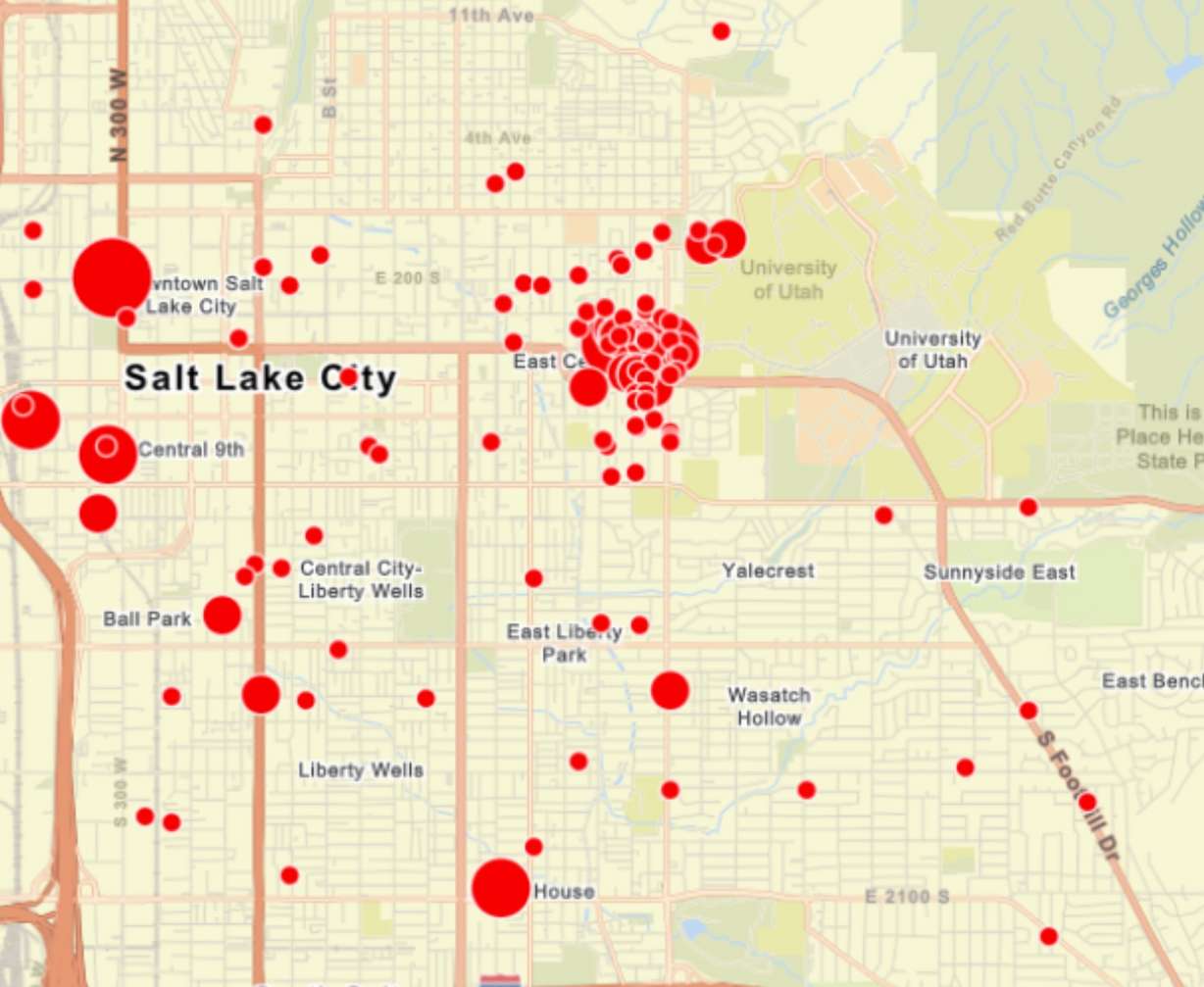
Unsurprisingly, 81 cases, or a little more than half of all 156 warning letters issued, were reported within the East Central neighborhood. Most of those cases were within a few blocks of the university's campus, per a heat map that Salt Lake City police presented during its update on the policy change.
But police are thrilled with the low rate of repeat offenses.
Only 17% have received fines, meaning they haven't had police called to the property again. Six of the 26 have even enrolled in a city program that reduces fines for landlords who take steps to "eliminate code violations and public nuisances."
Just one property owner — a private lounge offering "late-night or after-hours" parties — received a second $1,000 fine during the first year of the new ordinance, per the city.
"The warnings have been incredibly effective," said Salt Lake City police detective Marie Stewart, who also serves as a community liaison for the City Council district that includes the East Central neighborhood. "It's exactly what we wanted to see."
Education has helped, Stewart explained. She said she delivered educational notices to 160 homes near the university that had been identified as party "problem homes" after the rule change, and she believes informing residents about it has helped.
Several landlords tweaked their tenant leasing agreements to account for the city's ordinance change, adding the possibility of eviction in some cases, which may have helped reduce multiple offenses, she added.
Adjustments to come?
While the numbers are encouraging, it's still a work in progress, said City Councilwoman Jennifer Napier-Pearce, whose district covers East Central.
The next few months should offer a better window into the ordinance's success, largely since many of the problem parties align with the university's football season and it will give them two full football seasons, police noted.
We're not there yet, but I think we are getting there.
–Salt Lake City Councilwoman Jennifer Napier-Pearce
Salt Lake City is aware of at least one timing issue based on parties it has been called to. If the city issues a warning for a party and is called back because the party is still violating rules, should that count as the same violation or two in the same day with a $1,000 fine?
That's a question the city could explore, Cosgrove said.
Police and the mayor's office have also considered extending the 365-day rule to two years or "layers" to the law over cleanup speed, as they seek to find ways to reduce unruly parties, he added. It's unclear if and when those could be added to the ordinance.
The data could also better inform similar rules tied to short-term rentals, which is currently in the pipeline, city leaders said.
"I know the neighbors appreciate it. We're not there yet, but I think we are getting there," Napier-Pearce said.