'%3e%3cpath%20d='M34.1406%205.85938C30.3906%202.10547%2025.3047%200%2020%200C14.6953%200%209.60938%202.10547%205.85938%205.85938C2.10938%209.61328%200%2014.6953%200%2020C0%2025.3047%202.10547%2030.3906%205.85938%2034.1406C9.61328%2037.8906%2014.6953%2040%2020%2040C25.3047%2040%2030.3906%2037.8945%2034.1406%2034.1406C37.8906%2030.3906%2040%2025.3047%2040%2020C40%2014.6953%2037.8945%209.60938%2034.1406%205.85938ZM37.0117%2023.543H31.1602V13.5391H27.6328V19.9414C28.1211%2020.6914%2028.3711%2021.582%2028.3711%2022.5625V22.625C28.3711%2023.668%2028.1172%2024.6055%2027.6328%2025.4297V26.6094H36.082C33.4883%2032.9375%2027.2891%2037.3789%2020.0039%2037.3789C10.3711%2037.3789%202.62109%2029.6289%202.62109%2020C2.62109%2010.3711%2010.3711%202.62109%2020%202.62109C29.6289%202.62109%2037.3789%2010.3711%2037.3789%2020C37.3789%2021.1484%2037.2617%2022.2656%2037.0508%2023.3477C37.0391%2023.4141%2037.0234%2023.4766%2037.0117%2023.543Z'%20fill='white'/%3e%3cpath%20d='M22.3086%2018.5352C20.4336%2018.125%2019.9531%2017.8398%2019.9766%2017.1836V17.1406C19.9766%2016.6992%2020.3477%2016.2148%2021.4023%2016.2148C22.582%2016.2148%2023.8867%2016.6797%2025.0781%2017.4766L26.8516%2015.0195C25.4453%2013.8906%2023.707%2013.3398%2021.5547%2013.3398C18.5195%2013.3398%2016.4375%2015%2016.4063%2017.4766V17.5352C16.3633%2020.2617%2018.5859%2020.9805%2021.293%2021.6016C23.0391%2021.9766%2023.5703%2022.3164%2023.5703%2022.9609L23.5469%2022.9766C23.5469%2023.3906%2023.2578%2023.7031%2022.7852%2023.8359C22.5742%2023.9062%2022.1289%2023.9727%2021.5156%2023.9727C20.7617%2023.9727%2019.7539%2023.8633%2018.6328%2023.4844C18.0898%2023.2891%2017.4727%2023.0039%2016.8047%2022.6133L20.1406%2026.625C20.2813%2026.6602%2021.0977%2026.8516%2021.7734%2026.8516C25.0039%2026.8516%2027.0859%2025.2461%2027.1094%2022.6328V22.5703C27.1602%2020.1133%2025.2148%2019.1719%2022.3086%2018.5352Z'%20fill='white'/%3e%3cpath%20d='M5.24219%2013.5664V26.6133H8.75391V23.7578L10.2969%2021.9531L14.2031%2026.6133H18.3867L12.3555%2019.5195L17.4023%2013.5664H13.4531L8.75391%2019.0586V13.5664H5.24219Z'%20fill='white'/%3e%3c/g%3e%3cdefs%3e%3cclipPath%20id='clip0_97_2430'%3e%3crect%20width='40'%20height='40'%20fill='white'/%3e%3c/clipPath%3e%3c/defs%3e%3c/svg%3e)



- The Salt Lake Tabernacle, dedicated in 1875, is a historic landmark in Utah.
- Known for its acoustics, it houses the renowned Tabernacle Choir and organ.
- Constant maintenance preserves its original structure, ensuring future generations experience its legacy.
SALT LAKE CITY — The Salt Lake Tabernacle has a unique shape in the skyline of Salt Lake City.
Rather than a traditional church building adorned with spires, the tabernacle instead boasts a rounded roof on top of its oval footprint — the better for audiences to hear speakers in the days before modern sound systems.
In July of 1847, then-President Brigham Young invited members of The Church of Jesus Christ of Latter-day Saints to build a place to worship together as a united church on Sundays.
The first tabernacle was an open-air bowery, where people were exposed to the elements as they worshiped. It was soon replaced in 1857 with a permanent building.
That building, later called the Old Tabernacle, was used as a "test building," according to Emily Utt, the church's historic sites curator. It let builders practice different techniques with the materials they had on hand.
In the 1860s, a new building was proposed with 10,000 seats to host the church's entire membership at the time. The first meeting in the tabernacle took place in 1867, though the building was not formally dedicated until 1875. The Old Tabernacle was demolished, and the Salt Lake Assembly Hall was built in its place.
While the exterior uses sandstone from Red Butte Canyon, much of the wood used within the tabernacle came from City Creek Canyon. The benches and gallery along the rear of the building were built from pine, as were the interior columns that were painted to look like red marble.
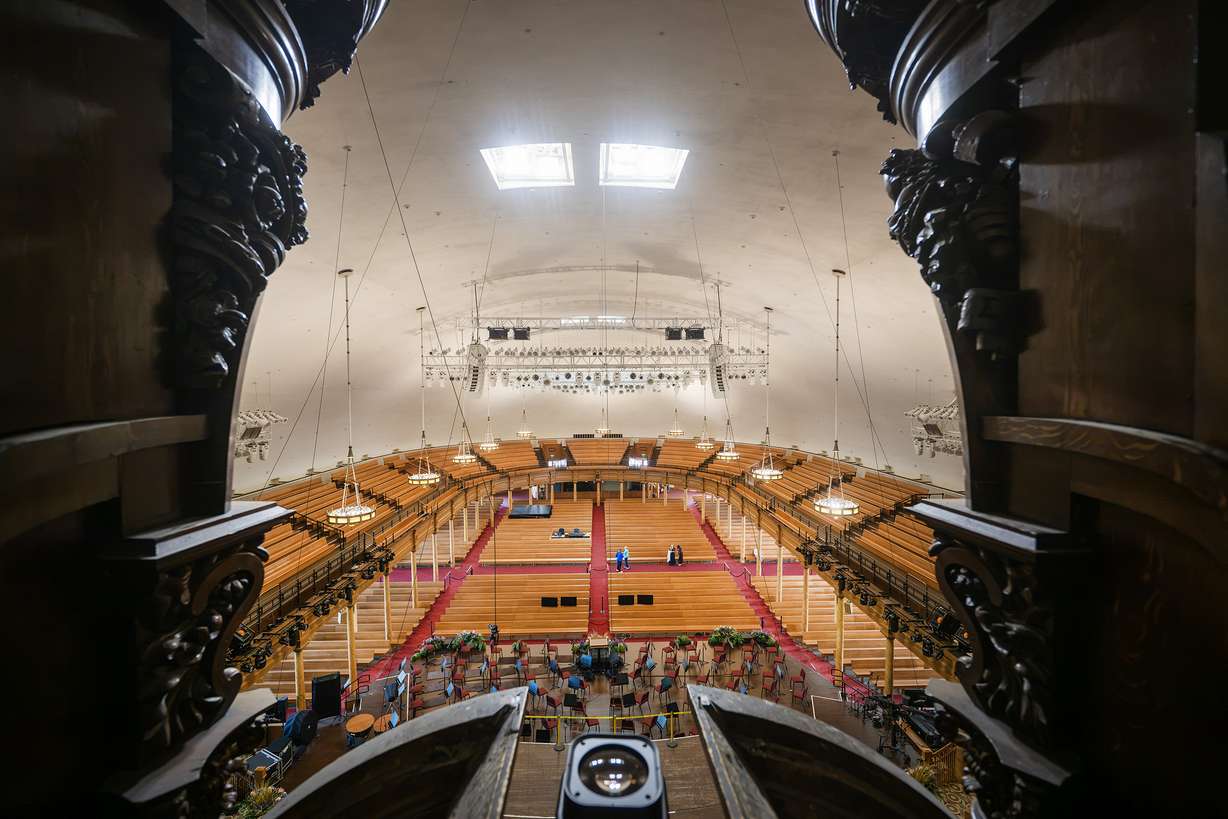
Utt said Young recognized the talents of pioneers from their lives before traveling to Utah and encouraged them to use those skills in the tabernacle's construction.
"I look around this building, and I see the craftsmanship and the desire of individual people to make something beautiful," Utt said.
The building was used for sacrament meetings, General Conference and other events for the church. As the church continued to grow and local meetinghouses became common, the tabernacle's purpose began to evolve into a general gathering place on Temple Square.
Sounds of the tabernacle
One of the most recognizable aspects of the tabernacle is the choir that sings within. The Tabernacle Choir at Temple Square dates back to August of 1847, when a small choir performed at a church conference. Over the years, it grew to include 360 singers.
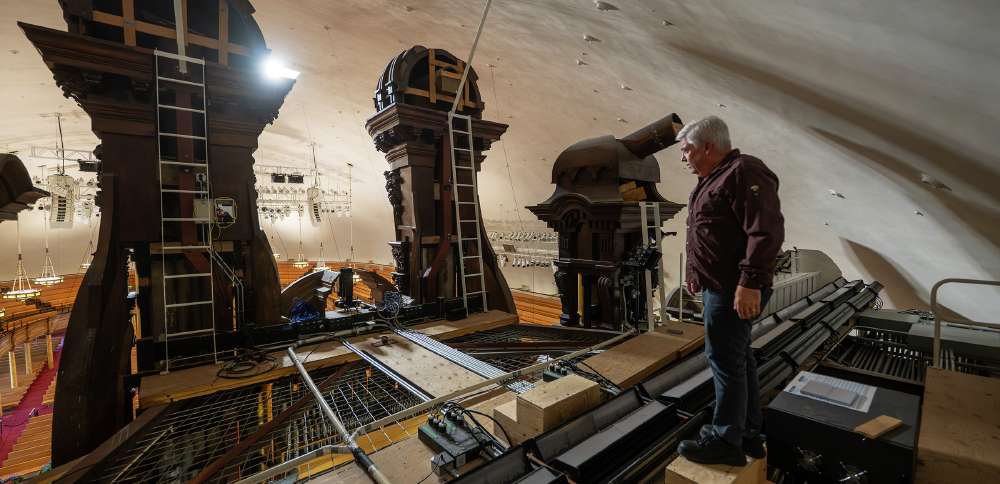
The choir made its home within the tabernacle, where it has been accompanied by a massive organ boasting more than 11,600 pipes. The acoustics transformed the voices and music into something that has become the defining feature of the choir. Utt said the building itself is the 361st choir member.
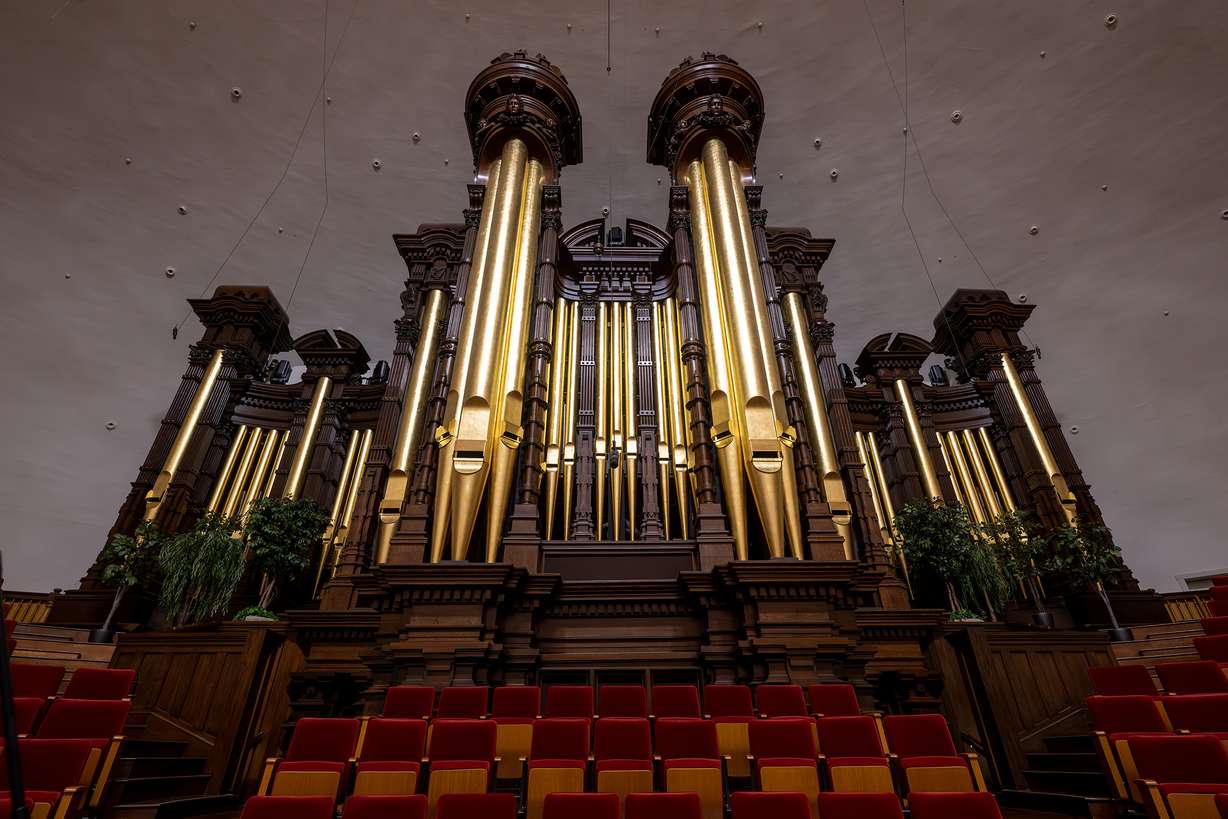
"This building is really known for the choir," Utt said. "Some of the guest musicians call it, like, this wall of sound that just comes out and hits them from this building. So I love to come in here and listen to the choir because you get that sense of this community of people coming together."
Guest organists are invited to play on the tabernacle's organ. The Salt Lake Tabernacle also co-hosts the annual Organ Fest event with the Cathedral of the Madeleine.
Dating back to the 1870s, people inside the building could hear pins echoing as they were dropped, thanks to the building's acoustics. Missionaries now perform a similar demonstration daily for thousands of visitors.
During renovations, engineers had the chance to upgrade the ceiling acoustics to modern standards. However, Sean McFarland, the church's chief broadcasting engineer, said the ceilings were restored to their original, hand-smoothed design.
"Great pains have been taken to make sure you can still see the pioneer handiwork," McFarland said.
Constant care
According to Utt, the building is almost 95% original to the 1800s. Many of the struts used in the ceiling are still wrapped in the original rawhide strips used to seal split beams in place.
Modernization efforts for the building, including adding steel beams inside the sandstone pillars and securing the roof to the pillars, were completed in 2005. However, McFarland said those efforts were largely for seismic stabilization.
"The actual original pioneer structure is still in place," he said. "The sandstone columns around the building, they're still holding it up."
The building requires a team of workers to constantly maintain it. The tabernacle needs daily cleaning due to the many tourists who visit the building, along with constant repairs that come from using a building from the 1800s.
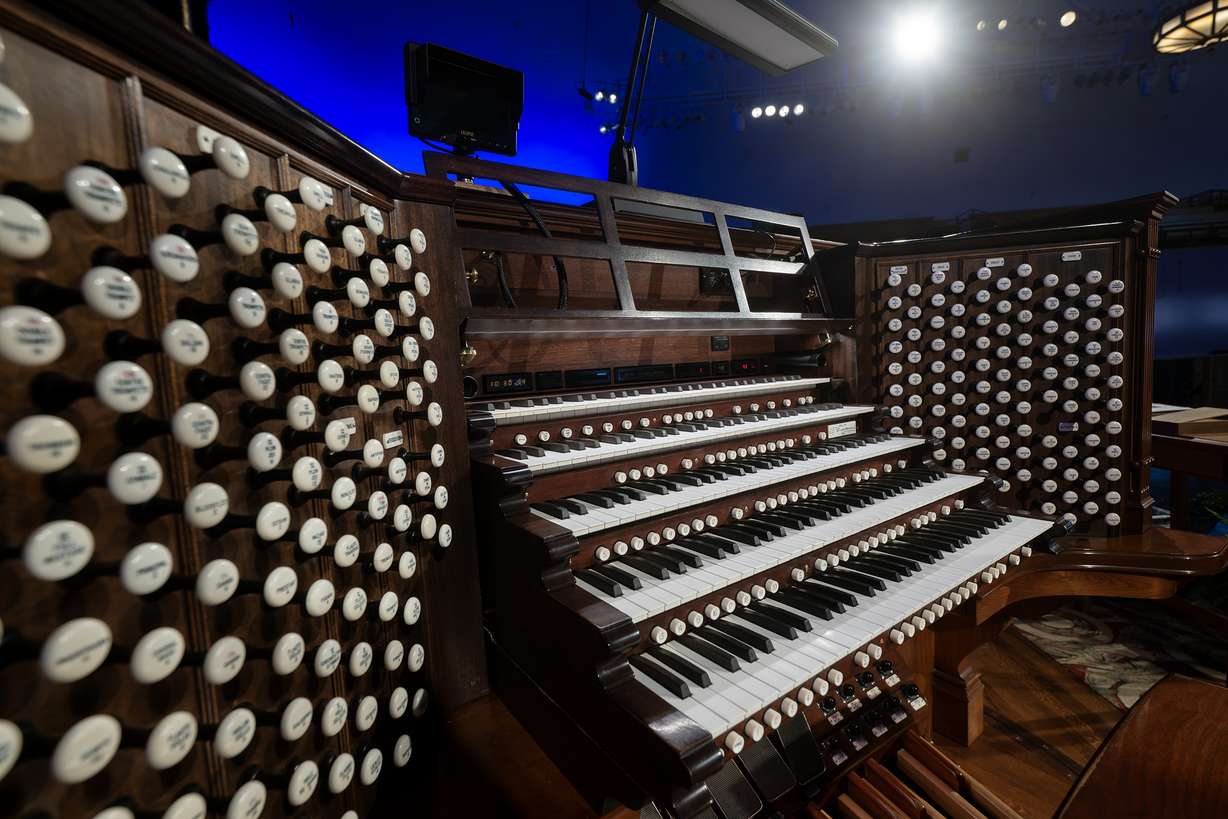
Utt said the metal pipes expand and contract with the temperature and humidity outside, prompting tuners to go in and adjust the pipes. She recalled multiple times when a tuner cut her off mid-sentence to run to the organ and adjust a specific pipe back into tune.
"It's a complicated dance between all these departments," Utt said.
Additionally, the current organ control panels were installed in the 1940s, and several of the connections have failed. The tabernacle is currently working on upgrading those controls to modern standards. While the organ still plays, Utt said some of the pipes have not worked since 1948.
"The organ itself has not been playing at its full, robust capacity for 60 years, 70 years. And so this project right now is bringing sound back that you haven't heard in decades," Utt said.
Despite the current challenges, Utt said caring for the building is a labor of love for her and the other caretakers. She still wants the building to be around for the next 100 years to allow future generations to experience the same sound that the pioneers did in the 1870s.
"I don't want to be the person who neglected something that others gave everything for," she said.