'%3e%3cpath%20d='M34.1406%205.85938C30.3906%202.10547%2025.3047%200%2020%200C14.6953%200%209.60938%202.10547%205.85938%205.85938C2.10938%209.61328%200%2014.6953%200%2020C0%2025.3047%202.10547%2030.3906%205.85938%2034.1406C9.61328%2037.8906%2014.6953%2040%2020%2040C25.3047%2040%2030.3906%2037.8945%2034.1406%2034.1406C37.8906%2030.3906%2040%2025.3047%2040%2020C40%2014.6953%2037.8945%209.60938%2034.1406%205.85938ZM37.0117%2023.543H31.1602V13.5391H27.6328V19.9414C28.1211%2020.6914%2028.3711%2021.582%2028.3711%2022.5625V22.625C28.3711%2023.668%2028.1172%2024.6055%2027.6328%2025.4297V26.6094H36.082C33.4883%2032.9375%2027.2891%2037.3789%2020.0039%2037.3789C10.3711%2037.3789%202.62109%2029.6289%202.62109%2020C2.62109%2010.3711%2010.3711%202.62109%2020%202.62109C29.6289%202.62109%2037.3789%2010.3711%2037.3789%2020C37.3789%2021.1484%2037.2617%2022.2656%2037.0508%2023.3477C37.0391%2023.4141%2037.0234%2023.4766%2037.0117%2023.543Z'%20fill='white'/%3e%3cpath%20d='M22.3086%2018.5352C20.4336%2018.125%2019.9531%2017.8398%2019.9766%2017.1836V17.1406C19.9766%2016.6992%2020.3477%2016.2148%2021.4023%2016.2148C22.582%2016.2148%2023.8867%2016.6797%2025.0781%2017.4766L26.8516%2015.0195C25.4453%2013.8906%2023.707%2013.3398%2021.5547%2013.3398C18.5195%2013.3398%2016.4375%2015%2016.4063%2017.4766V17.5352C16.3633%2020.2617%2018.5859%2020.9805%2021.293%2021.6016C23.0391%2021.9766%2023.5703%2022.3164%2023.5703%2022.9609L23.5469%2022.9766C23.5469%2023.3906%2023.2578%2023.7031%2022.7852%2023.8359C22.5742%2023.9062%2022.1289%2023.9727%2021.5156%2023.9727C20.7617%2023.9727%2019.7539%2023.8633%2018.6328%2023.4844C18.0898%2023.2891%2017.4727%2023.0039%2016.8047%2022.6133L20.1406%2026.625C20.2813%2026.6602%2021.0977%2026.8516%2021.7734%2026.8516C25.0039%2026.8516%2027.0859%2025.2461%2027.1094%2022.6328V22.5703C27.1602%2020.1133%2025.2148%2019.1719%2022.3086%2018.5352Z'%20fill='white'/%3e%3cpath%20d='M5.24219%2013.5664V26.6133H8.75391V23.7578L10.2969%2021.9531L14.2031%2026.6133H18.3867L12.3555%2019.5195L17.4023%2013.5664H13.4531L8.75391%2019.0586V13.5664H5.24219Z'%20fill='white'/%3e%3c/g%3e%3cdefs%3e%3cclipPath%20id='clip0_97_2430'%3e%3crect%20width='40'%20height='40'%20fill='white'/%3e%3c/clipPath%3e%3c/defs%3e%3c/svg%3e)


Estimated read time: 4-5 minutes
- Barbara Jensen's Herriman condo suffered $25K damage from sewer backups.
- The HOA claims it's not responsible; negligent neighbors caused the issue.
- Utah law requires Jensen to pay a $25K deductible; legal clarity is lacking.
HERRIMAN — It's the stuff of nightmares: something coming up from your sewer line, repeatedly. But for Barbara Jensen, that's her reality.
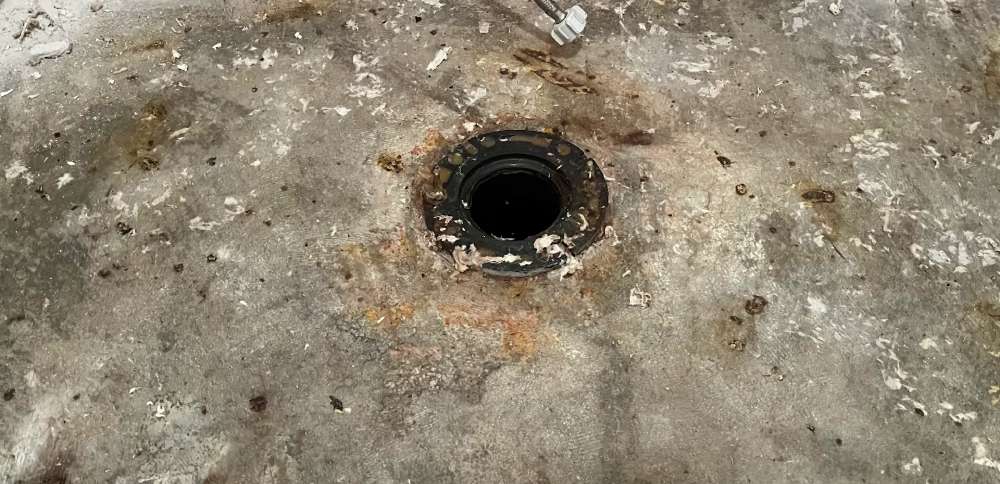
"It came up through the toilet. It came up through the tub," Jensen said of a foul mix of human waste, dirty water and bacteria that spewed up into her Herriman condo.
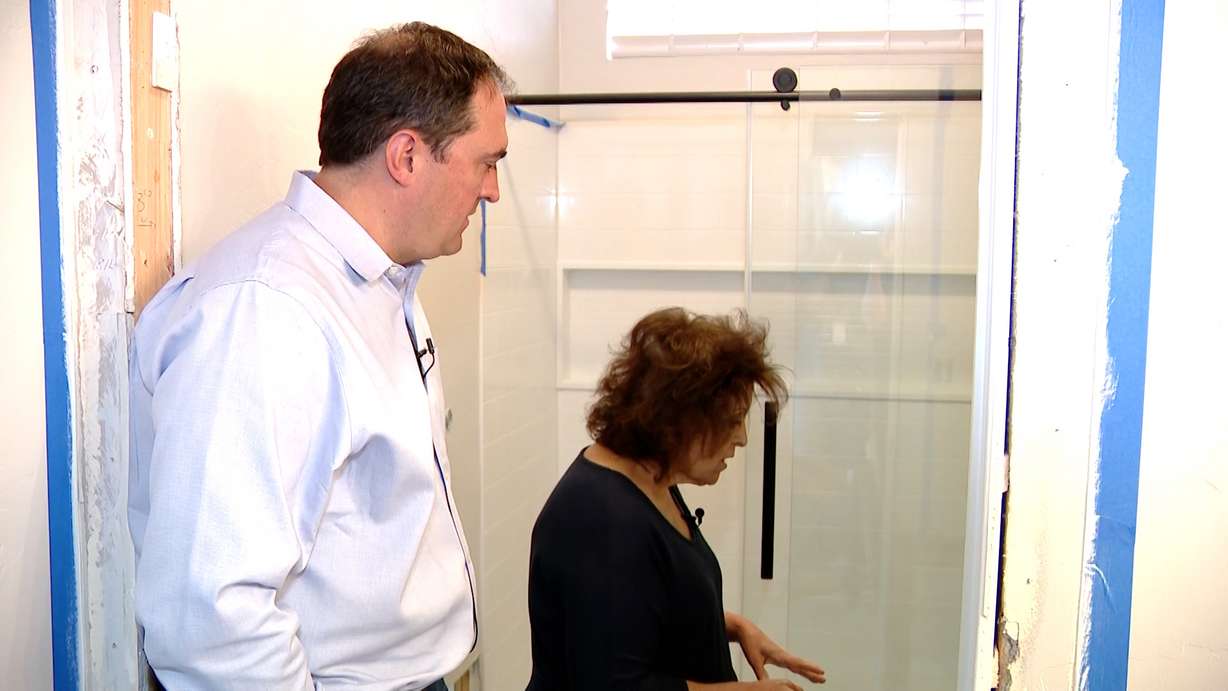
"It went clear down into the bedroom here," she said, pointing down the hallway leading from her bathroom to the bedroom.
A disaster crew cleaned up the mess. Plumbers cleared the line. But then the backup happened again, and eight more times after that, said Jensen.
"I've had to take out two claims on my insurance to pay for the damages," she said.
Damaged walls. Damaged flooring. Damaged cabinetry. Damaged nerves.
"It's a lot of stress," she said.
Jensen's homeowners' association called in plumbers from three separate companies and the sewer district. They told her the cause: neighbors flushing things they shouldn't.
"There's feminine products which is causing it," she said. "Which I don't buy."
Yeah, someone upstream in her building is flushing paper towels and sanitary products down their toilet. These are materials that do no break down like toilet paper. Instead, they absorb liquid, expand and clog up sewer lines.
Jensen shares the line with other condo owners. But the damage and repair bills are hers alone. She estimates that between her and her insurance, more than $25,000 has been paid toward repairs.
"I think the HOA needs to help a little on this," Jensen said.
The HOA disagrees.
Jensen said it acknowledged she doesn't control the shared line but insists it is not responsible for damage caused by another owner misusing their toilet.
And with no permanent solution, she said her insurer is threatening to drop her. Worried about another backup coming down the pipe, she called the KSL Investigators.
"I'm hoping that they'll do something and fix whatever the issue is," Jensen said.
So, we reached out to her HOA, the Eagle View Homeowners Association, to ask all about this.
In an email, an attorney for the HOA told us that its duty "is to repair, maintain, and replace the Common Area." But the plumbers found "the problem causing the backups ... doesn't have anything to do with maintenance, repair or replacement problems."
The attorney noted the cause as "negligent acts of specific owners," and responsibility lies with those owners, not Jensen. "But also, not the Association."
"Thus, the negligent Owner needs to pay for those negligent acts," the lawyer wrote.
Sue the negligent neighbor? Okay. Which one? That's the problem. Jensen said the identity of that neighbor remains a mystery. So, can the HOA really make her shoulder the costs of damage caused to her condo by a shared sewer line?
We took that question to Erin Rider, the director of the state's Office of Homeowners' Association Ombudsman. Unfortunately for Jensen, the answer is, like the stuff that came up from her toilet, murky.
"This is a tricky one," Rider said. "The association is not usually responsible for my private property. But if usage of this common area starts to affect my property ... does that give the association a liability? And that's, I think, where the law is not clear."
Rider said the law does state an HOA is responsible to maintain, repair and replace common areas. The question is whether maintenance includes misuse by owners.
"If it's part of maintenance, then yeah, the association would have a responsibility to make sure that the pipe is being appropriately used," Rider said. "But if it's not — if it's a separate thing — then it's not really the association's responsibility at that point."
Right now, the law doesn't specify if usage and maintenance are separate, Rider said.
So, we asked the HOA why it couldn't use its master insurance policy to repair Jensen's condo, then go after the negligent owner when they're discovered.
They could, the HOA's attorney told us. But Jensen is required by law to pay the policy's $25,000 deductible.
Utah law backs that up. It states that if a loss occurs, it is covered by the HOA's property insurance; "the unit owner is responsible for the deductible of the association of unit owners."
So, where does this leave Jensen? Well, she can pursue the mystery flusher in court for damages if that person is ever identified. Until then, she'll have to keep absorbing the loss.
That answer is currently unknown, but if there's any silver lining, it might be that she said there hasn't been another backup since we visited her. The HOA stated it has been educating condo owners about what can and cannot be flushed down the pipes.