'%3e%3cpath%20d='M34.1406%205.85938C30.3906%202.10547%2025.3047%200%2020%200C14.6953%200%209.60938%202.10547%205.85938%205.85938C2.10938%209.61328%200%2014.6953%200%2020C0%2025.3047%202.10547%2030.3906%205.85938%2034.1406C9.61328%2037.8906%2014.6953%2040%2020%2040C25.3047%2040%2030.3906%2037.8945%2034.1406%2034.1406C37.8906%2030.3906%2040%2025.3047%2040%2020C40%2014.6953%2037.8945%209.60938%2034.1406%205.85938ZM37.0117%2023.543H31.1602V13.5391H27.6328V19.9414C28.1211%2020.6914%2028.3711%2021.582%2028.3711%2022.5625V22.625C28.3711%2023.668%2028.1172%2024.6055%2027.6328%2025.4297V26.6094H36.082C33.4883%2032.9375%2027.2891%2037.3789%2020.0039%2037.3789C10.3711%2037.3789%202.62109%2029.6289%202.62109%2020C2.62109%2010.3711%2010.3711%202.62109%2020%202.62109C29.6289%202.62109%2037.3789%2010.3711%2037.3789%2020C37.3789%2021.1484%2037.2617%2022.2656%2037.0508%2023.3477C37.0391%2023.4141%2037.0234%2023.4766%2037.0117%2023.543Z'%20fill='white'/%3e%3cpath%20d='M22.3086%2018.5352C20.4336%2018.125%2019.9531%2017.8398%2019.9766%2017.1836V17.1406C19.9766%2016.6992%2020.3477%2016.2148%2021.4023%2016.2148C22.582%2016.2148%2023.8867%2016.6797%2025.0781%2017.4766L26.8516%2015.0195C25.4453%2013.8906%2023.707%2013.3398%2021.5547%2013.3398C18.5195%2013.3398%2016.4375%2015%2016.4063%2017.4766V17.5352C16.3633%2020.2617%2018.5859%2020.9805%2021.293%2021.6016C23.0391%2021.9766%2023.5703%2022.3164%2023.5703%2022.9609L23.5469%2022.9766C23.5469%2023.3906%2023.2578%2023.7031%2022.7852%2023.8359C22.5742%2023.9062%2022.1289%2023.9727%2021.5156%2023.9727C20.7617%2023.9727%2019.7539%2023.8633%2018.6328%2023.4844C18.0898%2023.2891%2017.4727%2023.0039%2016.8047%2022.6133L20.1406%2026.625C20.2813%2026.6602%2021.0977%2026.8516%2021.7734%2026.8516C25.0039%2026.8516%2027.0859%2025.2461%2027.1094%2022.6328V22.5703C27.1602%2020.1133%2025.2148%2019.1719%2022.3086%2018.5352Z'%20fill='white'/%3e%3cpath%20d='M5.24219%2013.5664V26.6133H8.75391V23.7578L10.2969%2021.9531L14.2031%2026.6133H18.3867L12.3555%2019.5195L17.4023%2013.5664H13.4531L8.75391%2019.0586V13.5664H5.24219Z'%20fill='white'/%3e%3c/g%3e%3cdefs%3e%3cclipPath%20id='clip0_97_2430'%3e%3crect%20width='40'%20height='40'%20fill='white'/%3e%3c/clipPath%3e%3c/defs%3e%3c/svg%3e)


Estimated read time: 4-5 minutes
This archived news story is available only for your personal, non-commercial use. Information in the story may be outdated or superseded by additional information. Reading or replaying the story in its archived form does not constitute a republication of the story.
KHAN YOUNIS, Gaza Strip — The Israeli army severed northern Gaza from the rest of the besieged territory and pounded it with airstrikes Monday, preparing for an expected push by ground forces into the dense confines of Gaza City and an even bloodier phase of the month-old war.
Already, the Palestinian death toll passed 10,000 people, the Health Ministry in Hamas-run Gaza said Monday. The ministry does not distinguish between fighters and civilians. Some 1,400 Israelis have died, mostly civilians killed in the Oct. 7 incursion by Hamas that started the war.
The war has quickly become the deadliest Israeli-Palestinian violence since Israel's establishment 75 years ago, with no end in sight as Israel vows to remove Hamas from power and crush its military capabilities.
Casualties are likely to rise sharply as the war turns to close urban combat. Troops are expected to enter Gaza City soon, Israeli media reported, and Palestinian militants who have had years to prepare are likely to fight street by street, launching ambushes from a vast network of tunnels.
"We're closing in on them," said Lt. Col. Richard Hecht, an Israeli military spokesman. "We've completed our encirclement, separating Hamas strongholds in the north from the south." The military said it struck 450 targets overnight and ground troops took over a Hamas compound.
Several hundred thousand people are believed to remain in the north in the assault's path. The military says a one-way corridor for residents of Gaza City and surrounding areas to flee south remains available. But many are afraid to use the route, part of which is held by Israeli troops.
We're closing in on them.
–Lt. Col. Richard Hecht, Israeli military spokesman
A strike early Monday hit the roof of Gaza City's Shifa Hospital, killing a number of displaced people sheltering on its top floor and destroying solar panels, said Mohamed Zaqout, general manager of all hospitals in Gaza. The panels have been helping keep power on in the facility, which has been reduced to using one generator because of lack of fuel.
Heavy Israeli bombardment overnight hit the Shati refugee camp, a densely built-up district on the Mediterranean coast adjacent to central Gaza City, Palestinians who fled south Monday reported. They said houses in the district were reduced to rubble with unknown numbers of people trapped underneath.
Ghassan Abu Sitta, a surgeon at Shifa Hospital, told The Associated Press the hospital buildings shook all night from the bombardment "and we started getting the bodies and the wounded. It was horrendous."

Around 70% of Gaza's 2.3 million residents have fled their homes since the war began. Food, medicine, fuel and water are running low, and U.N.-run schools-turned-shelters are beyond capacity. Many people are sleeping on the streets outside.
After days of intense diplomacy around the Middle East, U.S. Secretary of State Antony Blinken wrapped up his tour of the region Monday. He said efforts to secure a humanitarian pause, negotiate the hostages' release and plan for a post-Hamas Gaza were still "a work in progress" without pointing to any concrete achievements.
The war has also stoked wider tensions, with Israel and Lebanon's Hezbollah militant group trading fire along the border. In another sign of growing unrest, a Palestinian man stabbed and wounded two members of Israel's paramilitary Border Police in east Jerusalem before being shot dead, according to police and an AP reporter at the scene.
Israel captured east Jerusalem, along with Gaza and the West Bank, in the 1967 Mideast war. The Palestinians want all three territories for a future state. Israel annexed east Jerusalem in a move not recognized by most of the international community; it considers the entire city its capital.
In northern Gaza, a Jordanian military cargo plane air-dropped medical aid to a field hospital, King Abdullah II said early Monday. It appeared to be the first such airdrop of the war, raising the possibility of another avenue for aid delivery besides Egypt's Rafah crossing.
Over 450 trucks carrying aid have been allowed to enter Gaza from Egypt since Oct. 21. But humanitarian workers say the aid is far short of mounting needs.

Some 800,000 people have heeded Israeli military orders to flee to southern Gaza. But Israeli bombardments continue across the territory, and strikes in central and southern Gaza — the purported safe zone — killed dozens of people on Sunday. Israel blames civilian casualties on Hamas, accusing the militants of operating in residential neighborhoods.
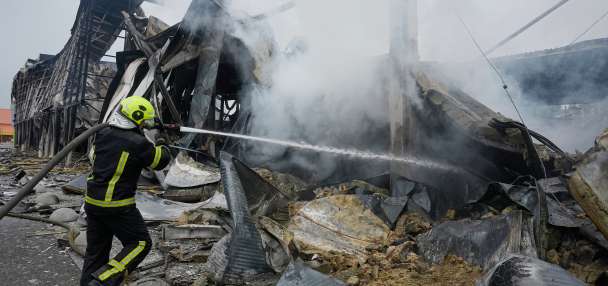
After another strike Monday, in the southern town of Khan Younis, men dug through the rubble with sledgehammers and their bare hands. A young boy caked in dust screamed as he was rolled onto a stretcher and carried away. At least two people were killed, according to an AP reporter at the scene.
Earlier Monday, Palestinians held a mass funeral for 66 people laid out on the ground outside a hospital morgue in the central town of Deir al-Balah. A man with bandages wrapped around his head placed his hand on a child's body and wept.
Contributing: Wafaa Shurafa, Samy Magdy, Amy Teibel, Sam McNeil, Kareem Chehayeb, Bassem Mroue