- Gunmen attacked a church in Karak, Jordan on Friday killing at least 7 people.
- The attack which wounded 40 others was during a funeral at a Greek Orthodox church.
- Jordan declared three days of mourning; investigations are ongoing to find assailants.
JERUSALEM — A survivor of a deadly attack on a church in Jordan described people crawling for their lives and watching the gunmen return to fire more bullets into the dying — as well as at the church facade. The death toll rose to nine on Saturday, a day after the attack, with nearly 40 others wounded.
The motivation was still unknown for the shooting at a Greek Orthodox church in Karak, about 55 miles south of the capital, Amman. Karak is home to a minority Christian population.
There was still no claim of responsibility, and no armed group has been accused of the attack that Jordan's government described as a "terrorist" act.
King Abdullah II directed authorities to respond with "an iron fist" against what he called the outlaws of Islam and anyone attempting to undermine the unity of the Jordanian people.
Friday's attack happened as people had gathered for a funeral. Some people were chatting outside the church when something sounded like an engine backfiring.
"All of a sudden, three masked men appeared, armed with automatic weapons, and began firing indiscriminately at those of us standing outside," witness Saed al-Halaseh recalled.
And "they weren't satisfied with just the initial casualties. They went back and fired on everyone again. They returned to finish off those who had already been hit," he said.
"Even then, they weren't finished; they came and stood right here, firing at the facade of the church, this part right here," he added.
Al-Halaseh described how people he knew were shot in the head or the back as others tried to flee. He dropped to the ground and crawled behind a nearby car, which he said saved him.
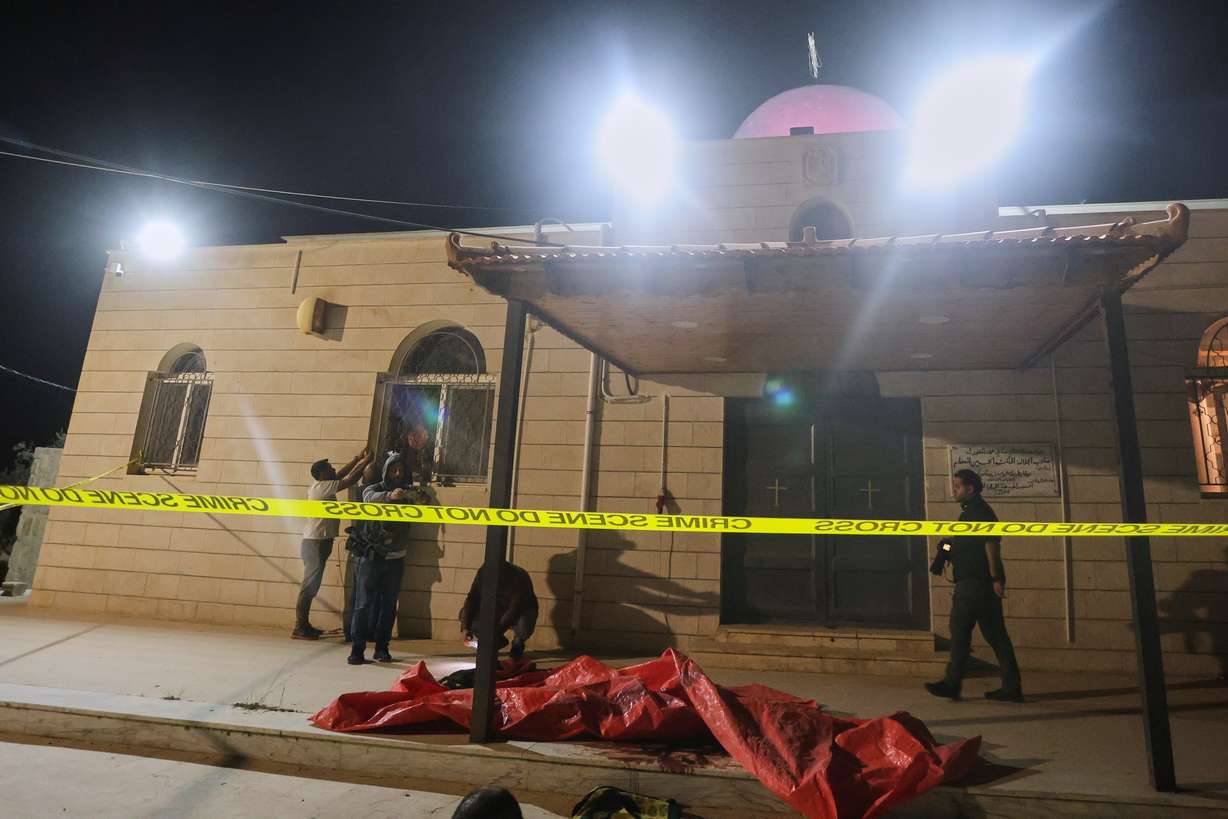
Jordan, and especially Karak, has been seen as a symbol of religious coexistence, al-Halaseh said.
"The sense of security we once had, the very foundation we grew up with, has, sadly, vanished," he added. "They were simply mourners at a funeral. I cannot fathom what the perpetrators could have possibly wanted from them. I don't believe any religion in the world could condone what happened. It was truly a massacre."
Footage broadcast on Jordanian state television showed two gunmen who appear to be holding pistols approaching the church and firing shots. A third man who appears to be holding a semiautomatic rifle then approaches and opens fire, and all three then run toward the church.
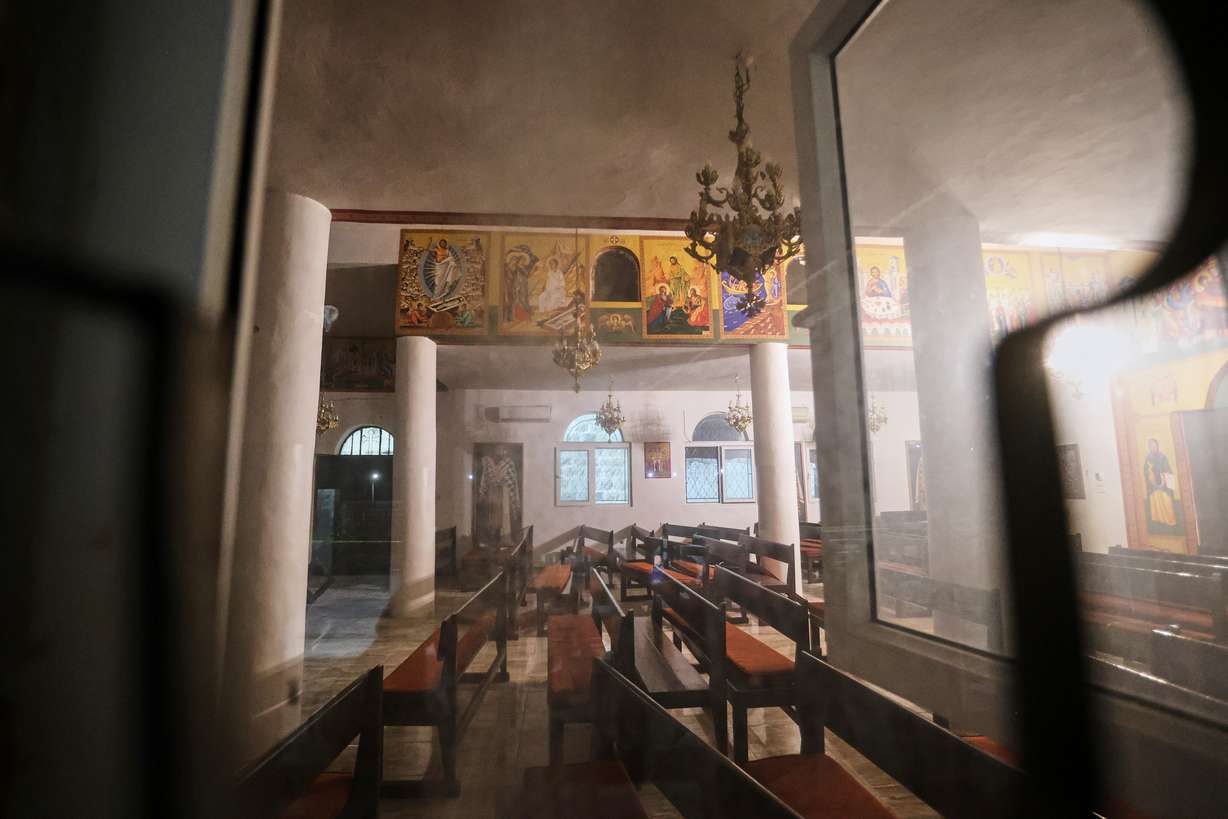
Video footage taken by witnesses shows broken glass and pools of blood on the floor of the church.
Dorgham Halasa, who was among the mourners inside the church, said intense gunfire erupted 15 minutes after the funeral had started, and then people started running. "It was a weird situation, and heavy gunfire," Halasa said.
He did not see the gunmen, but said other people reported seeing four of them. The Associated Press could not independently verify the number of assailants, and Jordan's security services did not immediately release details.
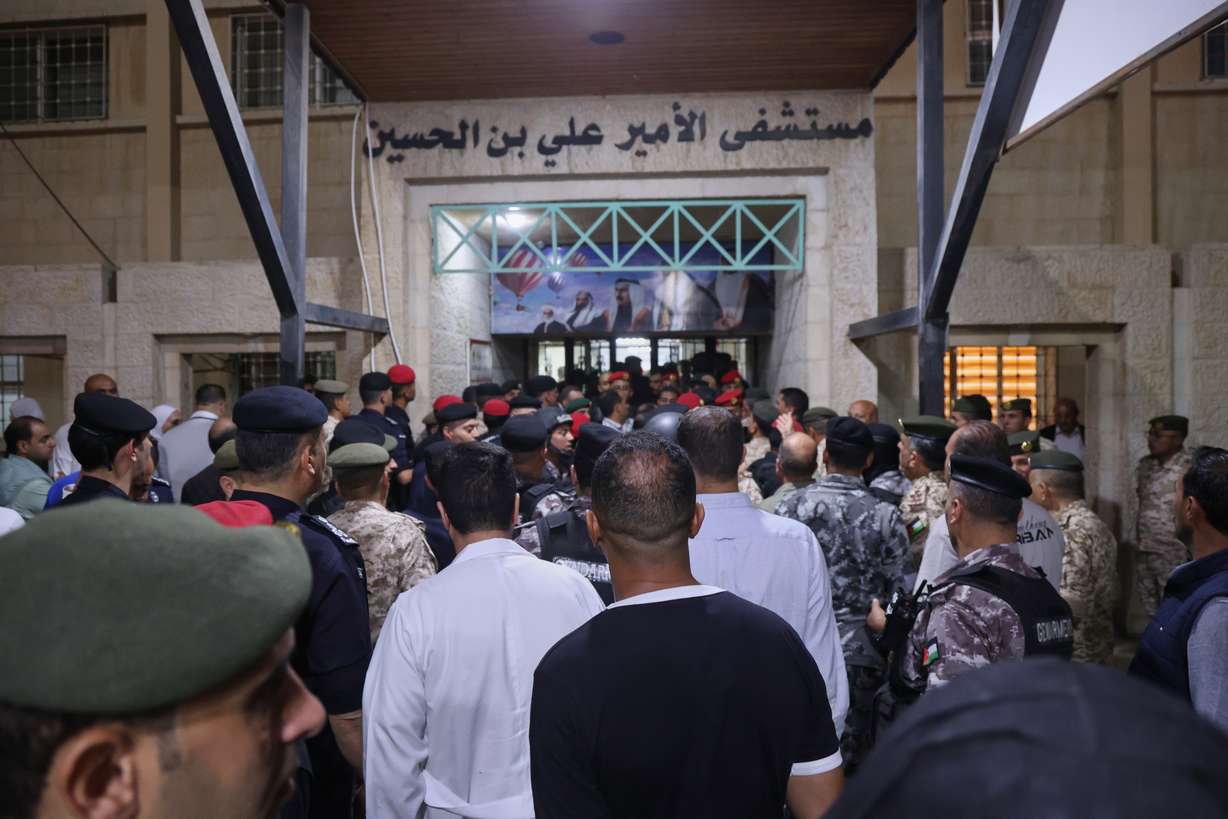
A government statement said that the attack was "carried out by unknown assailants," but didn't say whether any gunmen were captured or killed. It said that "investigations are underway at full speed."
Jordan declared three days of national mourning, according to the kingdom's Petra News Agency.
Karak is home to a minority Christian population.
In 2016, gunmen ambushed police in a series of attacks in Karak, including at a Crusader castle popular with tourists, killing 10 people, including seven officers, and wounding dozens. Jordanian security forces killed those gunmen after a long standoff.
Jordan's Health Minister Ibrahim al-Budour said two of those wounded are in critical condition.
King Abdullah II said on X that Jordan "will confront the terrorist act that targeted Karak with the harshest penalties" and offered his "deepest condolences to the families of the martyrs, and our wishes for recovery to the wounded."
Jordan's Prime Minister Jafar Hassan said during a security meeting in Karak on Friday evening that the attack was a result of terrorist ideology and blind extremism. He said the assailants will be punished and legal measures taken against those who seek to introduce extremism.
Condemnation of the slayings came from around the region, including from Lebanon, Syria, Egypt and Oman.
Ahmed al-Tayeb in Cairo, the grand imam of Al-Azhar, the Sunni Muslim world's foremost religious institution, offered his condolences to the families of victims in Friday's shooting, calling it a "heinous terrorist attack."
Iraqi Foreign Minister Fuad Hussein called his Jordanian counterpart and "affirmed Iraq's solidarity with Jordan in the face of terrorism," Hussein's office said in a statement.
U.N. Secretary-General Antonio Guterres condemned the attack during a funeral as "especially heinous," spokesman Stephane Dujarric said. "The secretary-general also calls for all those responsible to be found and to be held to account."