'%3e%3cpath%20d='M34.1406%205.85938C30.3906%202.10547%2025.3047%200%2020%200C14.6953%200%209.60938%202.10547%205.85938%205.85938C2.10938%209.61328%200%2014.6953%200%2020C0%2025.3047%202.10547%2030.3906%205.85938%2034.1406C9.61328%2037.8906%2014.6953%2040%2020%2040C25.3047%2040%2030.3906%2037.8945%2034.1406%2034.1406C37.8906%2030.3906%2040%2025.3047%2040%2020C40%2014.6953%2037.8945%209.60938%2034.1406%205.85938ZM37.0117%2023.543H31.1602V13.5391H27.6328V19.9414C28.1211%2020.6914%2028.3711%2021.582%2028.3711%2022.5625V22.625C28.3711%2023.668%2028.1172%2024.6055%2027.6328%2025.4297V26.6094H36.082C33.4883%2032.9375%2027.2891%2037.3789%2020.0039%2037.3789C10.3711%2037.3789%202.62109%2029.6289%202.62109%2020C2.62109%2010.3711%2010.3711%202.62109%2020%202.62109C29.6289%202.62109%2037.3789%2010.3711%2037.3789%2020C37.3789%2021.1484%2037.2617%2022.2656%2037.0508%2023.3477C37.0391%2023.4141%2037.0234%2023.4766%2037.0117%2023.543Z'%20fill='white'/%3e%3cpath%20d='M22.3086%2018.5352C20.4336%2018.125%2019.9531%2017.8398%2019.9766%2017.1836V17.1406C19.9766%2016.6992%2020.3477%2016.2148%2021.4023%2016.2148C22.582%2016.2148%2023.8867%2016.6797%2025.0781%2017.4766L26.8516%2015.0195C25.4453%2013.8906%2023.707%2013.3398%2021.5547%2013.3398C18.5195%2013.3398%2016.4375%2015%2016.4063%2017.4766V17.5352C16.3633%2020.2617%2018.5859%2020.9805%2021.293%2021.6016C23.0391%2021.9766%2023.5703%2022.3164%2023.5703%2022.9609L23.5469%2022.9766C23.5469%2023.3906%2023.2578%2023.7031%2022.7852%2023.8359C22.5742%2023.9062%2022.1289%2023.9727%2021.5156%2023.9727C20.7617%2023.9727%2019.7539%2023.8633%2018.6328%2023.4844C18.0898%2023.2891%2017.4727%2023.0039%2016.8047%2022.6133L20.1406%2026.625C20.2813%2026.6602%2021.0977%2026.8516%2021.7734%2026.8516C25.0039%2026.8516%2027.0859%2025.2461%2027.1094%2022.6328V22.5703C27.1602%2020.1133%2025.2148%2019.1719%2022.3086%2018.5352Z'%20fill='white'/%3e%3cpath%20d='M5.24219%2013.5664V26.6133H8.75391V23.7578L10.2969%2021.9531L14.2031%2026.6133H18.3867L12.3555%2019.5195L17.4023%2013.5664H13.4531L8.75391%2019.0586V13.5664H5.24219Z'%20fill='white'/%3e%3c/g%3e%3cdefs%3e%3cclipPath%20id='clip0_97_2430'%3e%3crect%20width='40'%20height='40'%20fill='white'/%3e%3c/clipPath%3e%3c/defs%3e%3c/svg%3e)


Estimated read time: 5-6 minutes

This article about kitchen & dining room lighting is sponsored by Lighting Design, winners of the 2025 Showroom of the Year Award by Dallas Market Center.
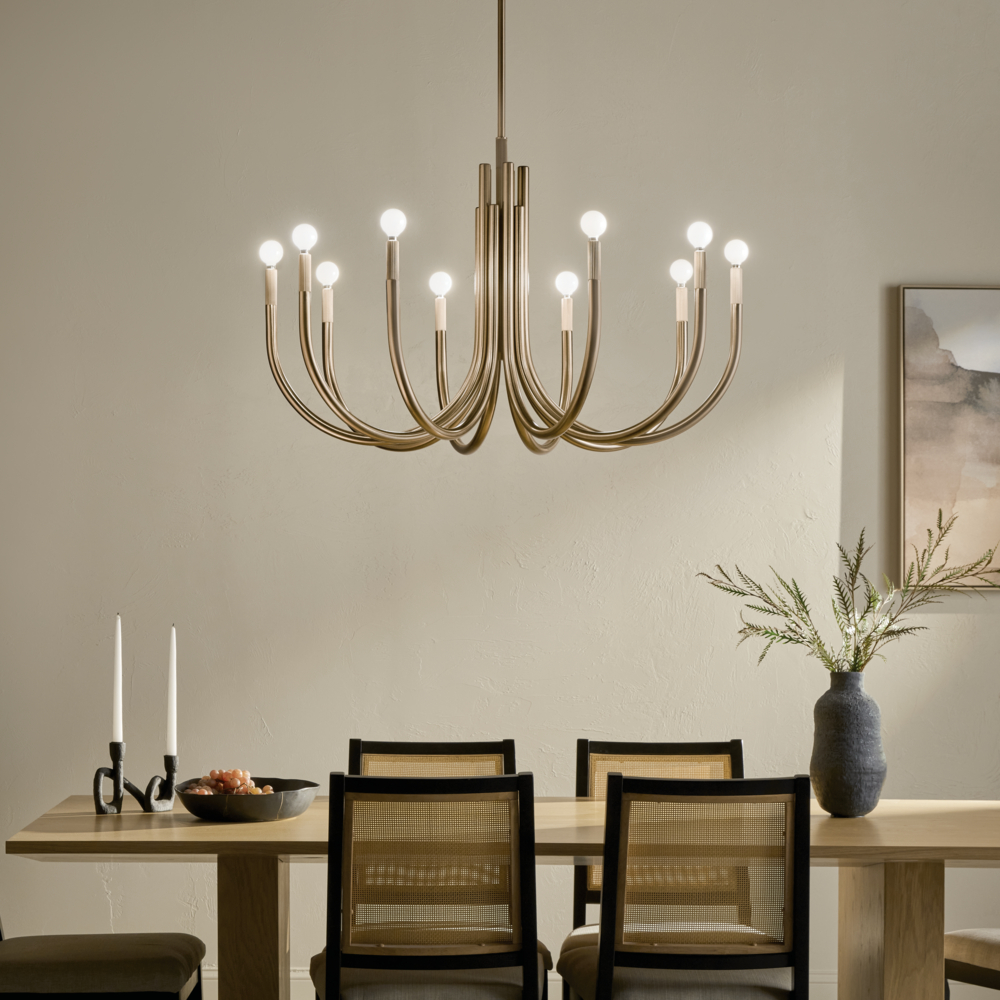
If your home is like most, your kitchen and dining room do far more than cook and serve meals; they likely double as work zones, homework hubs and, if you’re lucky, design statements. While cabinetry and finishes often get the spotlight, lighting plays a quiet but important role in shaping how these spaces feel and function. Thoughtful lighting choices can elevate everyday moments — from preparing dinner to hosting friends — while improving safety, comfort and energy efficiency. Experts at Lighting Design say the key is understanding how different types of lighting work together and choosing fixtures that suit both the room’s layout and how it’s used. Layering light for function and style One of the most common mistakes homeowners make is relying on a single light source. Kitchens and dining rooms benefit from layered lighting, which typically includes ambient, task and accent lighting. Ambient lighting provides overall illumination and sets the baseline brightness of a room. In kitchens, this often comes from recessed lights, flush mounts or semi-flush ceiling fixtures. Dining rooms may rely on a central chandelier or ceiling fixture to establish mood. Task lighting focuses light where it’s needed most. Under-cabinet lights brighten countertops for food prep, while pendants over an island provide targeted illumination for chopping, cooking or casual dining. Accent lighting adds visual interest, highlighting architectural features, open shelving or artwork. When these layers work together, the space feels balanced and intentional. Kitchen lighting that works hard In the kitchen, function often comes first — but that doesn’t mean sacrificing style. Pendant lights are a popular choice for kitchen islands, offering both task lighting and a strong visual anchor. For larger islands, designers often recommend a series of pendants spaced evenly across the length. Smaller islands may look best with two or even a single statement pendant. Scale matters: oversized pendants can overwhelm a compact kitchen, while fixtures that are too small may feel underwhelming. The shape and finish of your lighting also play a role. Clear or lightly tinted glass pendants allow more light to pass through, which is ideal for work areas. Metal or opaque shades can create a warmer, more dramatic look, especially when paired with dimmable bulbs. Under-cabinet lighting is another essential element, eliminating shadows cast by overhead lights and improving visibility on countertops. LED strips or puck lights are energy-efficient options that blend seamlessly into modern kitchens. Dining room lighting that sets the tone If the kitchen is about precision, the dining room is about atmosphere. Here, lighting helps define the experience — whether it’s a formal dinner or a relaxed family meal. A general guideline many designers follow is matching the shape of the chandelier to the shape of the table. Round chandeliers tend to complement round or oval tables, while linear or rectangular fixtures work well over long farmhouse or trestle tables. This visual alignment creates harmony and helps anchor the table within the room. Height is equally important when it comes to light fixtures. Hanging a chandelier too low can obstruct sightlines and feel intrusive, while placing it too high reduces its impact. Most experts suggest positioning the bottom of the fixture about 30 to 36 inches above the tabletop, adjusting slightly based on ceiling height. Dimmers are especially valuable in dining spaces, allowing you to shift from bright, functional light to a softer glow for evening meals and entertaining. Choosing fixtures that last Beyond placement and style, quality is key. Well-made fixtures not only look better but tend to perform more reliably over time. Retailers like Lighting Design curate collections that emphasize craftsmanship, durable materials and timeless design, making it easier for homeowners to find pieces that won’t feel dated in a few years. The company’s pendant and chandelier collections include both best-selling designs and newer releases, offering options for a range of aesthetics — from modern and minimalist to classic and transitional. Exploring collections in a local showroom can help you narrow your choices and ensure fixtures work cohesively across your spaces. Planning for the future Lighting decisions are often made late in the design process, but experts recommend considering them early — especially during renovations or new construction. Electrical placement, ceiling support and switch locations can all affect what fixtures are possible. Energy efficiency is also an important consideration. LED technology has advanced significantly, offering warm, flattering light with lower energy use and longer lifespans. Many modern fixtures are designed with LEDs in mind, reducing maintenance and operating costs over time. Your kitchens and dining room serve multiple roles, so you need flexible lighting solutions. With a thoughtful design, your spaces can be easily adaptable, supporting both everyday routines and special occasions. Lighting can do more than illuminate a room — it can transform how it’s used and enjoyed. If you’re looking to make meaningful updates, starting with the right lighting design might just be your brightest idea. This is a sponsored article brought to you by KSL TV in conjunction with the advertiser. The advertiser paid a fee to promote this article and may have influenced or authored the content. The views expressed in this article are those of the advertiser and do not necessarily reflect those of KSL TV, its parent company, or its staff.Privacy Policy