'%3e%3cpath%20d='M34.1406%205.85938C30.3906%202.10547%2025.3047%200%2020%200C14.6953%200%209.60938%202.10547%205.85938%205.85938C2.10938%209.61328%200%2014.6953%200%2020C0%2025.3047%202.10547%2030.3906%205.85938%2034.1406C9.61328%2037.8906%2014.6953%2040%2020%2040C25.3047%2040%2030.3906%2037.8945%2034.1406%2034.1406C37.8906%2030.3906%2040%2025.3047%2040%2020C40%2014.6953%2037.8945%209.60938%2034.1406%205.85938ZM37.0117%2023.543H31.1602V13.5391H27.6328V19.9414C28.1211%2020.6914%2028.3711%2021.582%2028.3711%2022.5625V22.625C28.3711%2023.668%2028.1172%2024.6055%2027.6328%2025.4297V26.6094H36.082C33.4883%2032.9375%2027.2891%2037.3789%2020.0039%2037.3789C10.3711%2037.3789%202.62109%2029.6289%202.62109%2020C2.62109%2010.3711%2010.3711%202.62109%2020%202.62109C29.6289%202.62109%2037.3789%2010.3711%2037.3789%2020C37.3789%2021.1484%2037.2617%2022.2656%2037.0508%2023.3477C37.0391%2023.4141%2037.0234%2023.4766%2037.0117%2023.543Z'%20fill='white'/%3e%3cpath%20d='M22.3086%2018.5352C20.4336%2018.125%2019.9531%2017.8398%2019.9766%2017.1836V17.1406C19.9766%2016.6992%2020.3477%2016.2148%2021.4023%2016.2148C22.582%2016.2148%2023.8867%2016.6797%2025.0781%2017.4766L26.8516%2015.0195C25.4453%2013.8906%2023.707%2013.3398%2021.5547%2013.3398C18.5195%2013.3398%2016.4375%2015%2016.4063%2017.4766V17.5352C16.3633%2020.2617%2018.5859%2020.9805%2021.293%2021.6016C23.0391%2021.9766%2023.5703%2022.3164%2023.5703%2022.9609L23.5469%2022.9766C23.5469%2023.3906%2023.2578%2023.7031%2022.7852%2023.8359C22.5742%2023.9062%2022.1289%2023.9727%2021.5156%2023.9727C20.7617%2023.9727%2019.7539%2023.8633%2018.6328%2023.4844C18.0898%2023.2891%2017.4727%2023.0039%2016.8047%2022.6133L20.1406%2026.625C20.2813%2026.6602%2021.0977%2026.8516%2021.7734%2026.8516C25.0039%2026.8516%2027.0859%2025.2461%2027.1094%2022.6328V22.5703C27.1602%2020.1133%2025.2148%2019.1719%2022.3086%2018.5352Z'%20fill='white'/%3e%3cpath%20d='M5.24219%2013.5664V26.6133H8.75391V23.7578L10.2969%2021.9531L14.2031%2026.6133H18.3867L12.3555%2019.5195L17.4023%2013.5664H13.4531L8.75391%2019.0586V13.5664H5.24219Z'%20fill='white'/%3e%3c/g%3e%3cdefs%3e%3cclipPath%20id='clip0_97_2430'%3e%3crect%20width='40'%20height='40'%20fill='white'/%3e%3c/clipPath%3e%3c/defs%3e%3c/svg%3e)


Estimated read time: 4-5 minutes
Back-to-school season is here.
Families are shopping for new school clothes, labeling supplies, packing backpacks and trying to get everyone back into a routine before that first school bell rings.
While families prepare for another school year, another group is getting ready behind the scenes: school nutrition professionals.
Long before students step into the cafeteria, teams are planning meals designed to fuel learning, support growing bodies and meet rigorous nutrition standards.
School lunch may not be the first thing parents think about this time of year — but it might be one of the most misunderstood.
Many parents would be surprised by just how much planning, nutrition and value go into every tray.
Here are four things you might not know about today's school meals.
Surprise #1: School meals are carefully planned to be balanced
School menus aren't created on a whim. Every meal is thoughtfully planned by trained school nutrition professionals to align with the Dietary Guidelines for Americans, which are updated every five years.
Every school lunch includes five meal components: fruits, vegetables, whole grains, lean protein and milk. Meals must also meet age-appropriate nutrition standards for calories while limiting added sugars and sodium.
Behind every tray is a team balancing nutrition requirements, student preferences and menu variety — all with the goal of helping students learn, grow and thrive.
But school lunch isn't just about nutrition.
School nutrition professionals also work hard to make mealtime something students enjoy. Many schools celebrate holidays, create fun themed menus, recognize special events and find creative ways to make the cafeteria a welcoming place where students look forward to gathering with friends.
It's another reminder that behind every meal is a team of people who genuinely care about the students they serve.
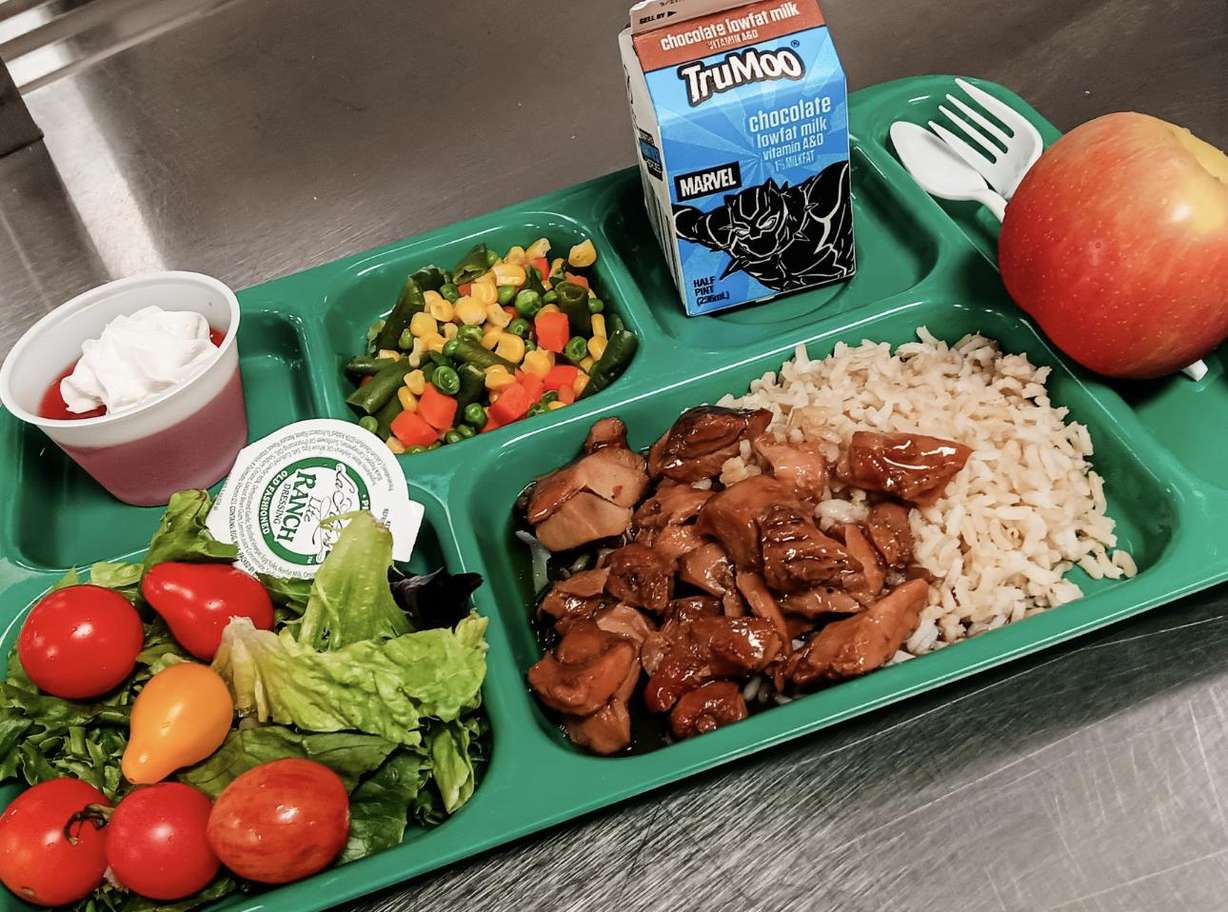
Surprise #2: School lunches earn high marks for nutrition
School lunches don't just aim to be nutritious — they've been measured against national nutrition standards.
Researchers use the Healthy Eating Index (HEI), a nationally recognized measure of how well foods align with the Dietary Guidelines for Americans, to evaluate overall diet quality.
Research shared by Dr. Lori Spruance, Associate Professor in BYU's Department of Health Science, found school lunches score about 80 on the Healthy Eating Index, compared with roughly 65 for lunches from home or other sources.
Overall, school lunches tend to align more closely with national dietary recommendations.
Surprise #3: Students are eating more of the foods they need
Every parent knows feeding kids isn't always easy.
No lunch guarantees every bite gets eaten, but research shows students who participate in school lunch programs are more likely to eat many of the foods children often need more of.
According to Dr. Spruance's research:
- About 66% of students eating school lunch consume milk, compared with about 23% of students eating lunches from home.
- About 58% eat fruit, compared with about 47% of students bringing lunch.
- About 43% eat vegetables, compared with about 21% of students eating lunches from home.
- The same research also found students eating school lunch are less likely to consume desserts, snack foods and sugary beverages than students eating lunches from other sources.
Those findings suggest school meal programs help students build balanced eating habits throughout the school day.

Surprise #4: School lunch is a surprisingly good value
Nutrition isn't the only benefit.
School meals can also help stretch a family's food budget.
Deloitte's 2025 Back-to-School Survey found the average packed lunch costs $6.15.
Meanwhile, the Utah State Board of Education's 2025–2026 school meal pricing report shows parents typically pay about $2 to $3.25 for a school lunch, depending on the district and grade level.
That difference can add up to meaningful savings over the course of the school year.
A fresh look at school lunch
Every family's routine looks a little different, and every student has different needs.
Whether lunch comes from home or the school cafeteria, the goal is the same: helping students stay nourished, focused and ready to learn.
Today's school meals are thoughtfully planned, nutritionally balanced and designed to support students throughout the school day. For many families, they offer a convenient, affordable and high-quality option that's worth another look.
To learn more about healthy eating and dairy's role in balanced meals, visit DairyWest.com.