'%3e%3cpath%20d='M34.1406%205.85938C30.3906%202.10547%2025.3047%200%2020%200C14.6953%200%209.60938%202.10547%205.85938%205.85938C2.10938%209.61328%200%2014.6953%200%2020C0%2025.3047%202.10547%2030.3906%205.85938%2034.1406C9.61328%2037.8906%2014.6953%2040%2020%2040C25.3047%2040%2030.3906%2037.8945%2034.1406%2034.1406C37.8906%2030.3906%2040%2025.3047%2040%2020C40%2014.6953%2037.8945%209.60938%2034.1406%205.85938ZM37.0117%2023.543H31.1602V13.5391H27.6328V19.9414C28.1211%2020.6914%2028.3711%2021.582%2028.3711%2022.5625V22.625C28.3711%2023.668%2028.1172%2024.6055%2027.6328%2025.4297V26.6094H36.082C33.4883%2032.9375%2027.2891%2037.3789%2020.0039%2037.3789C10.3711%2037.3789%202.62109%2029.6289%202.62109%2020C2.62109%2010.3711%2010.3711%202.62109%2020%202.62109C29.6289%202.62109%2037.3789%2010.3711%2037.3789%2020C37.3789%2021.1484%2037.2617%2022.2656%2037.0508%2023.3477C37.0391%2023.4141%2037.0234%2023.4766%2037.0117%2023.543Z'%20fill='white'/%3e%3cpath%20d='M22.3086%2018.5352C20.4336%2018.125%2019.9531%2017.8398%2019.9766%2017.1836V17.1406C19.9766%2016.6992%2020.3477%2016.2148%2021.4023%2016.2148C22.582%2016.2148%2023.8867%2016.6797%2025.0781%2017.4766L26.8516%2015.0195C25.4453%2013.8906%2023.707%2013.3398%2021.5547%2013.3398C18.5195%2013.3398%2016.4375%2015%2016.4063%2017.4766V17.5352C16.3633%2020.2617%2018.5859%2020.9805%2021.293%2021.6016C23.0391%2021.9766%2023.5703%2022.3164%2023.5703%2022.9609L23.5469%2022.9766C23.5469%2023.3906%2023.2578%2023.7031%2022.7852%2023.8359C22.5742%2023.9062%2022.1289%2023.9727%2021.5156%2023.9727C20.7617%2023.9727%2019.7539%2023.8633%2018.6328%2023.4844C18.0898%2023.2891%2017.4727%2023.0039%2016.8047%2022.6133L20.1406%2026.625C20.2813%2026.6602%2021.0977%2026.8516%2021.7734%2026.8516C25.0039%2026.8516%2027.0859%2025.2461%2027.1094%2022.6328V22.5703C27.1602%2020.1133%2025.2148%2019.1719%2022.3086%2018.5352Z'%20fill='white'/%3e%3cpath%20d='M5.24219%2013.5664V26.6133H8.75391V23.7578L10.2969%2021.9531L14.2031%2026.6133H18.3867L12.3555%2019.5195L17.4023%2013.5664H13.4531L8.75391%2019.0586V13.5664H5.24219Z'%20fill='white'/%3e%3c/g%3e%3cdefs%3e%3cclipPath%20id='clip0_97_2430'%3e%3crect%20width='40'%20height='40'%20fill='white'/%3e%3c/clipPath%3e%3c/defs%3e%3c/svg%3e)


Estimated read time: 8-9 minutes
Summer may still be in full swing, but the first day of school is approaching fast. School districts across Utah are welcoming students back to classrooms beginning as early as Aug. 12, with most elementary schools opening their doors between Aug. 13 and Aug. 24.
Here are eight health essentials Intermountain Health pediatric experts recommend you check off your list before the first bell rings.
1. Schedule a well-child checkup now
If there's one thing you do before school starts, make it this: schedule a well-child visit with your child's pediatrician or primary care provider. August appointments fill up quickly across the Wasatch Front, so don't wait.
A well-child visit is more than a formality. It's an opportunity for your provider to monitor your child's growth, development, and vision and to screen for any hearing changes that could affect learning. It's also an opportunity to complete any required school physical or sports physical forms.
Many Intermountain Health clinics offer same-week and walk-in availability for well-child visits during August. You can also access virtual mental health care on most plans at no out-of-pocket cost when members see an in-network provider.

2. Keep immunizations up to date
Utah requires proof of immunization for attendance at any school from kindergarten through 12th grade. For elementary-age children entering kindergarten through sixth grade in the 2026-2027 school year, your child must provide written proof of the following vaccinations:
- 5 doses of DTaP/DT (diphtheria, tetanus and pertussis)
- 4 doses of Polio
- 2 doses of MMR (measles, mumps and rubella)
- 3 doses of Hepatitis B
- 2 doses of Hepatitis A
- 2 doses of Varicella (chickenpox)
Influenza and COVID-19 immunizations are recommended but not required.
If you don't remember where your child's immunization records are you can check the Utah Statewide Immunization Information System (USIIS) through your provider.
3. Reset the sleep schedule
After months of summer nights playing late outside, transitioning your child back to a school sleep schedule can feel like an uphill battle. Intermountain Health experts recommend starting the adjustment one to two weeks before the first day of school. This includes reducing those favorite summer movies and screen time activities and having no screen time in the hour before bedtime.
The American Academy of Sleep Medicine recommends:
- Ages 5-6: 10 to 13 hours per night.
- Ages 7-8: 9 to 12 hours per night.
- Ages 9-12: 9 to 12 hours per night.
4. Fuel brains with healthy eating habits
What your child eats directly affects how they learn, focus and behave in the classroom. Intermountain Health recommends building healthy eating habits before school begins so lunchtime isn't an afterthought on busy mornings.

Here are some ideas for healthy school lunches:
Pack a rainbow: Include fruits and vegetables in a variety of colors. Berries, baby carrots, cucumber slices, cherry tomatoes and apple slices are kid-friendly favorites.
Prioritize protein: Turkey and cheese roll-ups, hummus with whole-grain crackers, or a simple peanut butter (or SunButter for allergy-safe classrooms) sandwich help kids stay full and focused.
Skip the sugar crash: Swap juice boxes for a reusable water bottle and trade sugary fruit snacks for whole fruit.
Don't forget breakfast: Studies consistently show that children who eat breakfast perform better in school. Keep it simple: oatmeal with fruit, whole-grain toast with nut butter, or yogurt with granola.
Let your child help choose and pack their lunch. Kids are far more likely to eat foods they've had a hand in selecting. Make it a Sunday-night ritual to plan the week's lunches together.
5. Check for safety
Whether you walk, ride, or drive to school, safety is important. There are a few things to talk about before school starts.
Everyone should wear a helmet every time they lace up roller blades or climb on a bike, skateboard, or scooter no matter their age! Helmets should fit snugly, with only about one finger width between the chin strap and your child's chin. Learn the new laws regarding helmet use on e-bikes.
Take a practice walk to school and remind your child how to stop and look both ways for traffic, including both cars and other vehicles.
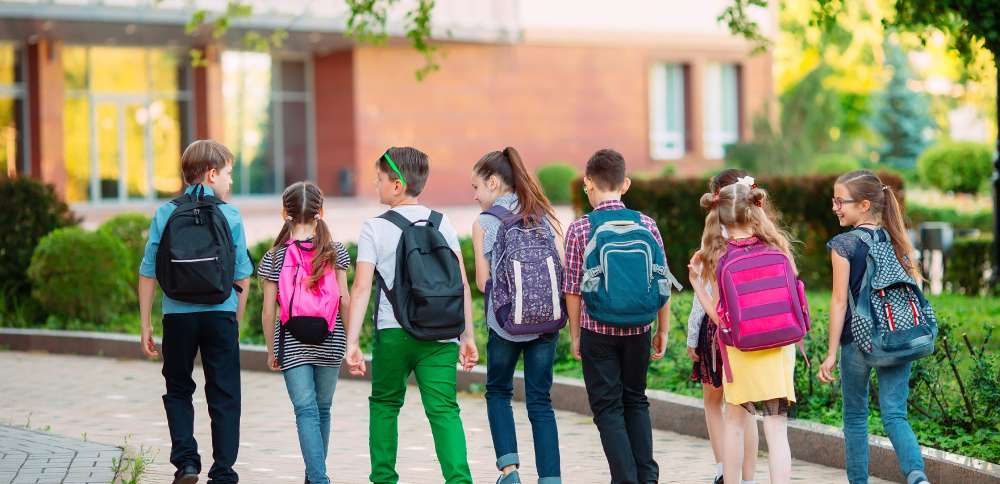
A poorly fitted or overloaded backpack can cause back pain, neck strain and poor posture in growing children. The American Academy of Pediatrics recommends that a child's backpack weigh no more than 10 to 20% of their body weight. Choose a backpack with two wide, padded shoulder straps. Head to the store with your child and have them try on backpacks with some weight in them. What looks cute on the shelf may not feel great on a 50-pound first grader's back.
6. Add mental health to the back-to-school checklist
This could be the most important item on the list. The transition from carefree summer days to the structure and social dynamics of school can be stressful, even for young children. Intermountain Primary Children's Hospital experts recommend that every Utah parent add a "mental health toolkit" to their back-to-school checklist.
The numbers are sobering: one in five children ages 3 to 17 nationally face a mental, emotional, developmental or behavioral disorder. In Utah, suicide remains a leading cause of death for youth, and 43% of young people who felt sad, hopeless or suicidal reported they did not talk to anyone about it.
Ask your child daily about what they're feeling, not just what happened at school, but how it made them feel.
Watch for warning signs: Changes in appetite, sleep, mood, social withdrawal or frequent complaints of stomachaches and headaches can signal emotional distress.
Know your resources: Intermountain's free youth assessment and referral line is available at 801-313-7711. The TalkToTweens.org website offers tools for all ages.
For crisis situations, call 988 (Suicide & Crisis Lifeline)
Intermountain Health recently expanded behavioral health services for children and families with the opening of the Intermountain Primary Children's Hospital Behavioral Health Center in Taylorsville, which includes inpatient and outpatient services and a 24/7 walk-in crisis center.
7. Build germ-fighting hygiene habits
Elementary classrooms are germ factories. There's no way around it. But good hygiene habits, taught early, can make a significant difference in how many sick days your child racks up this year.

Intermountain Health recommends reinforcing these habits before school starts:
- Teach your child to wash with soap and water for at least 20 seconds, especially before eating and after using the restroom.
- Cover coughs and sneezes with an elbow or tissue, not hands.
- No sharing water bottles, lip balm or utensils to prevent cross-contamination.
- Encourage kids not to touch their eyes, nose or mouth.
- Send antibacterial wipes in your child's supplies if allowed by the school.
8. Stay hydrated in Utah's dry climate
Utah's high desert climate and altitude mean children dehydrate faster here than in many other states. As temperatures often remain in the 90s through August and into September, hydration is essential for concentration, energy and physical performance.
Pro tip: Freeze the water bottle half-full the night before, then top it off with water in the morning. Your child will have ice-cold water well into the afternoon.
Bonus: Know when to keep your child home
Even the healthiest kids get sick. Knowing when to keep your child home protects not only your child but their classmates and teachers. Intermountain Health recommends keeping kids home when they have:
- A fever of 100.4°F or higher (wait until fever-free for 24 hours without medication)
- Vomiting or diarrhea
- A persistent, productive cough
- Signs of contagious illness like pink eye, strep throat or a rash
- Symptoms of COVID, RSV or the flu
The bottom line
Back-to-school season is exciting and chaotic in equal measure. But a little preparation now goes a long way toward setting your child up for their healthiest, happiest school year yet.
Intermountain Health is here to help Utah families every step of the way, from well-child visits and vaccinations to behavioral health support and virtual care options.
To schedule a well-child visit or find an Intermountain Health pediatrician near you, visit IntermountainHealth.org or call your local Intermountain clinic.
For mental health resources:
- Youth assessment and referrals: 801-313-7711
- Behavioral Health Navigation Line: 833-442-2211
- Suicide & Crisis Lifeline: 988
- Online resources: TalkToTweens.org
The opinions and conclusions expressed in this article are the sponsor's own and do not reflect the views or opinions of KSL.com. This Site Does Not Provide Medical Advice. Any content on this Site, such as text, graphics, images, information obtained from, or contained on this Site are for informational purposes only. The content is not intended to be a substitute for professional medical advice, diagnosis, or treatment. Always seek the advice of your physician or other qualified health provider with any questions you may have regarding a medical condition. Never disregard professional medical advice or delay in seeking it because of something you have read on this site! The owner and operator of this site do not recommend or endorse any specific tests, physicians, products, procedures, opinions, or other information that may be mentioned on the site. Reliance on any information provided by the Operator, including their employees, contractors or others appearing on the Site at the invitation of the Operator, or other visitors to the Site is solely at your own risk. If you think you may have a medical emergency, call your doctor or 911 immediately.