'%3e%3cpath%20d='M34.1406%205.85938C30.3906%202.10547%2025.3047%200%2020%200C14.6953%200%209.60938%202.10547%205.85938%205.85938C2.10938%209.61328%200%2014.6953%200%2020C0%2025.3047%202.10547%2030.3906%205.85938%2034.1406C9.61328%2037.8906%2014.6953%2040%2020%2040C25.3047%2040%2030.3906%2037.8945%2034.1406%2034.1406C37.8906%2030.3906%2040%2025.3047%2040%2020C40%2014.6953%2037.8945%209.60938%2034.1406%205.85938ZM37.0117%2023.543H31.1602V13.5391H27.6328V19.9414C28.1211%2020.6914%2028.3711%2021.582%2028.3711%2022.5625V22.625C28.3711%2023.668%2028.1172%2024.6055%2027.6328%2025.4297V26.6094H36.082C33.4883%2032.9375%2027.2891%2037.3789%2020.0039%2037.3789C10.3711%2037.3789%202.62109%2029.6289%202.62109%2020C2.62109%2010.3711%2010.3711%202.62109%2020%202.62109C29.6289%202.62109%2037.3789%2010.3711%2037.3789%2020C37.3789%2021.1484%2037.2617%2022.2656%2037.0508%2023.3477C37.0391%2023.4141%2037.0234%2023.4766%2037.0117%2023.543Z'%20fill='white'/%3e%3cpath%20d='M22.3086%2018.5352C20.4336%2018.125%2019.9531%2017.8398%2019.9766%2017.1836V17.1406C19.9766%2016.6992%2020.3477%2016.2148%2021.4023%2016.2148C22.582%2016.2148%2023.8867%2016.6797%2025.0781%2017.4766L26.8516%2015.0195C25.4453%2013.8906%2023.707%2013.3398%2021.5547%2013.3398C18.5195%2013.3398%2016.4375%2015%2016.4063%2017.4766V17.5352C16.3633%2020.2617%2018.5859%2020.9805%2021.293%2021.6016C23.0391%2021.9766%2023.5703%2022.3164%2023.5703%2022.9609L23.5469%2022.9766C23.5469%2023.3906%2023.2578%2023.7031%2022.7852%2023.8359C22.5742%2023.9062%2022.1289%2023.9727%2021.5156%2023.9727C20.7617%2023.9727%2019.7539%2023.8633%2018.6328%2023.4844C18.0898%2023.2891%2017.4727%2023.0039%2016.8047%2022.6133L20.1406%2026.625C20.2813%2026.6602%2021.0977%2026.8516%2021.7734%2026.8516C25.0039%2026.8516%2027.0859%2025.2461%2027.1094%2022.6328V22.5703C27.1602%2020.1133%2025.2148%2019.1719%2022.3086%2018.5352Z'%20fill='white'/%3e%3cpath%20d='M5.24219%2013.5664V26.6133H8.75391V23.7578L10.2969%2021.9531L14.2031%2026.6133H18.3867L12.3555%2019.5195L17.4023%2013.5664H13.4531L8.75391%2019.0586V13.5664H5.24219Z'%20fill='white'/%3e%3c/g%3e%3cdefs%3e%3cclipPath%20id='clip0_97_2430'%3e%3crect%20width='40'%20height='40'%20fill='white'/%3e%3c/clipPath%3e%3c/defs%3e%3c/svg%3e)


Estimated read time: 5-6 minutes
This archived news story is available only for your personal, non-commercial use. Information in the story may be outdated or superseded by additional information. Reading or replaying the story in its archived form does not constitute a republication of the story.
WASHINGTON — President Joe Biden on Friday blamed Russian President Vladimir Putin for Alexei Navalny's death, saying he was "not surprised" but "outraged" by the opposition leader's passing.
"We don't know exactly what happened, but there is no doubt that the death of Nalvany was a consequence of something that Putin and his thugs did," Biden said at the White House after Russian prison officials said Navalny had died.
"Russian authorities are going to tell their own story," Biden said. "But make no mistake. Make no mistake, Putin is responsible for Navalny's death."
He also said he was "contemplating" additional steps to punish Russia in the aftermath of Navalny's death, paying tribute to the opposition leader for "bravely" standing up to Putin's government's "corruption" and "violence."
The White House was still seeking more information about Navalny's death at a Russian penal colony north of the Arctic Circle, where he was dispatched less than two months ago.
But the development, and Biden's reaction, has put a further chill into already bitter U.S.-Russian relations.
Navalny, Russian President Vladimir Putin's most formidable opponent, collapsed and died on Friday after a walk at the "Polar Wolf" Arctic penal colony where he was serving a three-decade jail term, the Russian prison service said.
The death of Navalny, a 47-year-old former lawyer, robs the disparate Russian opposition of its most courageous and charismatic leader just as Putin prepares for an election that will keep the former KGB spy in power until at least 2030.
Navalny rose to prominence more than a decade ago by speaking publicly — and documenting — what he said was the vast corruption and opulence among the "crooks and thieves" who ran Putin's Russia.
The Federal Penitentiary Service of the Yamalo-Nenets Autonomous District said in a statement that Navalny felt unwell after a walk at the IK-3 penal colony in Kharp, about 1,200 miles northeast of Moscow into the Arctic Circle.
He lost consciousness almost immediately and died shortly afterward despite the efforts of the prison's medical team and ambulance staff, the prison service said. Attempts to resuscitate him failed, it said.
The Kremlin said Putin, who was visiting factories in the Ural mountains, had been informed.
Navalny's wife, Yulia, said she could not be sure her husband was dead because "Putin and his government ... lie incessantly."
But if her husband were indeed dead, she said, speaking at the Munich Security Conference, Putin and his entourage "will be punished for what they have done to our country, for what they have done to my family, for what they have done to my husband."
Russian Nobel Peace Laureate and newspaper editor Dmitry Muratov, speaking to Reuters, called the death a "murder" and said he believed Navalny's prison conditions caused his death.
Western leaders paid tribute to Navalny's courage as a fighter for freedom.
Murder accusation
Navalny's team, who have fled abroad, said it had no confirmation of his death but cast the prison service's statement as a murder confession.
"We have no reason to believe state propaganda," Leonid Volkov, Navalny's chief of staff, said. "If this is true, then it's not 'Navalny died,' but 'Putin killed Navalny.'"
Navalny's lawyer was on his way to the prison in Kharp, known as one of Russia's toughest penal colonies, where Navalny was serving sentences that would have kept him in prison beyond the age of 70.
Russian state television showed a press conference by the central bank chief as the news broke.
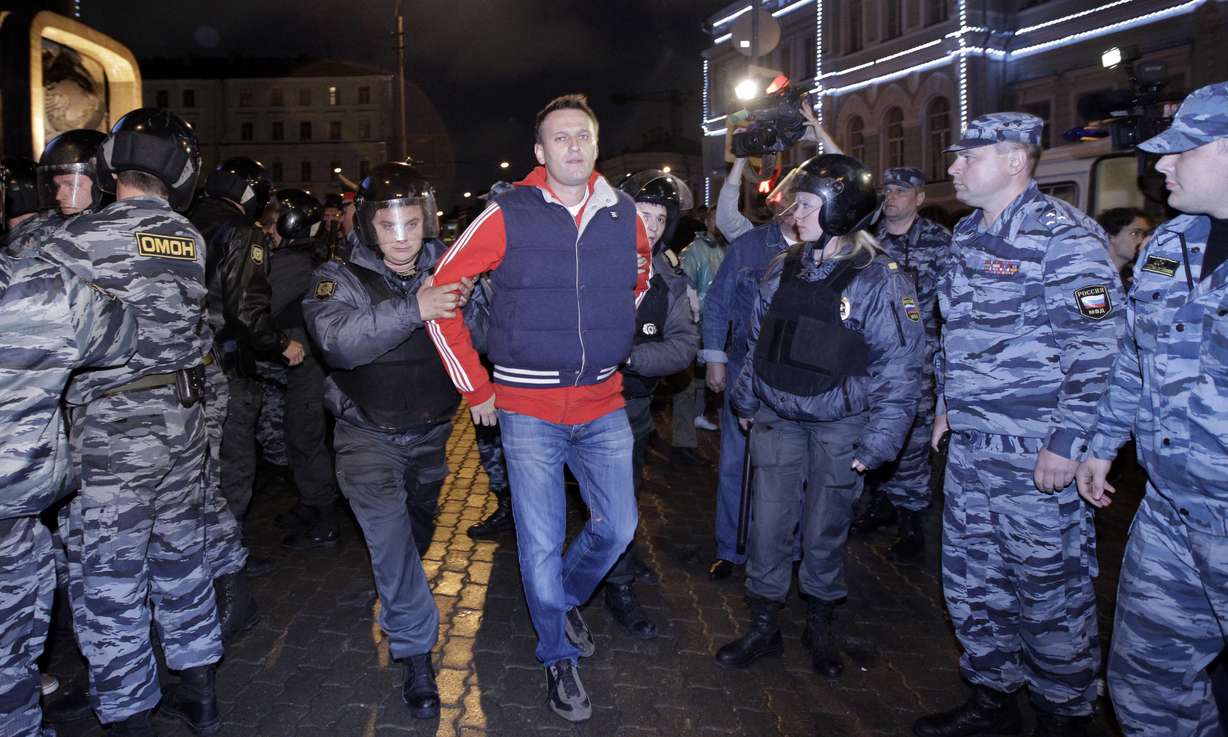
To supporters, Navalny was a future leader of Russia who would one day walk free from jail to take the presidency, though many opposition activists had expressed fears that he was in grave danger in the Russian prison system.
Navalny earned admiration from Russia's disparate opposition for voluntarily returning to Russia in 2021 from Germany, where he had been treated for what Western laboratory tests showed was an attempt to poison him with a nerve agent.
Navalny said at the time that he was poisoned in Siberia in August 2020. The Kremlin denied trying to kill him and said there was no evidence he was poisoned with a nerve agent.
There are few, if any, Russian opposition leaders of such prominence left inside Russia.
Navalny long forecast Russia could face seismic political turmoil because he said Putin built a brittle system of personal rule reliant on corruption.
He vented his anger in 2023 at the Russian elite for its venality, expressing hatred for those who squandered a historic opportunity to reform after the 1991 fall of the Soviet Union.
Kremlin enemy
A day before his death, Navalny peered through a barred window, laughing and cracking jokes about his depleting funds and the judge's salary.
"Your Honor, I will send you my personal account number so that you can use your huge salary as a federal judge to 'warm up' my personal account, because I am running out of money," he said via video link.
The Kremlin repeatedly dismissed Navalny's claims of vast corruption and allegations about Putin's personal wealth. Navalny's movement is outlawed and most of his senior allies now live in exile in Europe.
Russian officials cast Navalny as an extremist who was a puppet of the U.S. CIA intelligence agency which they say is intent on turning Russia into a client state of the West.
When demonstrations against Putin flared in December 2011, after an election tainted by fraud accusations, he was one of the first protest leaders arrested.
In an interview in Moscow in 2011, Navalny was asked by Reuters if he was afraid of challenging Putin's system.
"That's the difference between me and you: You are afraid and I am not afraid," he said. "I realize there is danger, but why should I be afraid?"
Navalny's last post on Telegram was a Valentine's Day message to his wife Yulia below a picture of them together.
"Baby, you and I have everything like in the song: cities between us, airfield take-off lights, blue blizzards and thousands of kilometers. But I feel that you are there every second, and I love you more and more," Navalny said.