'%3e%3cpath%20d='M34.1406%205.85938C30.3906%202.10547%2025.3047%200%2020%200C14.6953%200%209.60938%202.10547%205.85938%205.85938C2.10938%209.61328%200%2014.6953%200%2020C0%2025.3047%202.10547%2030.3906%205.85938%2034.1406C9.61328%2037.8906%2014.6953%2040%2020%2040C25.3047%2040%2030.3906%2037.8945%2034.1406%2034.1406C37.8906%2030.3906%2040%2025.3047%2040%2020C40%2014.6953%2037.8945%209.60938%2034.1406%205.85938ZM37.0117%2023.543H31.1602V13.5391H27.6328V19.9414C28.1211%2020.6914%2028.3711%2021.582%2028.3711%2022.5625V22.625C28.3711%2023.668%2028.1172%2024.6055%2027.6328%2025.4297V26.6094H36.082C33.4883%2032.9375%2027.2891%2037.3789%2020.0039%2037.3789C10.3711%2037.3789%202.62109%2029.6289%202.62109%2020C2.62109%2010.3711%2010.3711%202.62109%2020%202.62109C29.6289%202.62109%2037.3789%2010.3711%2037.3789%2020C37.3789%2021.1484%2037.2617%2022.2656%2037.0508%2023.3477C37.0391%2023.4141%2037.0234%2023.4766%2037.0117%2023.543Z'%20fill='white'/%3e%3cpath%20d='M22.3086%2018.5352C20.4336%2018.125%2019.9531%2017.8398%2019.9766%2017.1836V17.1406C19.9766%2016.6992%2020.3477%2016.2148%2021.4023%2016.2148C22.582%2016.2148%2023.8867%2016.6797%2025.0781%2017.4766L26.8516%2015.0195C25.4453%2013.8906%2023.707%2013.3398%2021.5547%2013.3398C18.5195%2013.3398%2016.4375%2015%2016.4063%2017.4766V17.5352C16.3633%2020.2617%2018.5859%2020.9805%2021.293%2021.6016C23.0391%2021.9766%2023.5703%2022.3164%2023.5703%2022.9609L23.5469%2022.9766C23.5469%2023.3906%2023.2578%2023.7031%2022.7852%2023.8359C22.5742%2023.9062%2022.1289%2023.9727%2021.5156%2023.9727C20.7617%2023.9727%2019.7539%2023.8633%2018.6328%2023.4844C18.0898%2023.2891%2017.4727%2023.0039%2016.8047%2022.6133L20.1406%2026.625C20.2813%2026.6602%2021.0977%2026.8516%2021.7734%2026.8516C25.0039%2026.8516%2027.0859%2025.2461%2027.1094%2022.6328V22.5703C27.1602%2020.1133%2025.2148%2019.1719%2022.3086%2018.5352Z'%20fill='white'/%3e%3cpath%20d='M5.24219%2013.5664V26.6133H8.75391V23.7578L10.2969%2021.9531L14.2031%2026.6133H18.3867L12.3555%2019.5195L17.4023%2013.5664H13.4531L8.75391%2019.0586V13.5664H5.24219Z'%20fill='white'/%3e%3c/g%3e%3cdefs%3e%3cclipPath%20id='clip0_97_2430'%3e%3crect%20width='40'%20height='40'%20fill='white'/%3e%3c/clipPath%3e%3c/defs%3e%3c/svg%3e)


Estimated read time: 4-5 minutes
This archived news story is available only for your personal, non-commercial use. Information in the story may be outdated or superseded by additional information. Reading or replaying the story in its archived form does not constitute a republication of the story.
In any relationship, both partners need to be seen and heard. Literally. Unfortunately, if you're one of the millions of people who suffer from hearing loss, that last part can be difficult. And it can take a serious toll on you and your loved ones over time.
Perhaps you've already experienced this firsthand, or maybe it's in your not-too-distant future. Either way, it's important to be aware of how hearing loss affects not just yourself but those closest to you. Here's what you need to know — and what you can do about it.
A source of stress and frustration
In 2019, The Hearing Review conducted a study of hearing-impaired spouses and their partners to better understand the effects of hearing loss on relationships.
The first finding isn't very surprising. Virtually any relationship expert will tell you that communication is key to developing stronger connections between couples. Well, that becomes a lot harder when one or both of you is hearing-impaired.
Many hearing partners get frustrated when it seems as if their hearing-impaired partner isn't listening to what they're saying. The real problem is that they are listening — but they can't understand what's being said.
The study also found that hearing spouses get frustrated when their hearing-impaired partners don't seem to want to address the problem. Forgetting or purposely neglecting hearing aids signaled to the hearing partner "an unwillingness to listen and engage socially."
Gina and Tom recently sought help from Dr. Keith Darrow in one of Utah's Excellence in Audiology clinics. Gina had untreated hearing loss for years, which took a toll on their relationship.
Tom said, "It is a sad fact that often I will need to repeat things three or four times to Gina before she gets it. By the time I've said something the third or fourth time, I've shortened the message for clarity's sake, sometimes making it too simple.
"The frustration and irritation I feel comes out and that's the main part she takes out of what I'm saying. … This has become a problem between us for sure because neither one of us are feeling or expressing love anymore — we are just trying to get basic ideas across."
Though issues like Tom and Gina's don't just exist in the privacy of the home, they extend to social situations, too.
Hearing partners also take on a certain burden for their hearing-impaired partners in social situations. They feel responsible for stepping in to help them feel included and avoid potentially embarrassing situations. As you can imagine, this gets exhausting for the mediating partner — but it can also affect the hearing-impaired partner.
"The hearing partners' mediating efforts were, in general, considered supportive and caring by the hearing-impaired partner—especially if they were performed with discretion," the study authors note. "The same efforts, however, could also lead to the unintended exclusion and sidelining of the person with the hearing loss, in addition to that person receiving unwanted attention."
Help your relationship by treating your hearing loss
You might think you can conceal your hearing difficulties from your partner — but they'll inevitably take notice.
"It is often the hearing partner's frustrations or an embarrassing social event that persuades the hearing-impaired person to acknowledge and act on the problem," the study reported. "Hearing loss, therefore, is a social and relational challenge: it both affects and is affected by social relationships."
Because hearing loss isn't just about an individual, it's important to treat it or take preventative measures to address it before it takes a toll on the relationship. Scheduling a hearing test or wearing hearing aids is a good start.
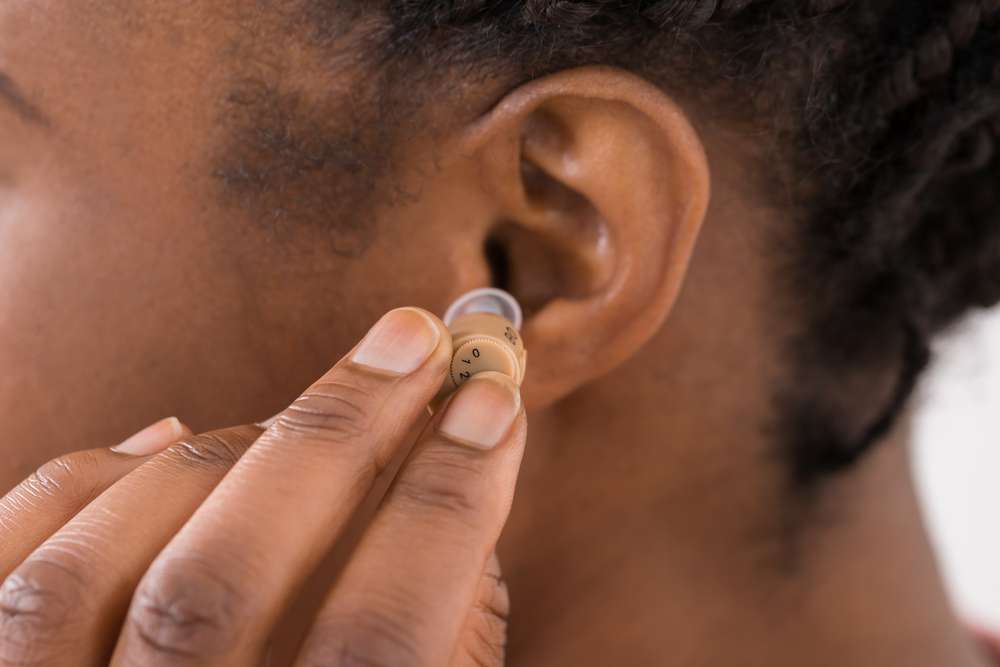
Many of the patients coming to Excellence In Audiology clinics initially make the appointment because their spouses asked them to. Taking the first steps to treat your own hearing loss is really a manifestation of love for your partner. It says that you genuinely care about communication and their needs and desires.
Fortunately, treating hearing loss in one of the Excellence In Audiology clinics is easy and affordable, especially with monthly treatment plan options.
During the adaptation process, hearing experts counsel both partners on effective communication strategies when one partner has a hearing loss. Some of these strategies include:
Never communicate from another room. This is difficult even for people without hearing loss. Face-to-face communication is always the most effective.
Make communication with your partner a priority. Turn off or pause the television or radio when talking.
When dining out, choose quieter restaurants and ask for a corner booth to eliminate background noise from at least two sides.
Hearing loss has a profound impact on marriages. It influences communication, emotional well-being, shared activities, and intimacy.
Couples facing these challenges need to approach them with empathy, patience, and a commitment to seeking treatment from a qualified professional, such as those at Excellence in Audiology certified clinics. If you have untreated or under-treated hearing loss, give your spouse the best Valentine's Day gift in the world by scheduling a hearing evaluation today. Start your journey to improved communication and relationships.
Request a consultation today at one of the Excellence in Audiology clinics conveniently located across the state of Utah.