'%3e%3cpath%20d='M34.1406%205.85938C30.3906%202.10547%2025.3047%200%2020%200C14.6953%200%209.60938%202.10547%205.85938%205.85938C2.10938%209.61328%200%2014.6953%200%2020C0%2025.3047%202.10547%2030.3906%205.85938%2034.1406C9.61328%2037.8906%2014.6953%2040%2020%2040C25.3047%2040%2030.3906%2037.8945%2034.1406%2034.1406C37.8906%2030.3906%2040%2025.3047%2040%2020C40%2014.6953%2037.8945%209.60938%2034.1406%205.85938ZM37.0117%2023.543H31.1602V13.5391H27.6328V19.9414C28.1211%2020.6914%2028.3711%2021.582%2028.3711%2022.5625V22.625C28.3711%2023.668%2028.1172%2024.6055%2027.6328%2025.4297V26.6094H36.082C33.4883%2032.9375%2027.2891%2037.3789%2020.0039%2037.3789C10.3711%2037.3789%202.62109%2029.6289%202.62109%2020C2.62109%2010.3711%2010.3711%202.62109%2020%202.62109C29.6289%202.62109%2037.3789%2010.3711%2037.3789%2020C37.3789%2021.1484%2037.2617%2022.2656%2037.0508%2023.3477C37.0391%2023.4141%2037.0234%2023.4766%2037.0117%2023.543Z'%20fill='white'/%3e%3cpath%20d='M22.3086%2018.5352C20.4336%2018.125%2019.9531%2017.8398%2019.9766%2017.1836V17.1406C19.9766%2016.6992%2020.3477%2016.2148%2021.4023%2016.2148C22.582%2016.2148%2023.8867%2016.6797%2025.0781%2017.4766L26.8516%2015.0195C25.4453%2013.8906%2023.707%2013.3398%2021.5547%2013.3398C18.5195%2013.3398%2016.4375%2015%2016.4063%2017.4766V17.5352C16.3633%2020.2617%2018.5859%2020.9805%2021.293%2021.6016C23.0391%2021.9766%2023.5703%2022.3164%2023.5703%2022.9609L23.5469%2022.9766C23.5469%2023.3906%2023.2578%2023.7031%2022.7852%2023.8359C22.5742%2023.9062%2022.1289%2023.9727%2021.5156%2023.9727C20.7617%2023.9727%2019.7539%2023.8633%2018.6328%2023.4844C18.0898%2023.2891%2017.4727%2023.0039%2016.8047%2022.6133L20.1406%2026.625C20.2813%2026.6602%2021.0977%2026.8516%2021.7734%2026.8516C25.0039%2026.8516%2027.0859%2025.2461%2027.1094%2022.6328V22.5703C27.1602%2020.1133%2025.2148%2019.1719%2022.3086%2018.5352Z'%20fill='white'/%3e%3cpath%20d='M5.24219%2013.5664V26.6133H8.75391V23.7578L10.2969%2021.9531L14.2031%2026.6133H18.3867L12.3555%2019.5195L17.4023%2013.5664H13.4531L8.75391%2019.0586V13.5664H5.24219Z'%20fill='white'/%3e%3c/g%3e%3cdefs%3e%3cclipPath%20id='clip0_97_2430'%3e%3crect%20width='40'%20height='40'%20fill='white'/%3e%3c/clipPath%3e%3c/defs%3e%3c/svg%3e)


Estimated read time: 5-6 minutes
This archived news story is available only for your personal, non-commercial use. Information in the story may be outdated or superseded by additional information. Reading or replaying the story in its archived form does not constitute a republication of the story.
LEWISTON, Maine — Five months before the deadliest mass shooting in Maine's history, the gunman's family alerted the local sheriff that they were becoming concerned about his deteriorating mental health while he had access to firearms, authorities said Monday.
After the alert, the Sagadohoc County Sheriff's Office reached out to officials of Robert Card's Army Reserve unit, which assured deputies that they would speak to Card and make sure he got medical attention, Sheriff Joel Merry said.
The family's concern about Card's mental health dated back to early this year before the sheriff's office was contacted in May, marking the earliest in a string of interactions that police had with the 40-year-old firearms instructor before he marched into a Lewiston bowling alley and a bar last Wednesday, killing 18 people and wounding 13 others.
After an intensive two-day search that put residents on edge, he was found dead from a self-inflicted gunshot.
Card underwent a mental health evaluation last summer after accusing soldiers of calling him a pedophile, shoving one and locking himself in his room during training in New York, officials said. A bulletin sent to police shortly after last week's attack said Card had been committed to a mental health facility for two weeks after "hearing voices and threats to shoot up" a military base.
Documents released from the sheriff on Monday gave the most detailed timeline yet of other warning signs and failed efforts to stop the gunman months before he killed.
On Sept. 15, a sheriff's deputy was sent to visit Card's home for a wellness check at the request of the reserve unit after a soldier said he was afraid Card was "going to snap and commit a mass shooting" because he was hearing voices again. The deputy went to Card's trailer but could not find him — nor the next day on a return visit. The sheriff's department then sent out a statewide alert for help locating Card with a warning that he was known to be "armed and dangerous" and that officers should use extreme caution.
By this time, Card's reserve unit had grown sufficiently concerned that it had decided to take away his military-issued firearms, the sheriff's office was told. Army spokeswoman Lt. Col. Ruth Castro confirmed that account, adding that Card was also declared "non-deployable" and that multiple attempts were made to contact him.
According to the deputy's report after visiting Card's home, he reached out to the reserves' unit commander who assured him the Army was trying to get treatment for Card. The commander also said he thought "it best to let Card have time to himself for a bit."
The deputy then reached out to Card's brother. The brother said he had put Card's firearms in a gun safe in the family farm and would work with their father to move the guns somewhere else and make sure Card couldn't get other firearms.
Authorities recovered a multitude of weapons while searching for Card after the shooting and believe he had legally purchased them, including a Ruger SFAR rifle found in his car, officials said Monday. A Smith & Wesson M&P15 rifle and Smith & Wesson M&P .40-caliber handgun were with his body.
Authorities have not said whether they believe Card planned the Oct. 25 rampage in advance. Nearly three months ago, he tried and failed to acquire a device used to quiet gunshots, a gun shop owner in Auburn said.
Rick LaChapelle, owner of Coastal Defense Firearms, said Card purchased a suppressor, also called a silencer, online and arranged to pick it up at his shop.
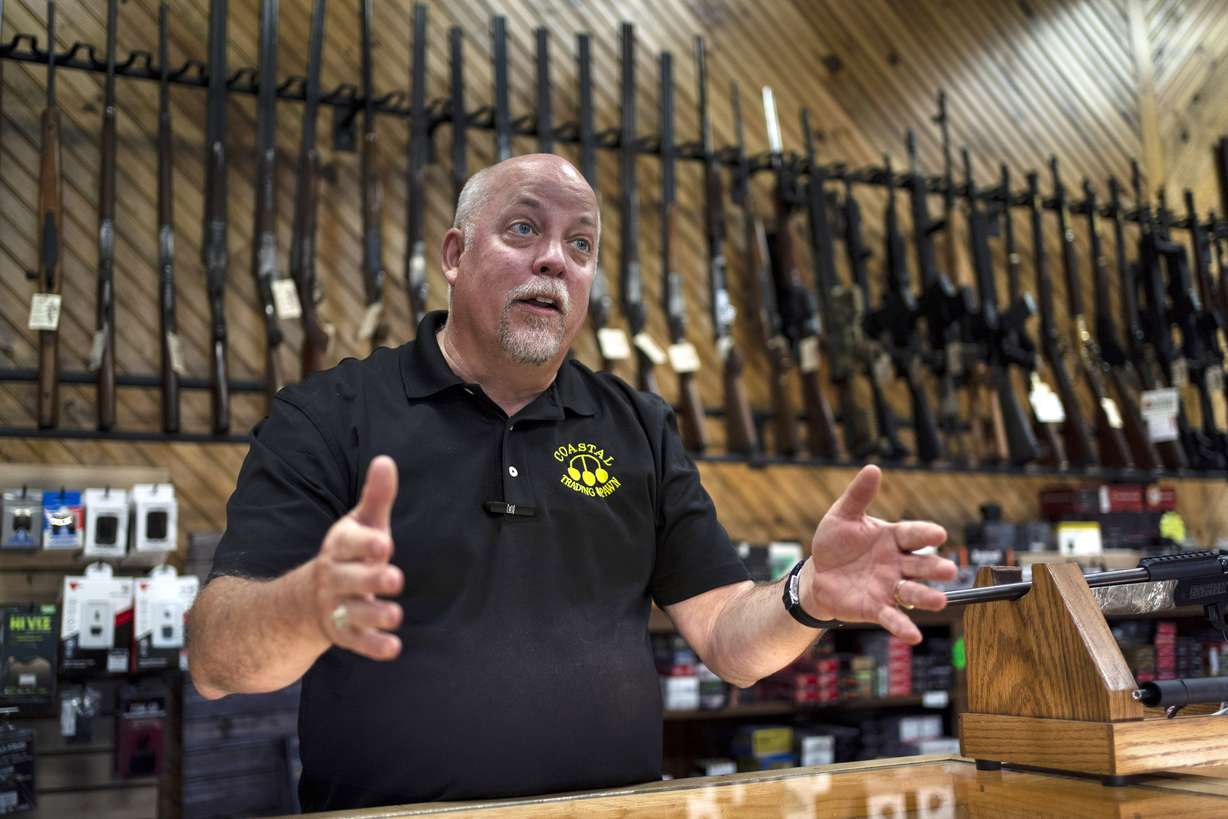
Card already had submitted information to the federal government to purchase it, and federal authorities had approved the sale to that point, he said.
When Card filled out the form at LaChapelle's gun shop to pick up the silencer Aug. 5, he answered "yes" to the question: "Have you ever been adjudicated as a mental defective OR have you ever been committed to a mental institution?"
"As soon as he answered that 'yes' we know automatically that this is disqualifying, he's not getting a silencer today," LaChapelle said.
Silencers are more heavily regulated under federal law than most firearms. Federal law requires buyers to apply with the Bureau of Alcohol, Tobacco, Firearms and Explosives and be approved. The dealer must do a background check ,too
He said Card was polite when notified of the denial, mentioned something about the military and said he would "come right back" after consulting his lawyer.
Investigators are facing increasing public scrutiny and still searching for a motive for the massacre but have increasingly focused on Card's mental health history.
On Monday, Gov. Janet Mills, a Democrat, held a news conference to provide an update on the response to the shooting. The conference turned contentious quickly when Mills declined to provide information about what the investigation has turned up so far.
Mills said state lawmakers would revisit Maine gun control laws. Proposals for tighter laws have stalled or failed in recent legislative sessions.
"I'm not going to stand here today and tell you I'm proposing X, Y and Z," she said. "I'm here to listen, work with others and get people around the table as promptly as possible."
Contributing: Patrick Whittle, David R. Martin, Matt Rourke, Lindsay Whitehurst, Kimberlee Kruesi, Bernard Condon, Michael Casey