'%3e%3cpath%20d='M34.1406%205.85938C30.3906%202.10547%2025.3047%200%2020%200C14.6953%200%209.60938%202.10547%205.85938%205.85938C2.10938%209.61328%200%2014.6953%200%2020C0%2025.3047%202.10547%2030.3906%205.85938%2034.1406C9.61328%2037.8906%2014.6953%2040%2020%2040C25.3047%2040%2030.3906%2037.8945%2034.1406%2034.1406C37.8906%2030.3906%2040%2025.3047%2040%2020C40%2014.6953%2037.8945%209.60938%2034.1406%205.85938ZM37.0117%2023.543H31.1602V13.5391H27.6328V19.9414C28.1211%2020.6914%2028.3711%2021.582%2028.3711%2022.5625V22.625C28.3711%2023.668%2028.1172%2024.6055%2027.6328%2025.4297V26.6094H36.082C33.4883%2032.9375%2027.2891%2037.3789%2020.0039%2037.3789C10.3711%2037.3789%202.62109%2029.6289%202.62109%2020C2.62109%2010.3711%2010.3711%202.62109%2020%202.62109C29.6289%202.62109%2037.3789%2010.3711%2037.3789%2020C37.3789%2021.1484%2037.2617%2022.2656%2037.0508%2023.3477C37.0391%2023.4141%2037.0234%2023.4766%2037.0117%2023.543Z'%20fill='white'/%3e%3cpath%20d='M22.3086%2018.5352C20.4336%2018.125%2019.9531%2017.8398%2019.9766%2017.1836V17.1406C19.9766%2016.6992%2020.3477%2016.2148%2021.4023%2016.2148C22.582%2016.2148%2023.8867%2016.6797%2025.0781%2017.4766L26.8516%2015.0195C25.4453%2013.8906%2023.707%2013.3398%2021.5547%2013.3398C18.5195%2013.3398%2016.4375%2015%2016.4063%2017.4766V17.5352C16.3633%2020.2617%2018.5859%2020.9805%2021.293%2021.6016C23.0391%2021.9766%2023.5703%2022.3164%2023.5703%2022.9609L23.5469%2022.9766C23.5469%2023.3906%2023.2578%2023.7031%2022.7852%2023.8359C22.5742%2023.9062%2022.1289%2023.9727%2021.5156%2023.9727C20.7617%2023.9727%2019.7539%2023.8633%2018.6328%2023.4844C18.0898%2023.2891%2017.4727%2023.0039%2016.8047%2022.6133L20.1406%2026.625C20.2813%2026.6602%2021.0977%2026.8516%2021.7734%2026.8516C25.0039%2026.8516%2027.0859%2025.2461%2027.1094%2022.6328V22.5703C27.1602%2020.1133%2025.2148%2019.1719%2022.3086%2018.5352Z'%20fill='white'/%3e%3cpath%20d='M5.24219%2013.5664V26.6133H8.75391V23.7578L10.2969%2021.9531L14.2031%2026.6133H18.3867L12.3555%2019.5195L17.4023%2013.5664H13.4531L8.75391%2019.0586V13.5664H5.24219Z'%20fill='white'/%3e%3c/g%3e%3cdefs%3e%3cclipPath%20id='clip0_97_2430'%3e%3crect%20width='40'%20height='40'%20fill='white'/%3e%3c/clipPath%3e%3c/defs%3e%3c/svg%3e)


Estimated read time: 10-11 minutes
This archived news story is available only for your personal, non-commercial use. Information in the story may be outdated or superseded by additional information. Reading or replaying the story in its archived form does not constitute a republication of the story.
- Scientists study the earliest events that lead to cancer by studying genetic and molecular changes.
- Research clinics identify, study and educate families with predispositions for melanoma, breast or colon cancer.
- Trials have identified promising new therapies to qualifying patients.
- Researchers study cancer patterns and identify new cancer-causing gene mutations through the world's most comprehensive population database, the Utah Population Database.
Providing Hope Through Education
The Huntsman Cancer Institute provides both patients and the general public with information about specific cancers, treatments, risk factors, prevention and screening through several key programs, services and materials, including:
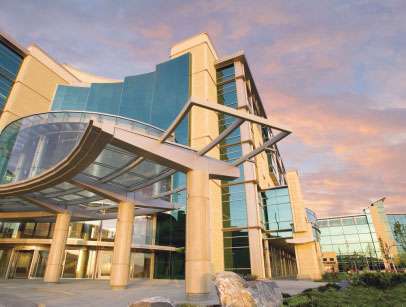
- Huntsman Cancer Learning Center has one of the most comprehensive collections of cancer-related materials in the United States.
- Huntsman Online Patient Education (HOPE) Guide provides Web-based tools for cancer patients, their loved ones and the general public.
- Huntsman Cancer Information Service offers a fully-staffed toll-free telephone service capable of providing accurate and personalized information on all aspects of cancer.
- Cancer Education Outreach Programs provide cancer-related educational presentations to public groups. This service is available upon request.
Providing Hope Through Care
The Huntsman Cancer Institute provides inpatient and outpatient care for all forms of adult cancer. Disease-specific teams of professionals work together to provide the best patient care.
- Outpatient clinical treatment includes chemotherapy, radiation therapy, small surgical procedures, diagnostic procedures and second opinions.
- Inpatient care is provided through the 50-bed Huntsman Cancer Hospital, adjacent to the HCI.
How Can I Reduce My Risk

- Maintain a healthy body weight and get regular physical activity.
- Reduce consumption of high-fat, high-sugar, and highly processed foods and drinks.
- Know your family history and share any illness patterns or concerns with your doctor.
- Perform skin, breast and testicular self-exams that can aid in the early detection of these cancers
- Find stress-reducing activities you enjoy, such as meditation, yoga, reading or exercising.
www.huntsmancancer.org/cancerInformation/wellness.jsp
Birthday Screenings
Through HCI's Birthday Cancer Screening Guidelines you can know when, and how often, cancer screenings should be done. Schedule a screening with your doctor annually, around your birthday, and make sure you perform self examinations monthly. Download additional information for yourself and pass it along to your family and friends.
http://www.huntsmancancer.org/birthdayScreening/
Early Detection
Early detection dramatically improves the chances of successful treatment. HCI provides at-a-glance screening guidelines for both men and women. Additional information can also be found by calling the Huntsman Cancer Information Service at (801) 581-6365.
For screening guidelines for women, click HERE
For screening guidelines for men, click HERE
Annual Awareness Opportunities
In an effort to increase community awareness, the Huntsman Cancer Institute provides a Cancer Awareness Calendar which focuses on one or two cancers each month. The program provides cancer overviews, events and activities associated with designated cancers to area residents, along with additional information and resources to allow further research of the monthly topic. Click HERE for more information.
Risk Factors
There are environmental, behavioral and genetic factors that may increase a person's risk for developing cancer. Some risk factors can be minimized or eliminated, while others cannot be controlled. However, knowing risks and discussing screening options with your doctor can improve the outcome of a disease if you are ever diagnosed. The Huntsman Online Patient Education (HOPE) Guide is an online resource for cancer information. HOPE not only provides detailed risk factor information, but it also serves as a resource for treatment, coping, prevention, symptoms, screening and medical tests. Visit the HOPE Guide at www.hopeguide.org.
HCI Learning Center

Questions? Being diagnosed with cancer is traumatic for the patients and their loved ones. Question after question will often come to mind as they grapple with the unbelievable reality they now face and the fight they are undertaking. To help answer such questions and empower individuals with knowledge, the Huntsman Cancer Institute has created the Huntsman Cancer Learning Center. The Huntsman Cancer Learning Center is designed to help patients, families and all individuals address their cancer-related concerns and can provide current information about cancer, its prevention and its treatments. Getting answers to cancer questions can help individuals develop a thorough understanding and can help them coordinate with their health care team to make better treatment decisions. Visit the Huntsman Cancer Learning Center, click HERE
- Treatment
- Coping
- Prevention
- Risk Factors
- Symptoms
- Screening and Medical Tests
Visit the Hope Guide at www.hopeguide.org
Additional assistance is also available through the Cancer Information Line at 1-888-HCI-2100. The information line provides accurate, up-to-date information on all aspects of cancer and is for cancer patients, families, friends, the general public and health professionals.
The Huntsman Cancer Information Service does address cancer-related questions through e-mail, and can be contacted at patient.education@hci.utah.edu.
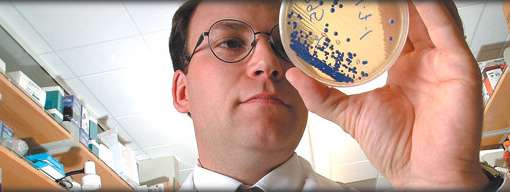
HCI's ability to create such an extensive database is a direct result of Utah's stable population, which has the capability to provide the genealogy, or family trees, of patients who are treated here. Understanding the genetic history of cancers in a family is a very important part of HCI's research mission and the institution does it better than anyone else.
http://www.huntsmancancer.org/group/sharedFacilities~/ccsg/UPDB.jsp
http://www.huntsmancancer.org/groups/ppr/services.html
HCI has created The Huntsman Cancer Foundation to help meet the centers key objectives, research-education-care, to individuals throughout the country. The foundation dedicates its resources to funding cancer research, treatment, education programs, and patient-care facilities. Opportunities for giving are vast, including in-kind donations, corporate giving, cash donations and multiple community fundraising efforts held annually through the foundations Hometown Heroes Program. Volunteer opportunities are also available through both the Huntsman Cancer Institute and Huntsman Cancer Foundation
Three Reasons To Give
- Scientists, including 2007 Nobel Prize winner Mario Capecchi, PhD, are internationally renowned for their breakthroughs in transgenic research.
- HCI houses and manages the largest, most comprehensive genetics database in the world, and more cancer genes have been identified by HCI scientists than at any other cancer research institute
- Huntsman Cancer Hospital ranked in the top 1 percent of hospitals in the nation for cancer care in 2007 by U.S. News and World Report.
www.huntsmancancerfoundation.org
The Huntsman Cancer Institute meets the highest national standards for cancer and research and is one of 21 members nationally that make up the National Comprehensive Cancer Network. As a member, HCI is dedicated to raising the standard of care for all cancer patients by improving the quality, effectiveness and efficiency of cancer care. HCI is also one of 61 National Cancer Institute Designated Cancer Centers throughout the United States. Other key accomplishments include:- Our Scientists, including 2007 Nobel Prize winner Mario Capecchi, are internationally renowned for their breakthroughs in transgenic cancer research.
- More Cancer genes have been identified by HCI scientists than at any other institute.
- HCI is home to the Utah Population Database, the largest, most comprehensive genetic database in the world.
- HCI is the only National Cancer Institute Cancer Center in the Intermountain West.
To read more information about genetics and research, visit: http://www.huntsmancancer.org/research.jsp
As a national leader, HCI conducts research and clinical trials in many facets of cancer treatment, including:
- Colon Cancer
- Melanoma
- Sarcoma
- Pancreatic Cancer
- Breast Cancer
To read more about HCI's recent scientific accomplishments, click HERE
Clinical Trials
The Huntsman Cancer Institute combines research and clinical trials to improve and advance cancer treatments. Clinical trials are the best way for physicians to learn about experimental treatments and their effectiveness. Patients of clinical trials are among the first to receive new research treatments before they are widely available and also have the satisfaction of knowing they are helping to find new and better cancer treatments. For additional information about HCI's clinical trials click HERE.