'%3e%3cpath%20d='M34.1406%205.85938C30.3906%202.10547%2025.3047%200%2020%200C14.6953%200%209.60938%202.10547%205.85938%205.85938C2.10938%209.61328%200%2014.6953%200%2020C0%2025.3047%202.10547%2030.3906%205.85938%2034.1406C9.61328%2037.8906%2014.6953%2040%2020%2040C25.3047%2040%2030.3906%2037.8945%2034.1406%2034.1406C37.8906%2030.3906%2040%2025.3047%2040%2020C40%2014.6953%2037.8945%209.60938%2034.1406%205.85938ZM37.0117%2023.543H31.1602V13.5391H27.6328V19.9414C28.1211%2020.6914%2028.3711%2021.582%2028.3711%2022.5625V22.625C28.3711%2023.668%2028.1172%2024.6055%2027.6328%2025.4297V26.6094H36.082C33.4883%2032.9375%2027.2891%2037.3789%2020.0039%2037.3789C10.3711%2037.3789%202.62109%2029.6289%202.62109%2020C2.62109%2010.3711%2010.3711%202.62109%2020%202.62109C29.6289%202.62109%2037.3789%2010.3711%2037.3789%2020C37.3789%2021.1484%2037.2617%2022.2656%2037.0508%2023.3477C37.0391%2023.4141%2037.0234%2023.4766%2037.0117%2023.543Z'%20fill='white'/%3e%3cpath%20d='M22.3086%2018.5352C20.4336%2018.125%2019.9531%2017.8398%2019.9766%2017.1836V17.1406C19.9766%2016.6992%2020.3477%2016.2148%2021.4023%2016.2148C22.582%2016.2148%2023.8867%2016.6797%2025.0781%2017.4766L26.8516%2015.0195C25.4453%2013.8906%2023.707%2013.3398%2021.5547%2013.3398C18.5195%2013.3398%2016.4375%2015%2016.4063%2017.4766V17.5352C16.3633%2020.2617%2018.5859%2020.9805%2021.293%2021.6016C23.0391%2021.9766%2023.5703%2022.3164%2023.5703%2022.9609L23.5469%2022.9766C23.5469%2023.3906%2023.2578%2023.7031%2022.7852%2023.8359C22.5742%2023.9062%2022.1289%2023.9727%2021.5156%2023.9727C20.7617%2023.9727%2019.7539%2023.8633%2018.6328%2023.4844C18.0898%2023.2891%2017.4727%2023.0039%2016.8047%2022.6133L20.1406%2026.625C20.2813%2026.6602%2021.0977%2026.8516%2021.7734%2026.8516C25.0039%2026.8516%2027.0859%2025.2461%2027.1094%2022.6328V22.5703C27.1602%2020.1133%2025.2148%2019.1719%2022.3086%2018.5352Z'%20fill='white'/%3e%3cpath%20d='M5.24219%2013.5664V26.6133H8.75391V23.7578L10.2969%2021.9531L14.2031%2026.6133H18.3867L12.3555%2019.5195L17.4023%2013.5664H13.4531L8.75391%2019.0586V13.5664H5.24219Z'%20fill='white'/%3e%3c/g%3e%3cdefs%3e%3cclipPath%20id='clip0_97_2430'%3e%3crect%20width='40'%20height='40'%20fill='white'/%3e%3c/clipPath%3e%3c/defs%3e%3c/svg%3e)


Estimated read time: 7-8 minutes
The numbers behind the nerves
A certain amount of dread about the first day of school is as old as school itself. But today's teens are navigating a level of mental health strain that previous generations didn't face at the same scale.
Nationally, 19% of adolescents ages 12 to 17 – roughly 4.9 million kids – reported moderate to severe anxiety symptoms in 2024, and 40% of high school students said they experienced persistent sadness or hopelessness. Academic worries top the list: school, grades, and college applications account for 83% of all teen concerns, according to recent survey data.
Utah is not immune. State data show 41.5% of Utah youth have felt sad or hopeless almost every day for two weeks or more. That's up from 33% a few years earlier. Nearly 18% of Utah youth experienced at least one major depressive episode in the past year.
The encouraging news is that Utah's most recent SHARP survey results show meaningful improvement in depression indicators statewide, with suicide related measures also trending down. But trending better is not the same as resolved and back-to-school season is when simmering anxiety often boils over.

Why back-to-school anxiety is different for teens
Younger children worry about separation from parents. Teens worry about themselves: their identity, their social standing, their future. That distinction matters because adolescent anxiety tends to be more internalized and harder to spot.
Common teen-specific triggers include:
- Academic pressure and perfectionism. A 2026 longitudinal study in The Lancet Child & Adolescent Health found that each one point increase in perceived academic pressure was associated with meaningfully higher depressive symptoms through age 22. Teens who tie their self-worth to GPA are especially vulnerable at the start of a new grading period.
- Social comparison and shifting friend groups. New classes mean new social configurations. For teens who already struggle with belonging, the first week can feel like an audition.
- Phone policies and digital separation anxiety. As of 2025, at least 26 states have implemented school phone restrictions and more are rolling them out for the 2025-26 and 2026-27 school years. For teens who use their phone as an emotional regulator, a bell-to-bell ban can paradoxically increase anxiety during school hours, even if it reduces distraction overall.
- Social media's long shadow. The average teen spends 4.5 hours a day on social media. Fifty-eight percent report losing sleep because of it. That sleep debt compounds school day stress and impairs the emotional regulation teens need most during transitions.
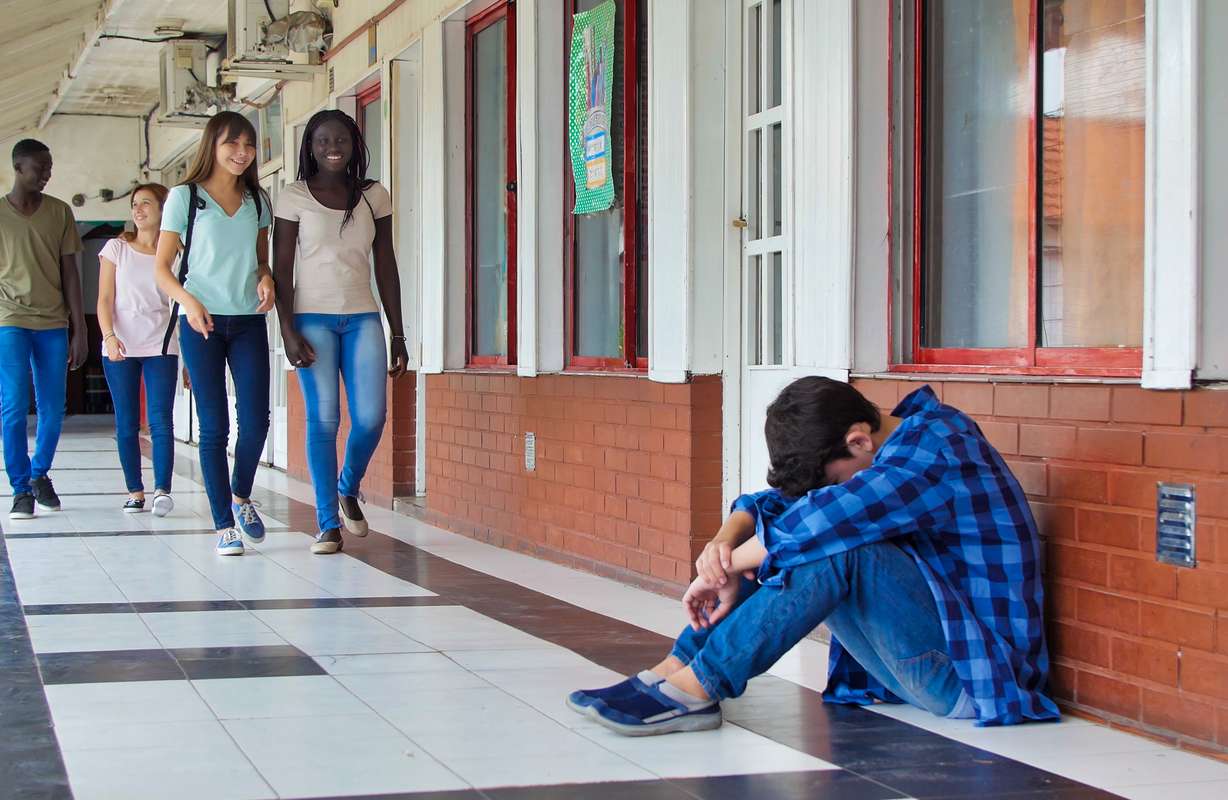
Normal nerves vs. warning signs
Some first-week anxiety is healthy; it means your teen cares. The red line is when worry stops being motivating and starts being disabling.
Normal (usually resolves in 1 to 2 weeks):
- Butterflies, trouble sleeping the night before
- Extra questions about schedule, teachers, logistics
- Mild irritability or clinginess
Time to pay closer attention if you see:
- Persistent dread, tearfulness, or anger that lasts beyond the first two weeks of school.
- Physical symptoms without a medical explanation like headaches, stomachaches, nausea, racing heart.
- Avoidance behaviors such as refusing to get in the car, calling or texting home repeatedly or bargaining to stay home.
- Withdrawal from friends, activities, or things they used to enjoy.
- A noticeable drop in sleep quality or a sudden change in eating habits.
Seek professional support if:
- Your teen cannot attend school consistently.
- Anxiety is intensifying rather than fading.
- You notice signs of self-harm, substance use, or talk of hopelessness.
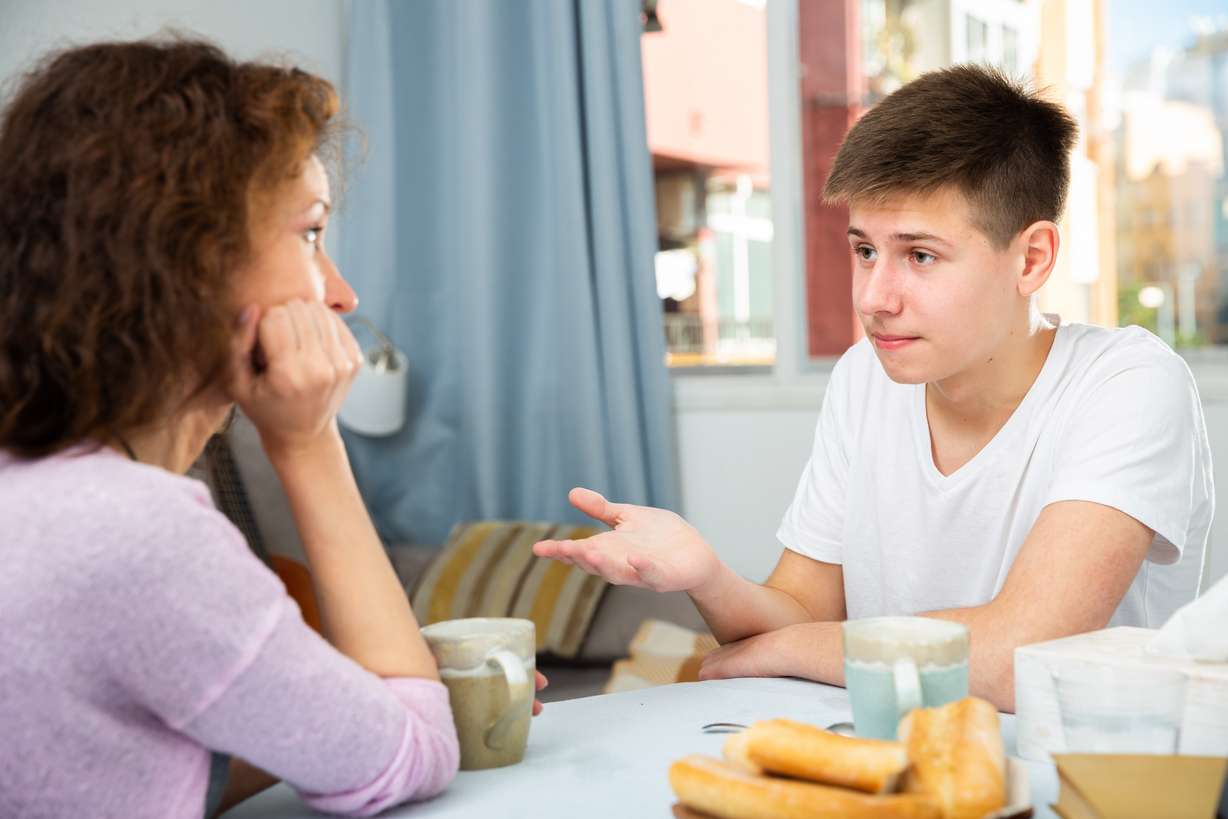
What to say (and what to stop saying)
Most parents default to reassurance: "You'll be fine." For a teen, that can land as dismissal. Instead, try language that validates and redirects:
- Instead of saying "don't worry about it," try "tell me what is weighing on you most."
- Instead of saying "you'll be fine," try "It makes sense that this feels hard. What part feels hardest?"
- Instead of saying "everyone's nervous," try "you can be nervous and still show up. Both things are true."
- Instead of saying "just focus on your grades," try "grades matter, but they aren't the only thing that defines you."
After you listen, help them fact-check the fear. If they're worried about getting lost, pull up the school map. If they're dreading a class, look up the teacher together. Anxiety shrinks when unknowns become known.
6 strategies that actually work for teens
Beyond the standard advice to take a deep breath, here are evidence-informed tools tailored to the teen brain:
- Shrink the first day down to size – Instead of thinking about the entire semester, help your teen focus only on the first 90 minutes. What class is first? Where do they sit? Who do they already know? A narrow focus reduces cognitive overwhelm.
- Reclaim the morning routine – now – Start shifting bedtimes and wake up times at least a week before school starts. Practice the full morning sequence: alarm, breakfast, getting dressed, leaving the house. Familiarity is one of the strongest anxiety buffers available.
- Teach the name-it-to-tame-it technique – Research in affective neuroscience shows that labeling an emotion ("I'm feeling anxious about lunch") activates the prefrontal cortex and calms the amygdala. Teens can do this silently, in a journal, or out loud with a trusted person.
- Create a phone transition plan – If your teen's school has a phone-free policy, talk about it before the first day not as a punishment, but as a shared adjustment. Discuss what they'll do during moments they'd normally scroll: talk to someone, listen to music between classes, sketch, read. Replacing the habit matters more than removing the device.
- Normalize the comparison trap – Teens are acutely aware of how they stack up. Acknowledge that social media makes it worse, and help them distinguish between someone else's highlight reel and their own full story.
- Box breathing and 5-4-3-2-1 grounding remain genuinely useful but only if practiced before an anxiety spike. Run through them together at home a few times so the skill is already loaded when they need it at school.
When to loop in the school
Schools want to help and increasingly, they're staffed to do so. Utah has made investments in school-based mental health resources that have earned improving marks on national report cards.
Reach out to your teen's counselor or school mental health team if you see:
- Repeated absences or chronic tardiness.
- Reports of bullying or social isolation.
- Frequent requests to leave class or go to the nurse.
- A pattern of calling or texting home during the school day.
School staff can create accommodations like a check-in with a trusted adult each morning, a brief "cool down" pass, or a modified schedule during the adjustment period. These small interventions often prevent bigger problems.
When to call a professional
If your teen's anxiety continues beyond the first few weeks, grows more intense, or begins interfering with school attendance, friendships, or daily life, it's time to seek additional support. A pediatrician can evaluate symptoms, rule out medical causes, and connect your family with a therapist or psychiatrist.
In Utah, resources include:
Intermountain Health pediatric behavioral health: Schedule through your child's pediatrician.
SafeUT app: real-time crisis chat and tip line for Utah students, parents, and educators.
988 Suicide & Crisis Lifeline call or text 988, 24/7.
This information is intended for general educational purposes only and should not be considered medical or mental health advice. If you have concerns about your teen's anxiety or emotional well-being, please consult your pediatrician or a licensed mental health provider.
The opinions and conclusions expressed in this article are the sponsor's own and do not reflect the views or opinions of KSL.com. This Site Does Not Provide Medical Advice. Any content on this Site, such as text, graphics, images, information obtained from, or contained on this Site are for informational purposes only. The content is not intended to be a substitute for professional medical advice, diagnosis, or treatment. Always seek the advice of your physician or other qualified health provider with any questions you may have regarding a medical condition. Never disregard professional medical advice or delay in seeking it because of something you have read on this site! The owner and operator of this site do not recommend or endorse any specific tests, physicians, products, procedures, opinions, or other information that may be mentioned on the site. Reliance on any information provided by the Operator, including their employees, contractors or others appearing on the Site at the invitation of the Operator, or other visitors to the Site is solely at your own risk. If you think you may have a medical emergency, call your doctor or 911 immediately.