Estimated read time: 4-5 minutes
- Gov. Cox emphasized the need to build critical mineral infrastructure at a summit.
- Utah ranks seventh nationally in nonfuel mineral production, with $5 billion output.
- Concerns remain about environmental impacts, particularly on the Great Salt Lake.
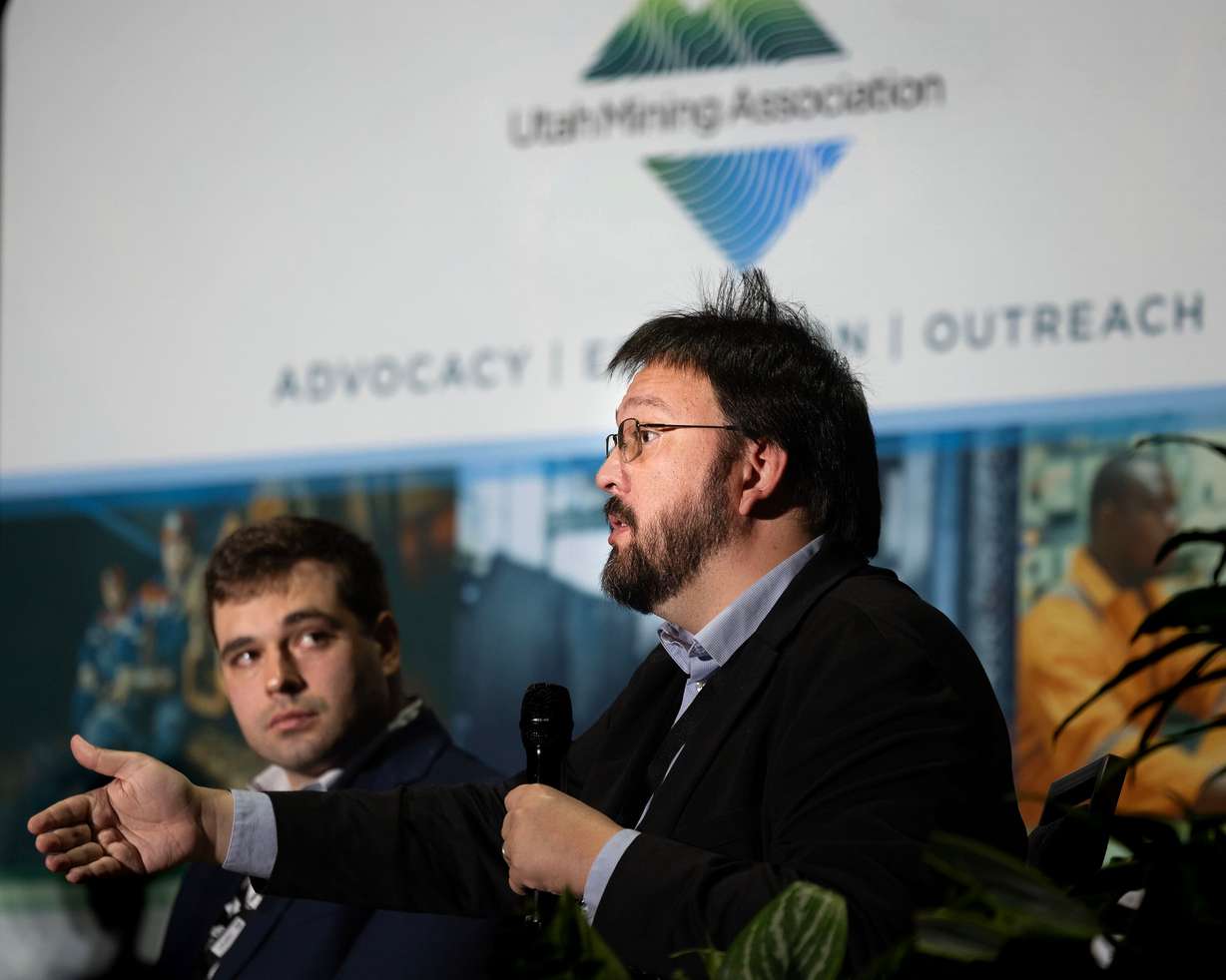
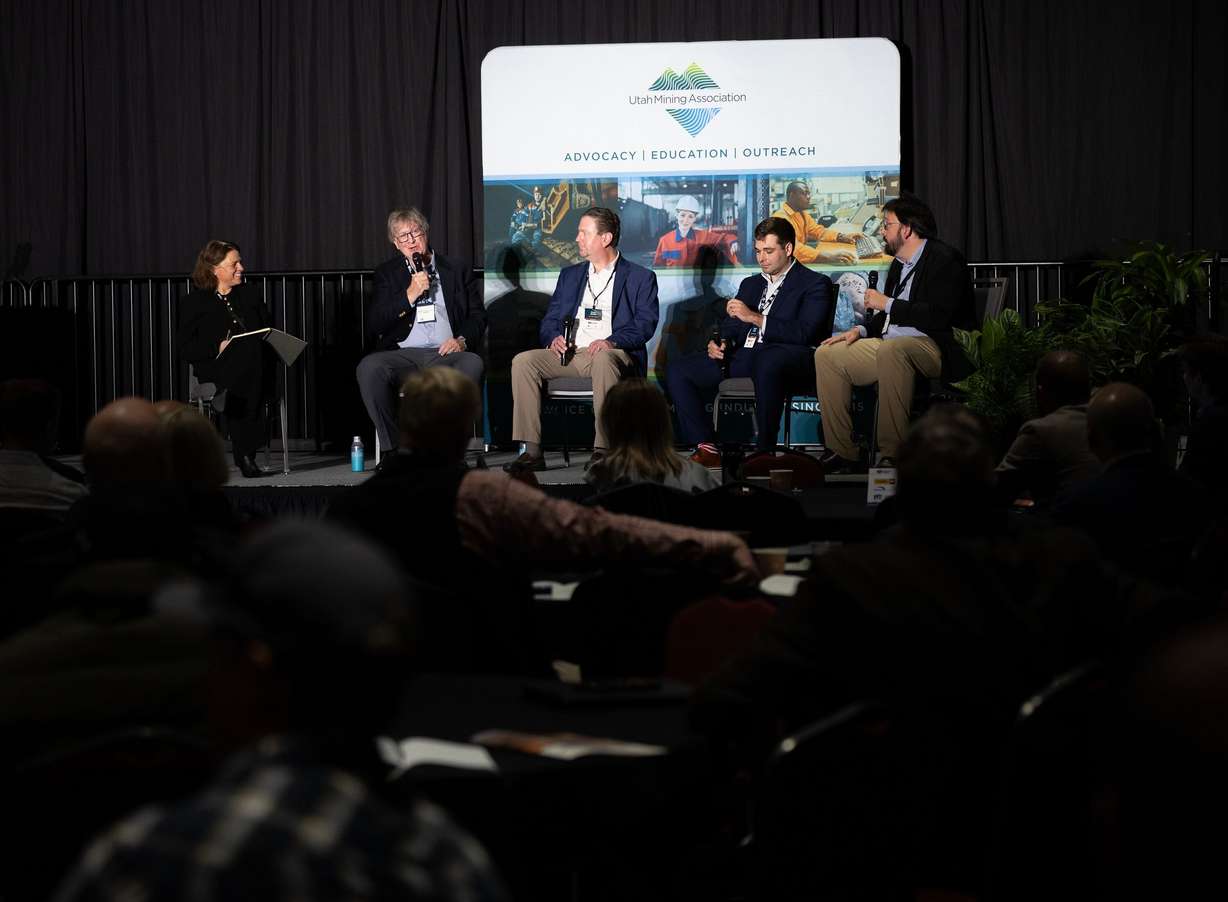
SALT LAKE CITY — Utah Gov. Spencer Cox, when speaking at the Intermountain Critical Minerals Summit in Salt Lake City on Wednesday, reminded industry leaders of his three-word challenge he had given almost two years prior: "We must build."
"You cannot build a modern electrical grid, advanced aerospace manufacturing, or a resilient domestic economy out of thin air," he said. "And most importantly, you cannot defend this country without the critical minerals that are the bedrock of American national security."
Cox gave that same three-word message in his State of the State address on Jan. 23, 2025. Since then, the state has worked toward fulfilling that request.
Utah has a robust mining industry — it produced $5 billion last year, according to a new report from the Utah Geological Survey, up $360 million from the year before. In the report, Utah ranked seventh nationally for nonfuel mineral production value.
Cox has been at the epicenter of that growth, making energy and critical mineral priorities in his goal to double Utah's power production over 10 years.
"For decades, our nation grew dangerously complacent — outsourcing extraction and processing to foreign competitors and geopolitical adversaries," Cox continued. "Today, our national security sits vulnerable to foreign bottlenecks and export bans."
In April 2025, China produced around 90% of the world's mined germanium, controlled 98% of low-purity gallium production, and ran more than 90% of global spherical graphite and anode material production, according to an ORF report. The report claimed the U.S. had a 100% import dependency for gallium.

"If American minerals must still cross an ocean to pass through an adversary's processing facility before an American defense contractor or manufacturer can actually use them, we do not have true national security," Cox said.
Utah, however, is much more independent — it produces 10 of the 60 minerals on the 2025 federal critical minerals list.
"The good news is that Utah wants to and is leading America's mineral independence revolution," he added.
The state is the sole domestic producer of beryllium — accounting for nearly 55% of global production. In recent years, Utah has also been the sole domestic producer of magnesium metal and potassium sulfate.
The Utah Geological Survey's report also said the state has the nation's only conventional uranium mill, and is home to one of two national copper smelters — something Cox said "still boggles" his mind.
"Utah has always turned overlooked stone into an engine of American strength," he added.
In January of this year, Cox announced his Mission Critical initiative, with the goal of making Utah the nation's top destination for critical mineral mining and processing. Additionally, Cox introduced Senate Bill 254, which took effect in May, and prioritizes permits related to critical minerals projects.
"We've established the nation's first Critical Minerals Council to bring state regulators, industry executives, and university researchers into the same room for the first time," he said. "We've partnered with industry, President Taylor Randall, and the University of Utah to launch the MIND Center, which will become the foundation for a federally recognized critical minerals processing testbed."
The governor also mentioned the state's ambitious goals: helping supply a quarter of domestic demand, processing at least half of our extracted minerals in Utah, and cutting permitting delays down to under 18 months.
Finally, Cox left a message for industry partners about environmental standards: "We can move faster without lowering standards. Those two duties are not in conflict."
Cox continued, "Responsible regulation must protect our air, our water, and communities without leaving projects vital to national defense trapped in bureaucratic purgatory."
However, many hold concerns over the state's mineral push. Utah's State Water Plan says the Bingham Canyon mine is one of the major industrial water users in the Jordan River Basin, though the State Engineer's Office hasn't released figures for individual companies.
Critics and environmentalists argue that industrial extraction directly threatens the survival of the Great Salt Lake. The lake sits at 4,190 feet — only about 2 feet above the record low.
The Utah Geological Survey's report notes the U.S. Magnesium Superfund Site adjacent to the Great Salt Lake in Tooele County. The lake's mineral-rich brine attracted extractors, until the site became one of the largest magnesium producers in the country.
The Environmental Protection Agency has reported that the facility accounted for as much as 92% of Utah's toxic air emissions.
Utah's study confirms the site idled its operations in late 2024 after failing to produce magnesium metal since 2022. However, environmentalists remain critical of mining techniques and their effects on precious state resources.
"Capital needs predictable timelines. Communities need uncompromised safety," Cox said. "Good government can and must deliver both."