'%3e%3cpath%20d='M34.1406%205.85938C30.3906%202.10547%2025.3047%200%2020%200C14.6953%200%209.60938%202.10547%205.85938%205.85938C2.10938%209.61328%200%2014.6953%200%2020C0%2025.3047%202.10547%2030.3906%205.85938%2034.1406C9.61328%2037.8906%2014.6953%2040%2020%2040C25.3047%2040%2030.3906%2037.8945%2034.1406%2034.1406C37.8906%2030.3906%2040%2025.3047%2040%2020C40%2014.6953%2037.8945%209.60938%2034.1406%205.85938ZM37.0117%2023.543H31.1602V13.5391H27.6328V19.9414C28.1211%2020.6914%2028.3711%2021.582%2028.3711%2022.5625V22.625C28.3711%2023.668%2028.1172%2024.6055%2027.6328%2025.4297V26.6094H36.082C33.4883%2032.9375%2027.2891%2037.3789%2020.0039%2037.3789C10.3711%2037.3789%202.62109%2029.6289%202.62109%2020C2.62109%2010.3711%2010.3711%202.62109%2020%202.62109C29.6289%202.62109%2037.3789%2010.3711%2037.3789%2020C37.3789%2021.1484%2037.2617%2022.2656%2037.0508%2023.3477C37.0391%2023.4141%2037.0234%2023.4766%2037.0117%2023.543Z'%20fill='white'/%3e%3cpath%20d='M22.3086%2018.5352C20.4336%2018.125%2019.9531%2017.8398%2019.9766%2017.1836V17.1406C19.9766%2016.6992%2020.3477%2016.2148%2021.4023%2016.2148C22.582%2016.2148%2023.8867%2016.6797%2025.0781%2017.4766L26.8516%2015.0195C25.4453%2013.8906%2023.707%2013.3398%2021.5547%2013.3398C18.5195%2013.3398%2016.4375%2015%2016.4063%2017.4766V17.5352C16.3633%2020.2617%2018.5859%2020.9805%2021.293%2021.6016C23.0391%2021.9766%2023.5703%2022.3164%2023.5703%2022.9609L23.5469%2022.9766C23.5469%2023.3906%2023.2578%2023.7031%2022.7852%2023.8359C22.5742%2023.9062%2022.1289%2023.9727%2021.5156%2023.9727C20.7617%2023.9727%2019.7539%2023.8633%2018.6328%2023.4844C18.0898%2023.2891%2017.4727%2023.0039%2016.8047%2022.6133L20.1406%2026.625C20.2813%2026.6602%2021.0977%2026.8516%2021.7734%2026.8516C25.0039%2026.8516%2027.0859%2025.2461%2027.1094%2022.6328V22.5703C27.1602%2020.1133%2025.2148%2019.1719%2022.3086%2018.5352Z'%20fill='white'/%3e%3cpath%20d='M5.24219%2013.5664V26.6133H8.75391V23.7578L10.2969%2021.9531L14.2031%2026.6133H18.3867L12.3555%2019.5195L17.4023%2013.5664H13.4531L8.75391%2019.0586V13.5664H5.24219Z'%20fill='white'/%3e%3c/g%3e%3cdefs%3e%3cclipPath%20id='clip0_97_2430'%3e%3crect%20width='40'%20height='40'%20fill='white'/%3e%3c/clipPath%3e%3c/defs%3e%3c/svg%3e)


Estimated read time: 3-4 minutes
As thousands of Utah students return to school, Intermountain Children's Health is encouraging families to review pedestrian safety habits before children begin walking to and from school.
Walking to school or around the neighborhood is a great way for children to be active, gain confidence, and practice independence. However, pedestrian injuries continue to send thousands of children to emergency departments each year, making it important for children to understand how to safely navigate streets and neighborhoods.
"As kids head back to school, they're spending more time walking in neighborhoods, around schools, and near traffic," said Michelle Jamison, community health program manager at Intermountain Primary Children's Hospital. "The start of the school year is a great time for families to review pedestrian safety habits. These simple conversations can help children recognize potential dangers and make safer choices when walking."
Intermountain Children's Health recommends teaching children to stay out of driveways, streets, parking lots, and unfenced yards near roadways when playing outside. If sidewalks are not available, children should walk facing oncoming traffic so they can see approaching vehicles.
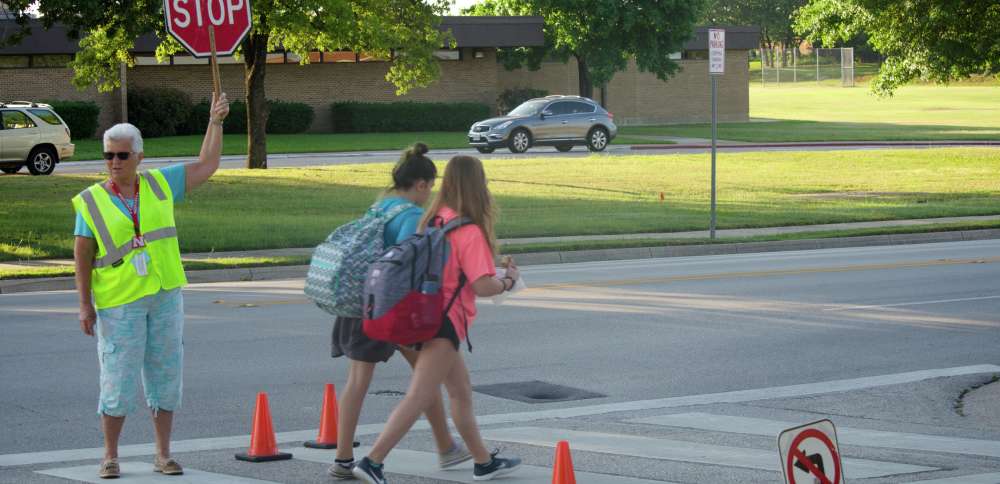
Families should also remind children to stop at the curb before crossing a street and look left, right, and left again. Children should make eye contact with drivers before stepping into a crosswalk to help ensure they are seen. Younger children should cross streets with an adult and use designated crossing areas whenever possible.
As daylight hours begin to shorten later in the fall, visibility becomes especially important. When walking at night or during low-light conditions, children should wear light-colored clothing or reflective gear to help drivers see them more easily.
Remind children to stay focused on their surroundings when walking near traffic. Phones, earbuds, and other distractions can make it harder to see, hear, and react to vehicles. Encourage children and teens to put devices away and take off headphones when crossing streets and walking through intersections.
"Pedestrian safety doesn't have to be complicated," said Jamison. "When children know how to cross safely, stay alert, and choose safe places to walk, they're better prepared to navigate their neighborhoods and school routes safely."
Families looking for additional child safety resources can visit Intermountain Health's child safety website at IntermountainHealth.org/childsafety.
The opinions and conclusions expressed in this article are the sponsor's own and do not reflect the views or opinions of KSL.com. This Site Does Not Provide Medical Advice. Any content on this Site, such as text, graphics, images, information obtained from, or contained on this Site are for informational purposes only. The content is not intended to be a substitute for professional medical advice, diagnosis, or treatment. Always seek the advice of your physician or other qualified health provider with any questions you may have regarding a medical condition. Never disregard professional medical advice or delay in seeking it because of something you have read on this site! The owner and operator of this site do not recommend or endorse any specific tests, physicians, products, procedures, opinions, or other information that may be mentioned on the site. Reliance on any information provided by the Operator, including their employees, contractors or others appearing on the Site at the invitation of the Operator, or other visitors to the Site is solely at your own risk. If you think you may have a medical emergency, call your doctor or 911 immediately.