'%3e%3cpath%20d='M34.1406%205.85938C30.3906%202.10547%2025.3047%200%2020%200C14.6953%200%209.60938%202.10547%205.85938%205.85938C2.10938%209.61328%200%2014.6953%200%2020C0%2025.3047%202.10547%2030.3906%205.85938%2034.1406C9.61328%2037.8906%2014.6953%2040%2020%2040C25.3047%2040%2030.3906%2037.8945%2034.1406%2034.1406C37.8906%2030.3906%2040%2025.3047%2040%2020C40%2014.6953%2037.8945%209.60938%2034.1406%205.85938ZM37.0117%2023.543H31.1602V13.5391H27.6328V19.9414C28.1211%2020.6914%2028.3711%2021.582%2028.3711%2022.5625V22.625C28.3711%2023.668%2028.1172%2024.6055%2027.6328%2025.4297V26.6094H36.082C33.4883%2032.9375%2027.2891%2037.3789%2020.0039%2037.3789C10.3711%2037.3789%202.62109%2029.6289%202.62109%2020C2.62109%2010.3711%2010.3711%202.62109%2020%202.62109C29.6289%202.62109%2037.3789%2010.3711%2037.3789%2020C37.3789%2021.1484%2037.2617%2022.2656%2037.0508%2023.3477C37.0391%2023.4141%2037.0234%2023.4766%2037.0117%2023.543Z'%20fill='white'/%3e%3cpath%20d='M22.3086%2018.5352C20.4336%2018.125%2019.9531%2017.8398%2019.9766%2017.1836V17.1406C19.9766%2016.6992%2020.3477%2016.2148%2021.4023%2016.2148C22.582%2016.2148%2023.8867%2016.6797%2025.0781%2017.4766L26.8516%2015.0195C25.4453%2013.8906%2023.707%2013.3398%2021.5547%2013.3398C18.5195%2013.3398%2016.4375%2015%2016.4063%2017.4766V17.5352C16.3633%2020.2617%2018.5859%2020.9805%2021.293%2021.6016C23.0391%2021.9766%2023.5703%2022.3164%2023.5703%2022.9609L23.5469%2022.9766C23.5469%2023.3906%2023.2578%2023.7031%2022.7852%2023.8359C22.5742%2023.9062%2022.1289%2023.9727%2021.5156%2023.9727C20.7617%2023.9727%2019.7539%2023.8633%2018.6328%2023.4844C18.0898%2023.2891%2017.4727%2023.0039%2016.8047%2022.6133L20.1406%2026.625C20.2813%2026.6602%2021.0977%2026.8516%2021.7734%2026.8516C25.0039%2026.8516%2027.0859%2025.2461%2027.1094%2022.6328V22.5703C27.1602%2020.1133%2025.2148%2019.1719%2022.3086%2018.5352Z'%20fill='white'/%3e%3cpath%20d='M5.24219%2013.5664V26.6133H8.75391V23.7578L10.2969%2021.9531L14.2031%2026.6133H18.3867L12.3555%2019.5195L17.4023%2013.5664H13.4531L8.75391%2019.0586V13.5664H5.24219Z'%20fill='white'/%3e%3c/g%3e%3cdefs%3e%3cclipPath%20id='clip0_97_2430'%3e%3crect%20width='40'%20height='40'%20fill='white'/%3e%3c/clipPath%3e%3c/defs%3e%3c/svg%3e)


Estimated read time: 6-7 minutes
Strokes are the fifth leading cause of death in the U.S., causing 1 in 20 adult deaths. Neurologists want patients to understand that many stroke cases may be prevented. If a stroke occurs, treatment is possible.
Stroke is a term that physicians use when a part of the brain is damaged because of a problem with blood flow. Strokes can happen when:
- An artery going to the brain gets clogged or closes off, and part of the brain goes without blood for too long. This accounts for approximately 85% of strokes.
- An artery breaks open and starts bleeding into or around the brain.
The effects of a stroke depend on several factors, including which part of the brain is affected and how quickly the stroke is treated.
"Stroke symptoms range from minor with no significant lasting effects to causing significant disability or death," said Paul Johnson, MD, is a neurohospitalist and the Comprehensive Stroke Center Medical Director at Intermountain Medical Center. "Some people become partly paralyzed or are unable to speak. The most common stroke symptoms are sudden weakness in the face or arms and/or inability to speak, but strokes can cause many other symptoms as well."
Risks for strokes can be partially genetics (or related to family history) but many risk factors are controllable through awareness and lifestyle changes. The No. 1 stroke risk factor is high blood pressure. Up to 80% of strokes in America are preventable. It's important for everyone to know their risk factors.
Most strokes are caused by treatable risk factors and are therefore preventable.
Quick medical treatment during a stroke is one of the most important factors in determining a good outcome. If a stroke does occur, there are treatments available to prevent long term brain injury but are very time sensitive.
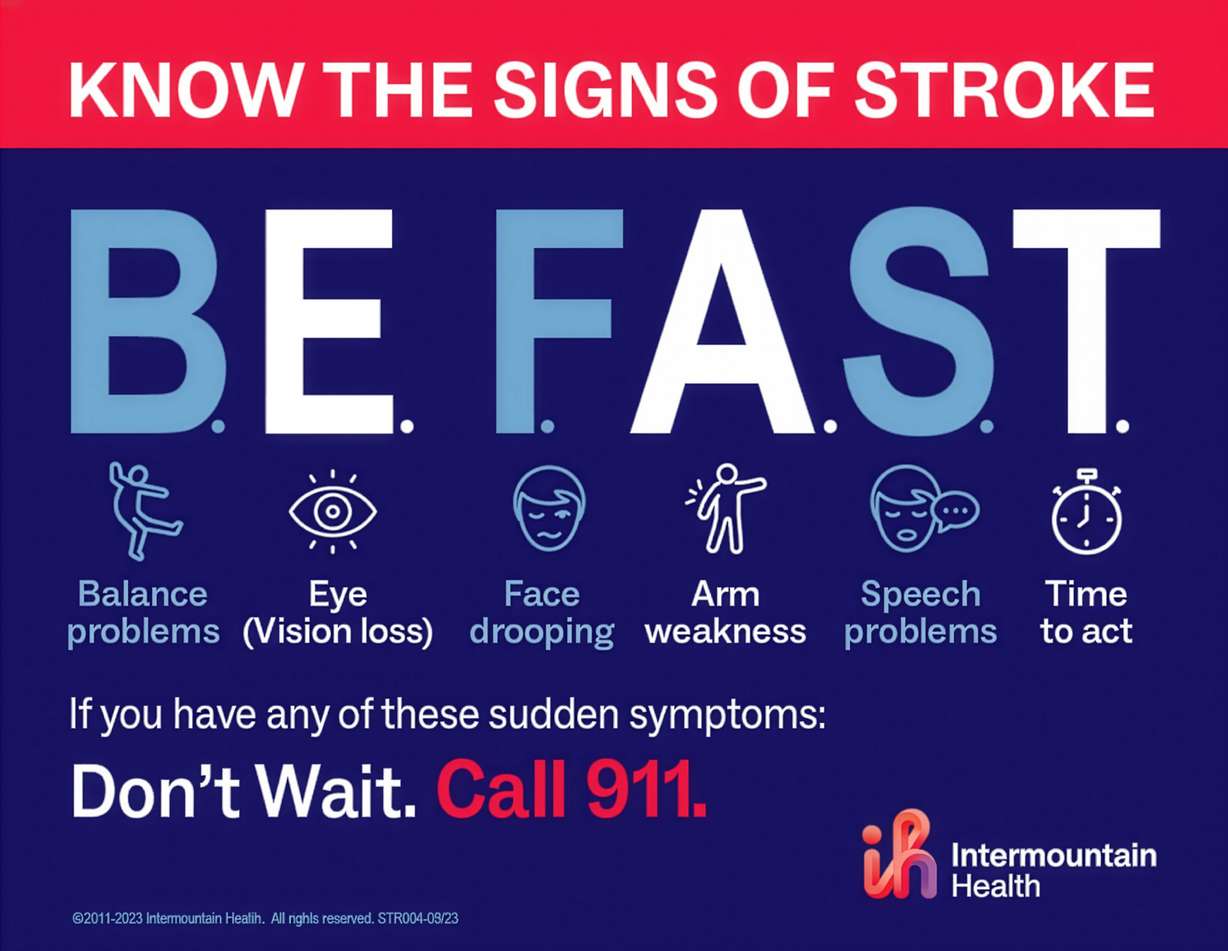
A simple way to remember the signs of stroke is: BE FAST.
- Balance: Sudden difficulty with balance or coordination.
- Eyes: Sudden blurred or double vision, or loss of vision in one or both eyes without pain.
- Face: Drooping or numbness on one side of the face.
- Arm weakness: Sudden weakness or numbness in one arm.
- Speech: Sudden difficulty, slurring, or inability to speak.
- Time: know when the last time you or your loved one had normal symptoms. Call 911.
The right treatment depends on what kind of stroke you are having. You need to get to the hospital very quickly to figure this out.
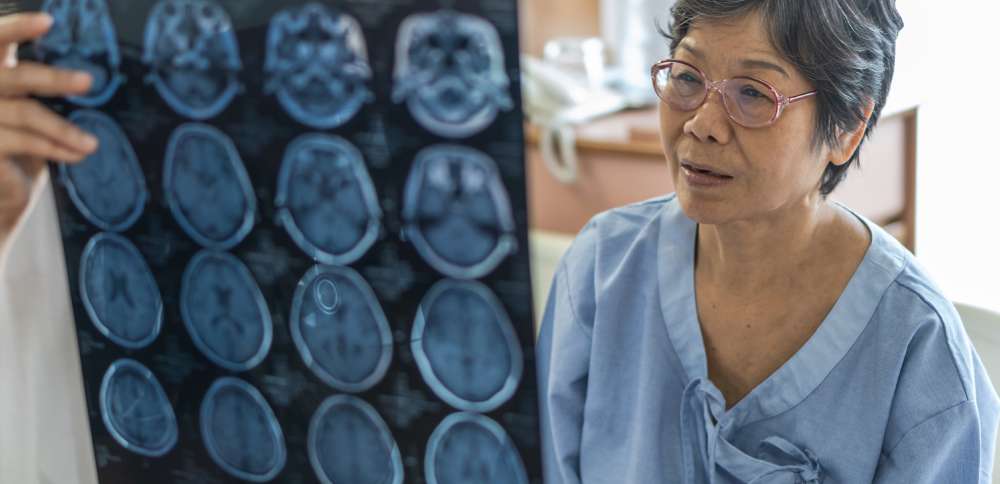
At the hospital, the doctors will do tests to confirm that you are having a stroke and figure out what type of stroke it is. This involves imaging tests such as a CT scan or MRI, which create pictures of the brain.
Other imaging tests are used to look at the blood vessels or the heart.
Quick treatment during a stroke is one of the most important factors in determining a good outcome. A stroke occurs when a portion of the brain doesn't get enough blood for a period of time.
"We have a saying in neurology that 'Time is Brain,' which means the sooner patients get treated, the fewer brain cells will be lost. Every second a person is having a stroke, 32,000 neurons die," Johnson said.
"The faster we get you to the hospital the better odds a person has of a full recovery without losing brain or body functions."
A new study shows that for every second someone delays emergency stroke care; it's associated with 2.2 hours of less healthy life.
Many strokes can be prevented, though not all. You can greatly lower your chance of having a stroke by taking your medicines exactly as directed.
Medicines that are especially important in preventing strokes include:
- Blood pressure medicines.
- Medicines called statins, which lower cholesterol – Medicines to prevent blood clots, such aspirin or blood thinners.
- Medicines that help to keep your blood sugar as close to normal as possible (if you have diabetes).
Making lifestyle changes:
- Stop smoking, if you smoke
- Get regular exercise (if your doctor says it's safe) for at least 30 minutes a day on most days of the week
- Lose weight, if you are overweight
- Eat a diet rich in fruits, vegetables, and low-fat dairy products, and low in meats, sweets, and refined grains (such as white bread or white rice)
- Eat less salt (sodium)
- Limit the amount of alcohol you drink. If you are female, do not drink more than one drink a day. If you are male, do not drink more than two drinks a day.
If you have stroke symptoms that only last a few minutes or hours, you may have had a transient ischemic attack (TIA). Transient symptoms are also worrisome because they may mean that another stroke is likely to occur soon.
People should still call 911 and come to the emergency department for rapid evaluation. Quick action may often lead to a quick recovery.
It's vital to remain optimistic and focus on getting a patient to recovery. It's important to recognize that the goal is to recover from a stroke.
Stroke treatments are focused on restoring blood flow to the brain to prevent brain tissue from dying due to lack of blood flow. Treatments include a blood clot dissolving medication called tPA and a procedure that uses a catheter to pull blood clots out of large arteries in the brain. Both treatments can significantly reduce disability but are very time sensitive.
The Intermountain Health team of specialists continues to develop protocols that shorten the amount of time it takes to diagnose and treat a stroke. This is important because a quick diagnosis and treatment can mean less long-term damage, less disability, and better overall outcomes.
Scheduling an appointment with a primary care provider will help to discuss a plan to minimize potential risks.
The opinions and conclusions expressed in this article are the sponsor's own and do not reflect the views or opinions of KSL.com. This Site Does Not Provide Medical Advice. Any content on this Site, such as text, graphics, images, information obtained from, or contained on this Site are for informational purposes only. The content is not intended to be a substitute for professional medical advice, diagnosis, or treatment. Always seek the advice of your physician or other qualified health provider with any questions you may have regarding a medical condition. Never disregard professional medical advice or delay in seeking it because of something you have read on this site! The owner and operator of this site do not recommend or endorse any specific tests, physicians, products, procedures, opinions, or other information that may be mentioned on the site. Reliance on any information provided by the Operator, including their employees, contractors or others appearing on the Site at the invitation of the Operator, or other visitors to the Site is solely at your own risk. If you think you may have a medical emergency, call your doctor or 911 immediately.