'%3e%3cpath%20d='M34.1406%205.85938C30.3906%202.10547%2025.3047%200%2020%200C14.6953%200%209.60938%202.10547%205.85938%205.85938C2.10938%209.61328%200%2014.6953%200%2020C0%2025.3047%202.10547%2030.3906%205.85938%2034.1406C9.61328%2037.8906%2014.6953%2040%2020%2040C25.3047%2040%2030.3906%2037.8945%2034.1406%2034.1406C37.8906%2030.3906%2040%2025.3047%2040%2020C40%2014.6953%2037.8945%209.60938%2034.1406%205.85938ZM37.0117%2023.543H31.1602V13.5391H27.6328V19.9414C28.1211%2020.6914%2028.3711%2021.582%2028.3711%2022.5625V22.625C28.3711%2023.668%2028.1172%2024.6055%2027.6328%2025.4297V26.6094H36.082C33.4883%2032.9375%2027.2891%2037.3789%2020.0039%2037.3789C10.3711%2037.3789%202.62109%2029.6289%202.62109%2020C2.62109%2010.3711%2010.3711%202.62109%2020%202.62109C29.6289%202.62109%2037.3789%2010.3711%2037.3789%2020C37.3789%2021.1484%2037.2617%2022.2656%2037.0508%2023.3477C37.0391%2023.4141%2037.0234%2023.4766%2037.0117%2023.543Z'%20fill='white'/%3e%3cpath%20d='M22.3086%2018.5352C20.4336%2018.125%2019.9531%2017.8398%2019.9766%2017.1836V17.1406C19.9766%2016.6992%2020.3477%2016.2148%2021.4023%2016.2148C22.582%2016.2148%2023.8867%2016.6797%2025.0781%2017.4766L26.8516%2015.0195C25.4453%2013.8906%2023.707%2013.3398%2021.5547%2013.3398C18.5195%2013.3398%2016.4375%2015%2016.4063%2017.4766V17.5352C16.3633%2020.2617%2018.5859%2020.9805%2021.293%2021.6016C23.0391%2021.9766%2023.5703%2022.3164%2023.5703%2022.9609L23.5469%2022.9766C23.5469%2023.3906%2023.2578%2023.7031%2022.7852%2023.8359C22.5742%2023.9062%2022.1289%2023.9727%2021.5156%2023.9727C20.7617%2023.9727%2019.7539%2023.8633%2018.6328%2023.4844C18.0898%2023.2891%2017.4727%2023.0039%2016.8047%2022.6133L20.1406%2026.625C20.2813%2026.6602%2021.0977%2026.8516%2021.7734%2026.8516C25.0039%2026.8516%2027.0859%2025.2461%2027.1094%2022.6328V22.5703C27.1602%2020.1133%2025.2148%2019.1719%2022.3086%2018.5352Z'%20fill='white'/%3e%3cpath%20d='M5.24219%2013.5664V26.6133H8.75391V23.7578L10.2969%2021.9531L14.2031%2026.6133H18.3867L12.3555%2019.5195L17.4023%2013.5664H13.4531L8.75391%2019.0586V13.5664H5.24219Z'%20fill='white'/%3e%3c/g%3e%3cdefs%3e%3cclipPath%20id='clip0_97_2430'%3e%3crect%20width='40'%20height='40'%20fill='white'/%3e%3c/clipPath%3e%3c/defs%3e%3c/svg%3e)


Estimated read time: 6-7 minutes
Parasites are something many people don't think to look at, and many are almost too small to see anyway. But for Anand Varma, the sneaky symbionts deserve a spot in front of the macro lens. The California-based photographer has built a career on capturing the minutia of scientific subjects, from brain-hacking worms to embryonic chickens.
With the goal of exploring the natural world, Varma initially set out to become a scientist. But an opportunity as a photography assistant in college opened his eyes to another route, behind the shutter of a camera. "I realized that photography could give me all the opportunities that I thought only a science career could," he said.
As a keynote speaker on April 21 in the Natural History Museum of Utah's lecture series, Varma will bring visitors through the arc of his journey from scientist-in-training to award-winning photographer, highlighting the beauty hiding in the details of biology.
Varma's first foray into photography was at the end of high school, after borrowing his father's camera to snap photos of bugs and snakes in the woods. He carried the hobby into college at the University of California, Berkeley, bringing his camera on field trips while working toward a biology degree.
Then, at the end of his sophomore year, a professor extended an opportunity to him to assist a photographer who regularly contributed to National Geographic. "I had no idea that that opportunity was going to change the course of my life and my career," he said. He spent the next seven years traveling the world and working with the photographer, David Liittschwager.
Now a National Geographic Explorer himself, Varma uses photography and videography to capture tiny details of the natural world in innovative ways. His projects often require him to develop cinematic methods off the beaten path, and to use both scientific and photography techniques to get the perfect shot.
For example, for a story on parasites that take over the minds of their hosts, he had to come up with new lighting schemes that allowed him to focus on the parasite—in one case, a type of worm called a nematomorph—without putting off readers. "I had to figure out how to make this look, if not cool, then at least intriguing enough for a reader," he said.
The nematomorph he photographed for the story, a horsehair worm, lives its early life inside a cricket. When the worm matures and is ready to lay eggs, it hijacks the cricket's brain and causes it to drown itself. Then, the worm emerges from the cricket into the water. Varma wanted to capture the moment that the worm left the cricket in a way that was clear to readers what was happening, without revealing too much detail.
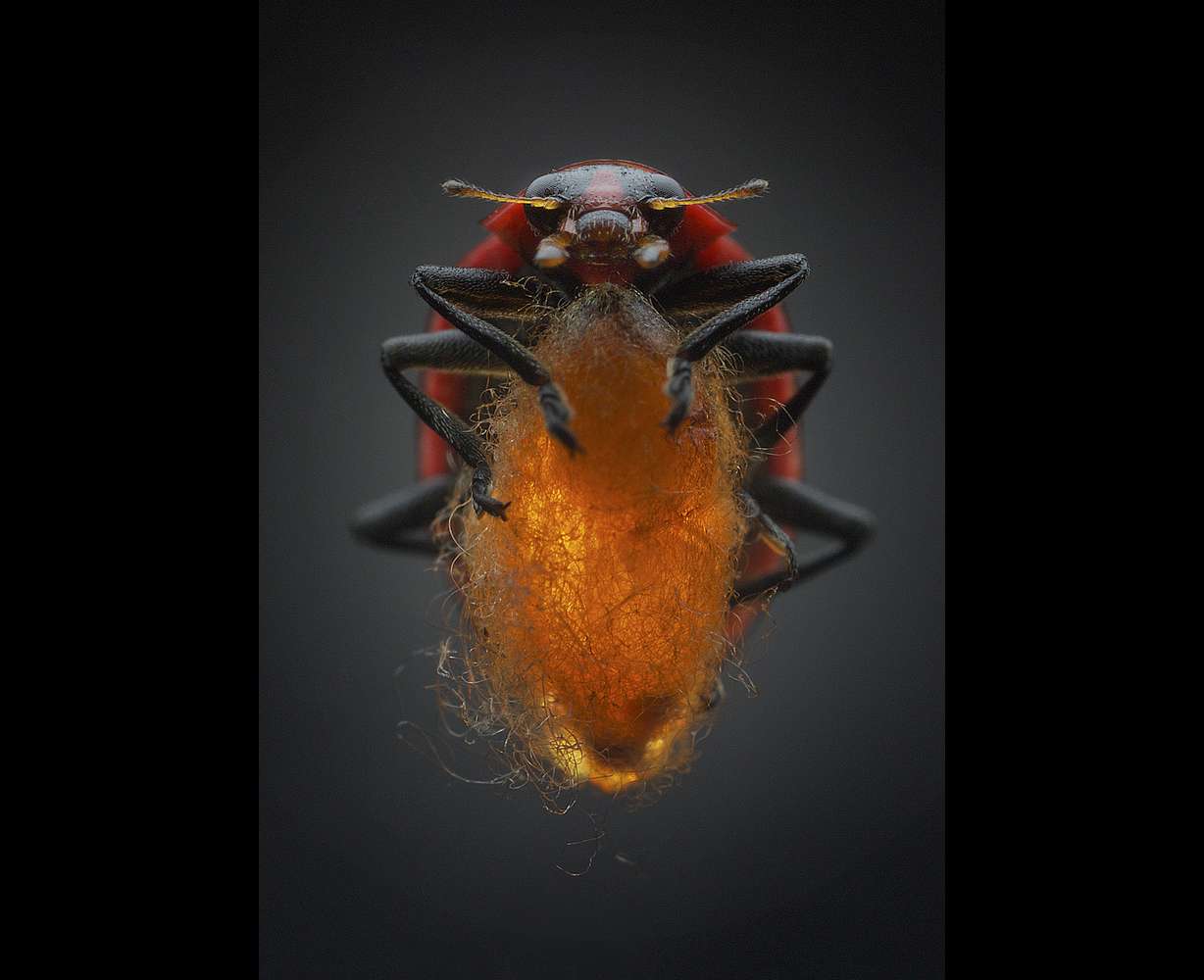
He took over 5,000 shots to get the final photo, employing a variety of tricks, including diffuse lighting to highlight the worm while keeping the cricket in shadow, a water-repellent treatment in a petri dish to cause the water to bead, and temperature control to slow down the worm's movement.
Although setting up the shot had a multitude of elements, the camera he used was straight-forward: a Canon EOS 5D Mark II, and 100 millimeter macro lens.
"There's nothing particularly special about these…they're very accessible today," he said.
Sometimes the challenge of a photo isn't the techniques used, but rather how to tell a unique story with the picture, Varma said. In a project focused on hummingbirds, for instance, he had to find a new way to present the birds in a way readers hadn't seen before.
"Every photo of a hummingbird that can be taken has already been taken," an editor told him before he began. Varma turned to researchers who study hummingbird flight mechanics for inspiration and ended up photographing a recreation of one of their experiments.
"The way that I could show them in a new way was to portray hummingbirds through the eyes of the scientists who study them," Varma said.
The scientists were studying airflow around hummingbirds' wings, research they conducted using high-speed cameras and puffs of water vapor. Varma used a similar setup. A tiny sugar water-filled syringe at the top of the shot coaxed the hummingbird into a good position, while clouds of water droplets from a miniature fog machine surrounded the bird, swirling into eddies with the motion of its wings.
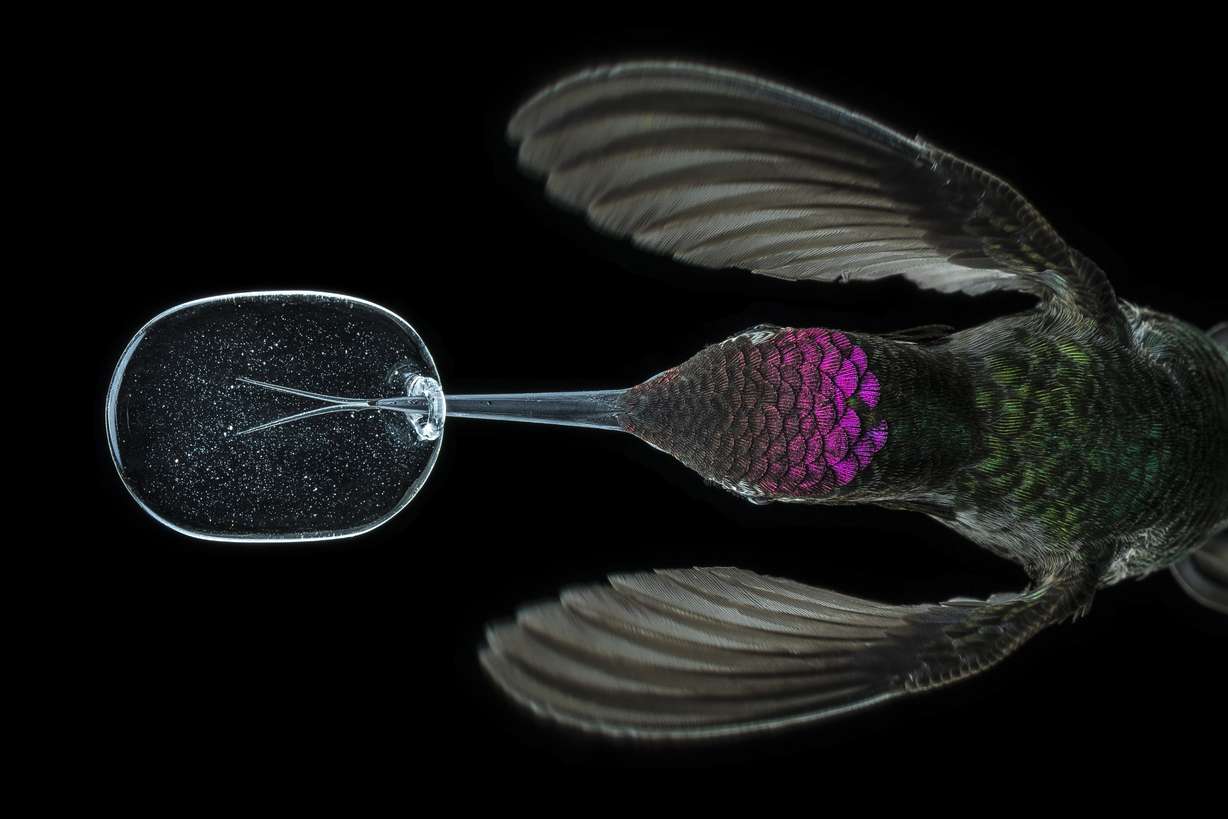
The final shot was taken on a traditional camera, but he used a special high-speed camera to slow down movement in the scene to do a lot of fine-tuning.
Even with a mastery of cameras and shot setup, there are other skills Varma has had to cultivate to be successful. In particular, he underscores the importance of setting oneself apart from others in the field and dealing with the uncertainty of charting an individualized course to carve out a career.
"It's a challenge to work in a field that's pretty unstructured, there's not really a roadmap," he said. "These two career paths, photography and science, don't have to be mutually exclusive."
It's hard to find opportunities that support both ventures simultaneously, though. That's what inspired him to start WonderLab, "an experimental science photography studio that combines a photography studio, with a biology lab, with a classroom."
The Berkeley-based project started four years ago and is funded by the National Geographic Society. WonderLab brings local schools on field trips and hosts workshops for both scientists and early-career photographers who want to learn about science photography. Digital resources about visual science storytelling are also in the works, Varma said.
"This space can play in both photography as well as science, as well as education," he said. "I want to create an interdisciplinary space where photographers and scientists and educators can think about how to connect people to the natural world in new ways."
Hear from Anand Varma and see more of his spectacular photography when he speaks at Kingsbury Hall on April 21 as part of the Natural History Museum of Utah's 2026 Lecture Series exploring "The Science of Small Things." Details and tickets can be found at nhmu.utah.edu/LectureSeries.