
Estimated read time: 4-5 minutes
This archived news story is available only for your personal, non-commercial use. Information in the story may be outdated or superseded by additional information. Reading or replaying the story in its archived form does not constitute a republication of the story.
RICHFIELD — At a subdued and largely civil town hall, Rep. Chris Stewart, R-Utah, traded turns on a microphone with a half-dozen constituents in this longtime Republican ranching community.
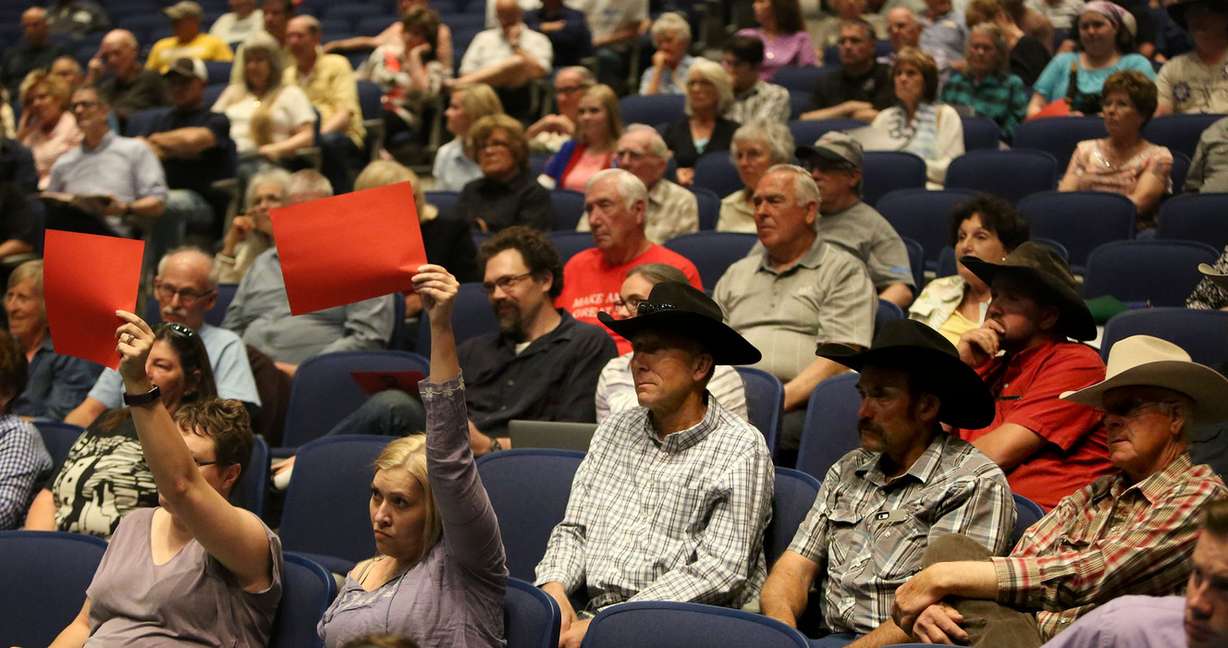
About 250 people attended — several in Stetsons and leather boots, a few in fuchsia hats that have become emblems of opposition to the president. Many had silver hair. The group gathered in a high school auditorium in the overwhelmingly Republican community in Utah's 2nd Congressional District. Some held up green and red pieces of construction paper showing their approval or disapproval.
Despite being cordial for the most part, the hourlong meeting still was punctuated with boos from critics, who then were met with pushback from Stewart's supporters urging them to "go back to Salt Lake."
Audience questions focused on how to end GOP infighting and persuade the president to stop tweeting, but also on whether a special prosecutor is needed to continue investigating possible ties between President Donald Trump and Russia after the firing of FBI Director James Comey.
"It's something I would consider," Stewart responded to the question on Comey from Tyrell Aagard, who grew up in nearby Levan and now lives in Salt Lake.
Aagard wasn't satisfied. He wanted a clear yes or no, he said.
"I felt like that was a cop-out. This is the most important question, politically, at this moment," Aagard said.
Stewart largely stuck to GOP positions in the session, saying he had a duty to work to repeal Obamacare, believes coal is an important part of the nation's energy structure and said federal environmental regulators have too much authority to impose pollution limits in Utah.
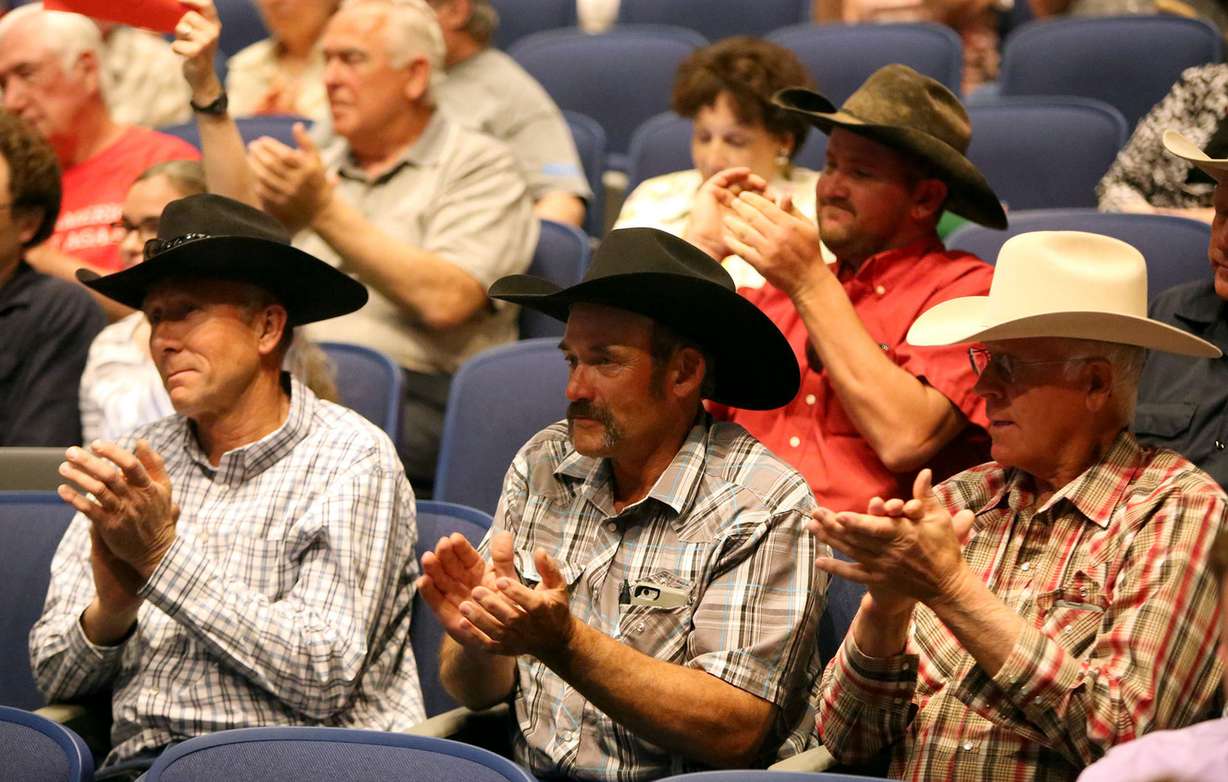
Clint Tanner, who works in maintenance for a mining company and lives in Richfield with his wife and two kids, was heartened by his representative's faith in coal.
"I think Congressman Stewart speaks for us here in coal country," Tanner said. "I thought it was productive."
It wasn't all question-and-answer, though. Stewart took the first 20 minutes of the meeting to warn of the dangers of North Korea's missile stockpile and explain his vote to repeal and replace former President Barack Obama's health care law.
Those who took the microphone had their names drawn by Stewart's staff from a box of questions.
Even though the meeting largely broke from the national trend of contentious town hall exchanges between Republican members of Congress and foes of Trump, some flares went off.
During Stewart's PowerPoint presentation detailing what he said were the unfulfilled promises of Obamacare, hecklers cried out that Stewart's health care vote moved to take coverage away from Utahns who need it.
And after the congressman stated that abortions make up the majority of work done by Planned Parenthood, several hissed and booed. The procedure accounts for 3 percent of the organization's clinical work, according to the group.
But Stewart was met with cheers when he said the existing health law unnecessarily forced people to buy expensive health insurance.
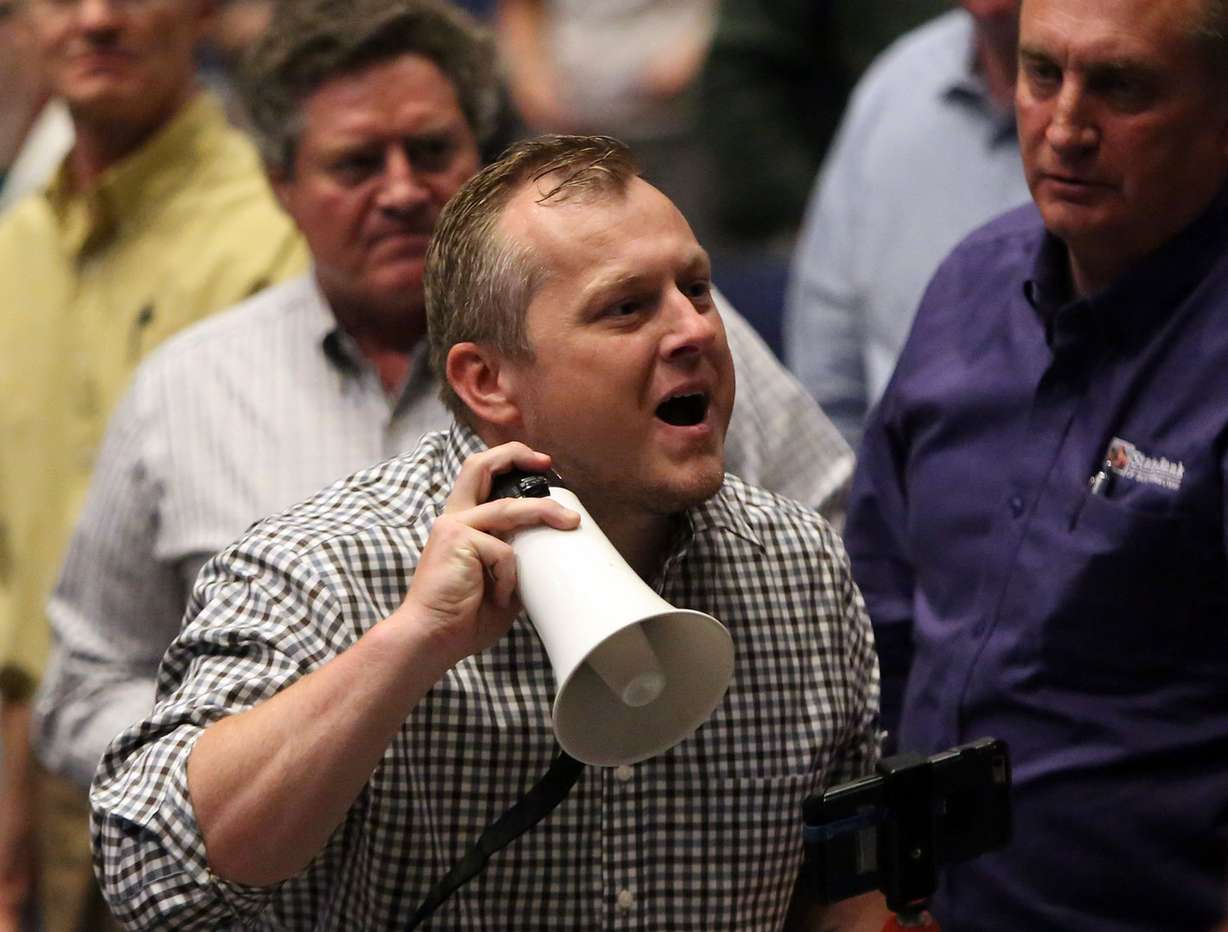
Stewart's staff cut the meeting off after an hour. One audience member produced a megaphone at the end of the meeting and slammed Stewart for not taking more questions.
The meeting comes a month and a half after a tense public question-and-answer session he held at Salt Lake City's West High School. In the March meeting, Stewart struggled to speak over a chorus of boos.
It was a much friendlier reception Friday in the town of 7,500 people about 160 miles south of Salt Lake City, than in the Democratic stronghold of Utah's capital city.
Stewart did not make himself available to reporters on Friday, but took the opportunity to meet with local leaders earlier in the day. Wayne County Commissioner Newell Harward, of Loa, bent Stewart's ear Friday afternoon in hopes of opening federally managed trails in his county to motorized use.
"He supports our community really well," Harward said.
Stewart did not touch on another flashpoint related to federal lands: Utah's national monuments, which he has said are land grabs by officials in Washington. In April, he cheered Trump's executive order reviewing monuments nationwide, including Utah's Bears Ears National Monument, declared in December, and Grand Staircase-Escalante, designated in 1996.
In hosting the event, Stewart forewent advice from the state Republican Party, which said town hall meetings should be avoided because they have become hostile.
None more so than a February meeting at Brighton High School in Cottonwood Heights. Rep. Jason Chaffetz, R-Utah, strained to say anything over the heckling and chants of "do your job" from a crowd of more than 1,000. Hundreds more who did not make it in the small auditorium stood outside.
Richfield is the county seat of Sevier County, where residents voted 88 percent Republican and 7 percent Democratic in the November general election, according to election estimates posted on the county's website.
The 2nd Congressional District encompasses Salt Lake City and the state's western side from Bountiful to St. George. That includes pieces of rural Utah, extending east to Canyonlands National Park and Grand Staircase-Escalante National Monument.