
Estimated read time: 2-3 minutes
This archived news story is available only for your personal, non-commercial use. Information in the story may be outdated or superseded by additional information. Reading or replaying the story in its archived form does not constitute a republication of the story.
ALPINE — Many students aren't willing to admit in class that they don't understand the material being taught.
In fact, a recent study by the University of Pennsylvania found students of working-class families are much less likely than their middle-class peers to raise their hands and ask a question. Not surprisingly, the researcher note drop-out rates among students from working class families are 5 times greater.
What if teachers could eliminate that "embarrassment factor." New technology makes it possible, as evident at Alpine's Westfield Elementary School in Mrs. Nevarez's sixth-grade class.
When KSL News visited the class Tuesday, they were reviewing a new concept in astronomy. When teacher Karre Nevarez wants to know if students understand before she moves on, she has a new tool that will let her do that without putting any student on the spot.
"It definitely makes it a lot less daunting for the student because they can immediately say, ‘I don't know that.' But the rest of the class has no idea," Nevarez explained.

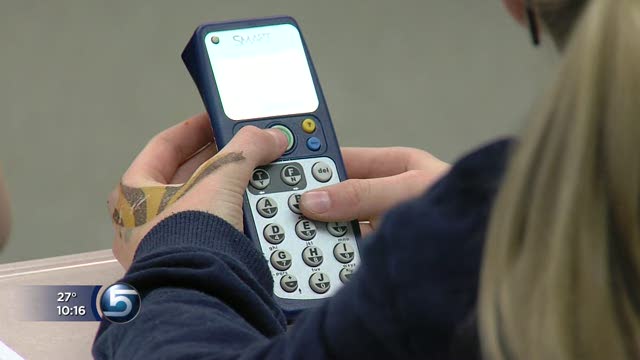
The SMART Response devices, as they're called, are a little bit like handheld video games. Students answer questions with the buttons, and the data immediately registers on the teacher's computer. She knows right away who is having trouble.
Students say the anonymity removes the pressure. "Because not everybody knows what score you got, only Mrs. Nevarez knows," said Chloe Pendleton.
"I like it because she can help us with our troubles, and she does if we're wrong," classmate Cora Wescott added.
For the teacher, Smart Response provides instant feedback so she can change how she's presenting information that day. And equally important: it's automated.
"I used to stay up until 1:00, 2:00 in the morning grading papers; and this makes it so not only are they getting an immediate response, the computer is correcting for me," Nevarez said.
She applied for a grant to get this technology. As you might imagine, it's expensive. But she and her students wish more teachers could provide this kind of help so they don't have to face the embarrassment of asking for it.
"I really wish I could have this kind of technology in all my classes. It's been a life changer for me," said Jacob Arnold, a student in Mrs. Nevarez's class.
----
Written by Nadine Wimmer with contributions from Ashley Kewish.