
Estimated read time: 5-6 minutes
This archived news story is available only for your personal, non-commercial use. Information in the story may be outdated or superseded by additional information. Reading or replaying the story in its archived form does not constitute a republication of the story.
SALT LAKE CITY — Cancer kills more than 1,900 Utahns every year, making it the state's second-leading cause of death.
The Sandy and southeastern Salt Lake County area is worst off, as it is home to the state’s highest rate of melanoma, breast and colorectal cancer cases. More than two dozen other small areas of the state also have higher-than-average rates, according to the Utah Cancer Small Area Report, which was released by the Utah Department of Health and the Utah Cancer Action Network on Tuesday.
The report identifies breast, colon, lung, prostate and skin cancer, mortality and screening rates in 61 designated small areas of Utah, to give community leaders and policymakers an idea of what can and needs to be done to "best allocate limited funds to communities with the greatest need," said State Epidemiologist Dr. Robert Rolfs.
"In Utah, we are below the national average in screenings for breast, cervical and prostate cancers — cancers that can be treated more effectively when detected early," he said.
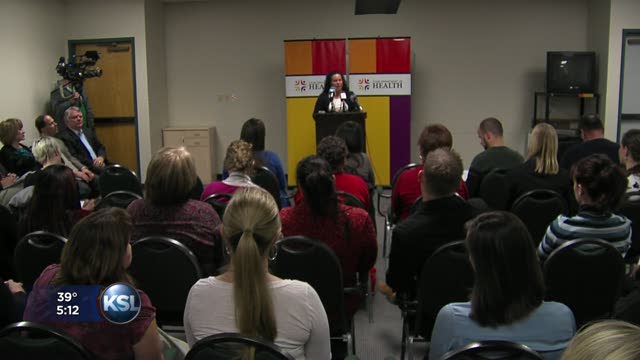
Rolfs, along with health officials from UDOH's Cancer Control Program and the Utah Cancer Action Network, aim make Utah healthier with a new comprehensive plan for cancer prevention and control. That plan, which was outlined Tuesday, seeks to lower the current cancer death rate in the Beehive State by increasing screening rates and promoting good behaviors.
Salt Lake has the highest mortality rates.
Utah County has the lowest.
Getting screened is a must.
Wearing appropriate clothing and sunscreen can reduce the risk.
Vacciens for HPV and hepatitis reduce cancer risk.
"In Utah, people tend to believe we are a very healthy state and as a result, there isn't the urgency to get screened, to detect cancers," said UCAN co-chairwoman Lynette Hansen. She said the state's five-year plan addresses seven categories, including morbidity and mortality, advocacy and public policy, prevention and awareness, detection and treatment, survivorship and quality of life, education and practice, and data acquisition, utilization and management.
Each area of focus contains specific goals, objectives and strategies to help decrease the burden of cancer in Utah.
"There are some simple things that people can do to help detect cancer early, that are proven, both to be effective in detecting cancer and in saving lives," Rolfs said. He said that while there are many forms of cancer, Utah boasts relatively low rates for most of them.
Of concern, however, is a high rate of melanoma — one of the highest in the nation and above the national average.
Summit County Health Department Director Richard Bullough said high altitudes and incredible ski areas are partly to blame for the county's higher-than-average incidence of skin cancers. The area is second-highest in the number of melanoma cases, with 47.5 cases per 100,000 population.
But with new data from the report, Bullough said more can now be done to curtail the rising trend.
"Local data are very important," he said. It is the first time that the state has gathered and released community-specific data regarding cancer occurrence and screening rates.
Bullough said ski resorts and other local businesses are looking to partner with the department to offer sunscreen to patrons and officials are working in schools to educate youth on the dangers of sun exposure.
"We know that limiting exposure by wearing the right kind of clothing, hats, staying in the shade, wearing effective sunblock and sunscreen, can limit that risk," Rolfs said. "It's an area where people can make a difference with the kind of cancer Utah suffers from a little bit more."
Summit County Health Department Director Richard Bullough said high altitudes and incredible ski areas are partly to blame for the county's higher-than-average incidence of skin cancers. The area is second-highest in the number of melanoma cases, with 47.5 cases per 100,000 population.
Salt Lake County also has some of the highest mortality rates due to cancers, whereas parts of Utah County have the lowest in most categories.
While cancer prevalence appears to be highest in the most densely populated areas of the state, Rolfs said every community in Utah could improve.
Obtaining regular mammograms, colonoscopies and pap smears, as well as taking advantage of available vaccines for HPV and hepatitis, are important clinical services that Rolfs said are successful and proven prevention methods to combat and often deter cancer.
Even in Utah, where smoking is done at a minimum, Rolfs said lung cancer has a high prevalence in certain areas. Second-hand smoke is just as much a culprit, he said.
"It remains the most preventable cause of death," he said. "Focusing on what we know we can do is a way we can make a difference."
At the community level, prevention efforts have been successful in boosting prostate cancer screening throughout the state. An intensive media campaign has taken the state from one of the lowest screening rates in the country, to being nearly even with the national average in the past seven years.
Utah still remains one of the top states in the country for the incidence of prostate cancer and deaths that result from it, however.
"We need some help," said Kathryn Rowley, Utah Cancer Control Program director. She said federal funding that once helped to get the word out about various cancer screening and prevention measures is no longer available, and the department must rely on state and local support.
"We have no money to air our campaigns," Rowley said. Research, too, is typically a job performed with the help of increasingly scarce federal funding.
For the time being, the UDOH is relying on the public to spread the word about the importance of healthy behaviors in the role of preventing cancer. Rowley said those include avoiding smoking, participating in early detection screening, eating healthy and exercising, as well as using sunscreen.
"Utah is deemed one of the healthiest states in the nation," Hansen said. "We just don't take the effort to take care of ourselves."
Email:wleonard@ksl.com